
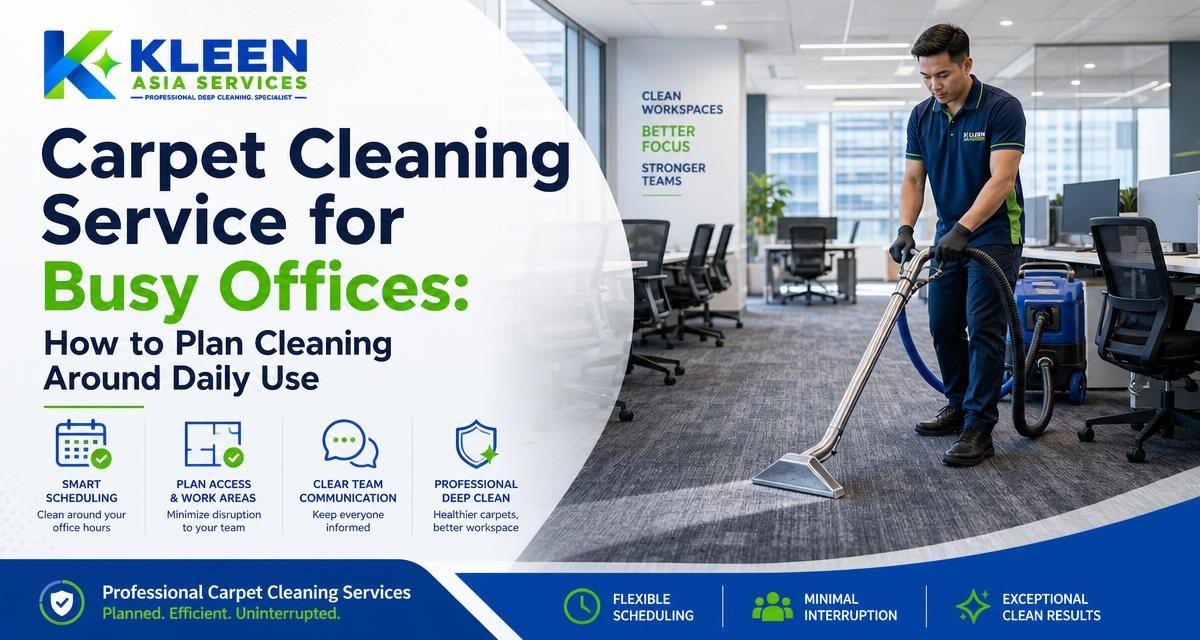
Arranging a professional carpet cleaning service for a busy office requires more than choosing a date. Office managers also need to plan access, move or protect furniture, separate work zones, communicate with staff and consider how the space will be used after cleaning. A clear plan helps the cleaning team work efficiently while allowing the office to continue operating with as little disruption as possible.
Why office carpet cleaning needs careful planning
Office carpets are used differently from residential carpets. Staff may walk through the same entrances repeatedly, visitors may gather in reception areas, and meeting rooms can switch from quiet workspaces to heavily used rooms throughout the day. Desks, chairs, cabinets, cables and equipment can also make some areas difficult to reach during normal cleaning.
Because of this, an office carpet cleaning project should be treated as a small workplace operation. The goal is not simply to clean the carpet, but to make sure the right areas are accessible, the people affected know what to expect and the office has a practical plan for using the space afterwards.
Cleaning is easier when the scope is clear
Before contacting a provider, identify exactly what needs attention. The scope might include the entire office, only open-plan work areas, or specific sections such as reception, corridors, meeting rooms and pantry entrances. Note areas with visible marks, heavier foot traffic or persistent odours, but avoid assuming that every carpet requires the same approach.
It is also useful to record the carpet type if that information is available, the approximate floor area and any sections that cannot be moved or closed. Sharing these details with the cleaning company can help both sides discuss access and preparation more accurately.
Choose a cleaning window that fits office activity
The most suitable appointment is one that gives the cleaning team access without placing unnecessary pressure on employees. For some offices, that may mean a quieter weekday period. For others, cleaning may be easier when fewer people are present, such as after normal work activities or during a planned office closure. The right choice depends on the organisation’s schedule, building rules and the areas included in the service.
Look beyond the calendar when selecting a cleaning window. Consider regular meetings, customer visits, deliveries, interviews, training sessions and shared-room bookings. A carpet cleaning appointment that overlaps with an important presentation can create avoidable disruption even if the work itself is well organised.
Questions to consider before confirming a date
- Which rooms must remain available throughout the day?
- Are there periods when staff numbers are lower?
- Will the building require advance notice for cleaners, equipment or loading access?
- Can reception or security provide access to the relevant areas?
- Are meeting rooms, corridors or shared facilities booked for important activities?
- Does the provider need access to power, water or a particular entrance?
- Who will be present to answer questions on the day?
Do not promise a specific completion or drying time to staff unless it has been confirmed by the provider for the actual office conditions. Carpet type, room layout, ventilation and the cleaning method may affect how the space should be used afterwards. Ask for practical guidance and include it in the internal notice.
Break the office into manageable work zones
Cleaning the whole office at once may not be the only option. Dividing the floor into zones can make it easier to maintain access to essential work areas. For example, an office manager might schedule reception and corridors separately from open-plan desks, or handle meeting rooms on a different occasion from the main staff area.
A zone-based plan is especially helpful when the office cannot close completely. It gives employees a clear alternative route and allows important rooms to remain available while another section is being cleaned. The plan should be based on the actual layout rather than a generic sequence.
| Office area | Planning considerations | Useful preparation |
|---|---|---|
| Reception and entrance | Visitors and deliveries may continue during the day. | Coordinate with reception and identify an alternative waiting or entry route if needed. |
| Open-plan work area | Desks, chairs, cables and personal items can limit access. | Ask staff to clear floor-level items and confirm which furniture can be moved. |
| Meeting rooms | Bookings may conflict with the cleaning window. | Check the room calendar and temporarily move meetings if necessary. |
| Corridors and walkways | People may need to pass through repeatedly. | Plan an alternative route or clean sections in stages. |
| Pantry or refreshment area | Spills and regular use may continue after cleaning. | Coordinate access and remind users to take extra care after the work. |
| Private offices | Confidential documents and personal equipment may be present. | Arrange access with occupants and secure sensitive items before the appointment. |
Use a simple floor plan
A marked floor plan can reduce confusion. Highlight the areas included in the appointment, rooms that should remain closed temporarily and the route the cleaning team should use to enter and leave. Mark furniture that cannot be moved, sensitive equipment and sections where staff must not walk during the cleaning process.
The plan does not need to be complicated. A printed layout with a few notes can be enough, provided it is shared with the relevant contact person and is available on the day. If the building has several floors or tenants, confirm whether lifts, loading areas and common corridors require separate arrangements.
Prepare desks, furniture and equipment
Professional cleaning teams can work around some furniture, but the result may be more consistent when carpeted areas are accessible. Office managers should ask in advance what the cleaning team expects staff to move and what will be handled by the provider. Do not assume that heavy cabinets, computers or fixed fixtures can be relocated.
Give employees clear instructions rather than leaving preparation until the last few minutes. Depending on the office layout, staff may need to remove bags, boxes, wastebaskets, loose documents, desk accessories and other objects resting on the floor. Personal items should be stored safely, and confidential papers should not be left in areas that need to be accessed.
Items that need special attention
- Computer equipment: Keep power cables and electronic devices away from areas that will be cleaned, following the office’s normal equipment safety procedures.
- Documents: Remove confidential files and papers from the floor or from furniture that may need to be moved.
- Wheeled chairs: Confirm whether chairs should be placed on a non-carpeted surface or grouped in a designated area.
- Storage units: Ask before attempting to move cabinets, shelving or other heavy items.
- Decorative objects: Clear plant pots, display items and loose floor decorations from the work zone.
- Access-controlled rooms: Arrange keys, access cards or an authorised escort before the cleaning team arrives.
If furniture remains in place, tell the provider beforehand. This allows the cleaning team to plan around fixed obstacles rather than discovering them during the appointment.
Communicate the plan to employees
Staff communication is one of the easiest ways to prevent interruptions. Send a notice before the appointment explaining the date, affected areas, preparation required and any temporary access restrictions. Include a deadline for clearing floor-level items so that employees are not trying to reorganise their desks while the cleaners are already working.
Use more than one communication channel if the office normally relies on several. An email, calendar notice, staff messaging channel or notice near the entrance can help ensure that the information reaches people who work different schedules. Department leaders can also remind their teams during regular meetings.
What the staff notice should include
- The date and planned cleaning window.
- The rooms or zones included in the work.
- What employees need to remove from the floor.
- Where personal items, chairs or small furniture should be placed.
- Which entrances, corridors or rooms may have limited access.
- Whether staff should work from another area during the cleaning.
- Who to contact with access or preparation questions.
Keep the message practical. Employees do not need a long technical explanation, but they do need enough information to prepare properly. If the cleaning plan changes, update the notice rather than relying on informal word of mouth.
Plan for sensitive areas and workplace safety
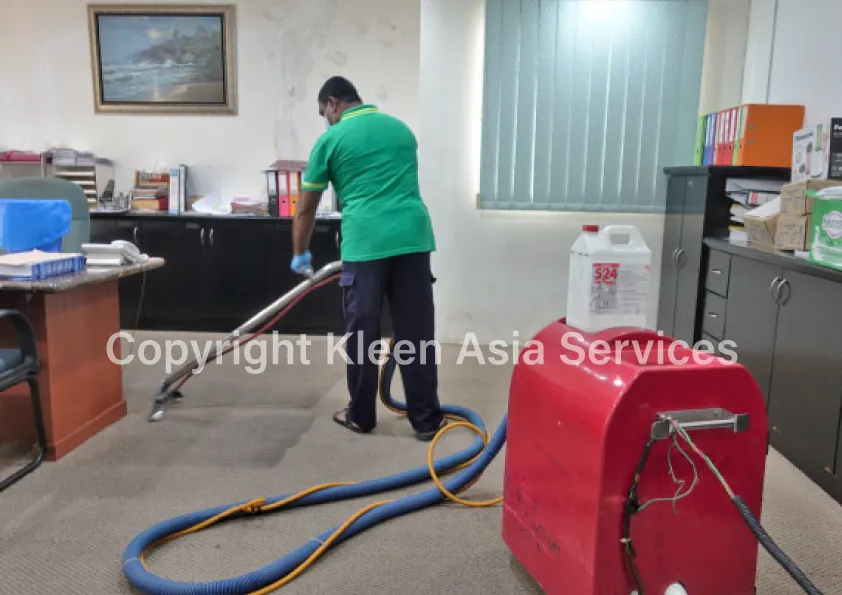
Office carpets are often close to electrical equipment, stored documents and other items that require care. Identify sensitive areas before the appointment and discuss them with the carpet cleaning provider. This may include server or equipment rooms, archive spaces, laboratories, reception technology and sections containing fragile furnishings.
Building management may also have rules about contractor access, cleaning products, noise, water use, lift protection or work in shared areas. Check these requirements early. If the office occupies a managed building, the property manager or facilities team may need details of the appointment before access is approved.
During cleaning, follow the provider’s instructions about restricted areas and movement through the office. Place temporary notices where people can see them, and direct staff and visitors around active work zones. Afterward, follow the provider’s guidance on when and how the carpeted areas should be used.
Discuss carpet condition before the appointment
When requesting a carpet cleaning service, describe the condition of the carpet honestly. Mention visible stains, areas with heavy traffic, previous cleaning, water exposure and any concerns about particular materials or furnishings. If the office has experienced a leak or flooding, explain what happened and identify the affected areas rather than treating the issue as routine maintenance.
It is sensible to ask what the service includes and what preparation is expected. You can also ask how the provider approaches different carpeted zones, whether furniture needs to be moved and what restrictions may apply after cleaning. Clear questions help set realistic expectations; no cleaning provider can assess every material or outcome without considering the actual site conditions.
Information to provide when requesting a quotation or appointment
- Office location and building access information.
- Approximate carpeted area or number of rooms.
- Whether the space is residential, commercial or shared with other occupants.
- Types of areas involved, such as offices, corridors, reception or meeting rooms.
- Visible stains, odours, water damage or other specific concerns.
- Furniture and equipment that will remain in place.
- Preferred cleaning windows and any building restrictions.
These details allow the discussion to focus on the actual office rather than a generic service description. They can also help identify whether additional furnishings, such as office sofas or fabric seating, should be considered separately.
Coordinate cleaning with other office maintenance
Carpet cleaning may be part of a wider workplace maintenance plan. If the office is also arranging sofa cleaning, upholstery cleaning, curtain cleaning or floor cleaning, discuss how these tasks should be sequenced. The best order depends on the rooms, access requirements and the providers involved.
For example, moving furniture for carpet access may create an opportunity to inspect fabric seating or curtains. However, do not add extra work without confirming the scope, timing and preparation requirements with the relevant provider. A written schedule can show which rooms are unavailable and prevent different maintenance activities from competing for the same access route.
What to do after the carpet cleaning
The job is not finished when the equipment leaves. Keep the agreed areas managed according to the provider’s instructions. Avoid returning furniture, boxes or floor-level items until the area is ready for normal use, and do not allow staff to ignore temporary restrictions simply because the room looks accessible.
Once the office is ready, replace furniture carefully and check that walkways, entrances and workstations are arranged safely. Look for any items that were left outside their usual location. It is also useful to ask staff whether the zone-based plan worked well and record any improvements for the next appointment.
A short post-cleaning checklist
- Confirm which areas are available for normal use.
- Follow all instructions provided about furniture and foot traffic.
- Return chairs and small furniture without dragging them across the carpet.
- Recheck entrances, corridors and meeting rooms before reopening them.
- Remove temporary notices only when restrictions no longer apply.
- Record stains or areas that may need separate attention later.
- Keep the cleaning details with the office maintenance records.
Build carpet care into the office routine
Professional cleaning works best when it is supported by simple daily habits. Place mats or other suitable entry protection where appropriate, respond to spills according to office procedures and ask staff to report problems early. Regular vacuuming and prompt attention to heavily used areas can help the carpet remain presentable between professional appointments, although the right routine depends on the carpet and the office environment.
Keep a record of high-traffic zones, recurring marks and rooms that are difficult to access. This information can improve future planning and help you decide whether to clean the whole office or organise selected zones. It also gives the provider useful context when discussing the next carpet cleaning service.
Choosing a carpet cleaning provider for a busy office
When comparing carpet cleaning services, look beyond the first available appointment. Consider whether the provider is prepared to discuss access, furniture, work zones and the office’s operating needs. A helpful pre-service conversation is often more valuable than a vague promise of a particular result.
Kleen Asia Carpet Cleaning & Upholstery Cleaning provides carpet cleaning for residential and commercial carpeted spaces in Kuala Lumpur and Selangor. Offices can discuss the carpeted areas involved, access arrangements and specific cleaning concerns when seeking service details. The company also presents sofa and upholstery, mattress, curtain, rug and other cleaning services, which may be relevant when several fabric surfaces need attention in the same workplace.
Final planning checklist
Use the following checklist before confirming an office carpet cleaning appointment:
- Define the rooms and carpeted zones to be cleaned.
- Choose a window that avoids important office activity.
- Confirm building access, security and loading arrangements.
- Mark alternative routes if corridors or entrances are affected.
- Ask what furniture and items staff need to move.
- Identify sensitive equipment, documents and restricted rooms.
- Send employees clear preparation instructions.
- Share carpet condition details with the provider.
- Confirm post-cleaning use instructions before the appointment.
- Review the plan afterwards and record improvements for next time.
With these steps in place, professional carpet cleaning becomes easier to fit around everyday office use. The cleaning team has better access, employees know what to expect and managers can protect essential work activities while maintaining a cleaner, fresher and more comfortable indoor space.
Frequently asked questions
Can an office remain open while carpet cleaning is taking place?
It may be possible if the work is divided into zones and alternative routes are available. Confirm the practical arrangements with the cleaning provider and building management before the appointment.
Should employees move their office chairs and personal items?
Employees should usually clear loose items from the floor, but furniture arrangements depend on the provider and the office layout. Ask what can be moved safely and what should remain in place.
How far in advance should an office plan carpet cleaning?
Plan early enough to check staff schedules, meeting-room bookings, building access and preparation requirements. The suitable notice period will vary by office and appointment scope.
What information should an office manager give a carpet cleaning company?
Provide the location, carpeted areas, approximate size, access conditions, furniture limitations, visible concerns and preferred cleaning windows. Mention any water exposure or sensitive areas as well.
Can reception and corridors be cleaned during normal working hours?
They may need a staged plan because visitors and staff use them continuously. Discuss temporary routes, notices and the order of work with the provider before confirming the schedule.
What should staff do after the carpet has been cleaned?
Staff should follow the provider’s instructions about access, furniture and foot traffic. They should also avoid placing items back on the carpet until the area is ready for normal use.
Can carpet cleaning be coordinated with office sofa or curtain cleaning?
It can be discussed as part of a wider maintenance plan, but the timing and preparation requirements should be confirmed for each service. A room-by-room schedule can help coordinate the work.