

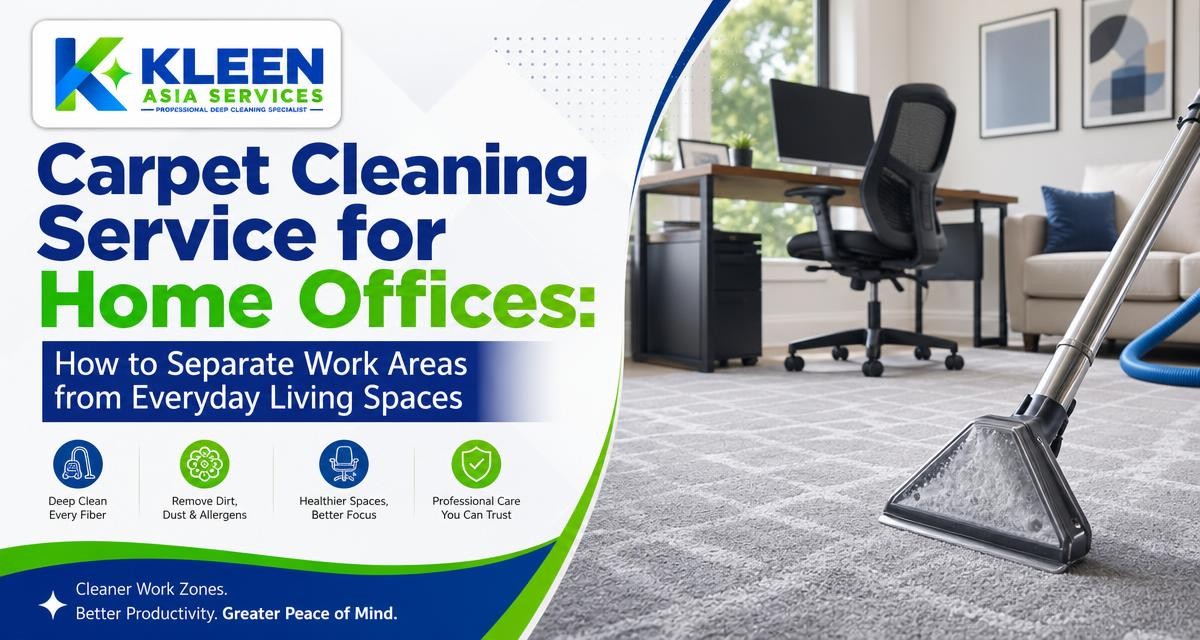
A home office may occupy a dedicated room, a corner of the living room or a small section of a bedroom. Because the space often serves more than one purpose, arranging a carpet cleaning service requires more than simply describing the carpet size. A clear explanation of the work zone, furniture placement, daily foot traffic and access conditions helps a professional cleaner understand what needs attention and how the area should be prepared.
Why home office carpets need a clear cleaning plan
Remote workers use their work areas differently from the rest of the home. A desk chair may roll over the same section of carpet for several hours each day, while the route to the desk may also be used by family members, visitors or pets. At the same time, the surrounding carpet may be part of an everyday living space where people eat, relax and move between rooms.
This combination creates several cleaning zones rather than one uniform area. The carpet beneath a desk, the path leading to the workspace and the open area around it may each have different furniture, access and foot-traffic requirements. Describing these differences before requesting professional cleaning makes the conversation more practical and helps avoid confusion on the day of service.
Start by identifying the carpeted work zones
Dedicated home office
If your home office has its own room, explain whether the entire floor is carpeted or only part of it. Mention the position of the desk, office chair, shelving, filing cabinets and any other large items. A dedicated room may be easier to describe, but access can still depend on narrow doorways, stairs, built-in storage or furniture that cannot be moved.
It is also useful to distinguish between the main working area and less-used sections of the room. For example, the carpet behind a desk may receive little direct traffic, while the area under and around the chair may be used constantly. This information gives the cleaner a more accurate picture than a general statement such as “the office carpet needs washing.”
Workstation in a living room
A desk placed in a living room creates a shared zone. The carpet may be used for working during the day and for family activities in the evening. When requesting a carpet cleaning service, describe the boundaries of the work area and explain which furniture belongs to the office setup and which furniture belongs to the living room.
For instance, you might identify the desk, chair mat, monitor stand and nearby storage as the work zone, while the sofa, coffee table and television area form the living zone. This distinction helps establish which items may need to be moved and which should remain in place.
Bedroom, hallway or open-plan workspace
Some home offices are arranged beside a bed, along a hallway or within an open-plan apartment. These layouts often have limited separation between work and personal areas. Describe the full carpeted section that requires attention, including any path used to reach the desk and any nearby surface that is regularly exposed to shoes or outdoor dust.
In an open-plan space, measurements or simple room descriptions can be helpful. You do not need technical drawings. A short explanation of the room layout, the location of the desk and the position of the nearest entrance is usually enough to begin a useful discussion with a professional cleaner.
Explain furniture placement before booking
Furniture is one of the most important practical details when arranging a carpet washing service. A cleaner needs to know whether the carpet is exposed, partly covered or located beneath heavy furniture. Large desks, bookcases, cabinets and sofas may not be easy to move, and some items may need to remain exactly where they are to protect equipment or avoid damage.
Prepare a simple list of the main items in the area. Include the following details where relevant:
- The number and approximate size of desks.
- Whether the office chair has wheels and moves across the carpet.
- Any chair mat, floor protector or loose rug placed over the carpet.
- Bookcases, cabinets or storage units that sit directly on the floor.
- Electronic equipment, cables or power strips close to the cleaning area.
- Furniture that can be moved and furniture that must remain in position.
Remove small personal items from the floor before the appointment. Books, bags, toys, paper boxes and loose cables can make access more difficult. Clearing these items also helps separate ordinary tidying from the actual carpet cleaning work.
Desk chairs and chair mats
Desk chairs deserve special attention because they are repeatedly moved across a small section of carpet. If a chair mat is used, tell the cleaner whether it can be removed. The condition of the carpet underneath may differ from the exposed area, so identifying the mat in advance gives a clearer picture of the work area.
Chair wheels can also affect access. A chair may appear light but still need to be moved away from the cleaning zone. If it is connected to a standing desk, monitor arms or other equipment, explain the arrangement rather than attempting to disconnect anything you are not comfortable handling.
Describe foot traffic honestly
Foot traffic is not limited to the number of people who work in the room. Consider how often the area is crossed, whether people enter from outdoors, and whether the office is also used by children, pets or visitors. A home office beside the front door will usually have a different traffic pattern from a study at the back of the home.
When describing the carpet to a professional, be specific about the routes that receive the most use. These may include:
- The path from the entrance to the desk.
- The area beneath a rolling chair.
- The route between the office and kitchen.
- The space beside a sofa or dining table in a shared room.
- The area near a balcony, patio or frequently opened door.
Do not assume that every visible mark has the same cause. Food or drink spills, tracked-in dirt, general dust, flattened carpet fibres and marks from furniture may require different discussion. Tell the cleaner what you know about the affected areas and avoid promising that a particular stain will disappear. A professional can explain what may be appropriate after considering the carpet and the condition of the area.
Access details that affect a home office cleaning visit
Access is easy to overlook when the office is inside a home. However, the route from the entrance to the carpeted work area may pass through several rooms. A cleaner may need to bring equipment through a corridor, lift or staircase, so advance information can make the visit easier to organise.
Share practical details such as:
| Access detail | Why it matters | What to explain |
|---|---|---|
| Entrance route | The work area may not be close to the main entrance. | Describe the rooms, corridor or stairs between the entrance and office. |
| Parking or building entry | Apartment and office buildings may have controlled access. | Explain visitor procedures, loading restrictions or security requirements if applicable. |
| Doorways and staircases | Large equipment may need a clear route. | Mention narrow doors, steps, lifts or other possible obstacles. |
| Power and water access | The cleaner may need to understand the available working environment. | Ask what access is needed and identify any relevant restrictions before the visit. |
| Work-from-home schedule | Calls and meetings may continue during the appointment. | Explain whether the room must be available at a particular time or whether another workspace is needed. |
If you live in a managed building, check whether the building has rules for service visits. This may include lift bookings, visitor registration or permitted access routes. These arrangements are not part of carpet cleaning itself, but resolving them early can prevent delays and make the appointment more comfortable for everyone.
Prepare the work area without disrupting your equipment
Preparation should make the carpet accessible while keeping your work equipment safe. Back up important files before moving a computer, disconnect devices only if you know how to do so safely, and keep cables away from the area being cleaned. If a desk cannot be moved, tell the cleaner rather than trying to lift it with equipment still connected.
Remove portable items from the floor and place them in a dry, protected area. This includes power adapters, headphones, document trays, wastebaskets and personal belongings. If you use a standing desk or a mobile workstation, return it to a position that leaves a clear route around the carpeted section.
What to do with sensitive items
Paper documents, notebooks and electronic accessories should be stored away from the cleaning area. If your work involves confidential information, clear the desk and surrounding floor before the appointment. This is a sensible privacy measure as well as a way to reduce clutter.
Keep items that should not be exposed to moisture or cleaning products away from the carpet. If you are unsure whether a particular item can remain in the room, ask about preparation requirements when contacting the service provider.
How to explain the home office clearly when requesting service
A useful enquiry does not need to be long. It should give enough information for the cleaner to understand the room, the carpet and the access conditions. You can use this structure:
- Describe the room: Say whether it is a dedicated office, a bedroom workspace, a living-room corner or an open-plan area.
- Describe the carpet: Explain whether the whole room or only part of it is carpeted.
- Identify the work zone: Point out the area beneath the desk, chair and storage units.
- Explain traffic: Mention daily chair movement, household foot traffic, pets or routes from outdoor entrances.
- List furniture: State what can be moved and what must remain in place.
- Describe concerns: Mention visible marks, spills, odours or areas that appear more heavily used without guaranteeing a particular result.
- Confirm access: Include stairs, lifts, narrow entrances, building rules and any scheduling restrictions.
Photographs may also help if the service provider accepts them, especially when the workspace is crowded or difficult to describe. Include a wider view showing the room layout and closer views of specific areas. Images should support your explanation, not replace details about access and furniture.
Carpet cleaning service or carpet washing service?
People use different terms when searching for professional help. “Carpet cleaning service” and “carpet washing service” may both describe the need to have a carpet professionally cleaned, but the important issue is the information behind the request. Explain the location, material if known, size, furniture and condition rather than relying on the service label alone.
For a home office, the most useful enquiry focuses on the working environment. Tell the provider whether the carpet is fixed or a loose rug, whether a chair mat covers part of it, and whether the area must be ready for work again after the appointment. The cleaner can then discuss the service details and preparation needed for the particular space.
Planning around remote work
Cleaning a home office can temporarily affect meetings, calls and concentration. Plan for the possibility that the room may not be available during the appointment and ask the provider what preparation or access is expected. If the office is part of a shared room, decide how household members will move around the area while work is taking place.
It is also sensible to plan where equipment will go while the carpet is being cleaned. A temporary table, another room or a cleared section of hard flooring may help you continue essential work. Avoid moving heavy electronics repeatedly if doing so creates a safety risk. Good scheduling begins with an honest description of how the room is used.
When a professional carpet cleaning service may be useful
Regular vacuuming and prompt attention to small spills are part of ordinary carpet care, but they may not address every concern in a busy home office. Professional cleaning may be worth discussing when the carpet has a heavily used chair area, visible soiling, persistent household odours or a workspace that has become difficult to maintain.
Kleen Asia Carpet Cleaning & Upholstery Cleaning provides carpet cleaning services for homes and offices in Kuala Lumpur and Selangor. The company also presents sofa and upholstery, mattress, curtain and rug cleaning services. If your home office shares space with upholstered furniture or a rug, you can describe the wider cleaning needs when making an enquiry rather than treating every item as a separate problem.
A simple checklist before requesting service
- Mark the boundaries of the carpeted work area.
- Note the position of the desk, chair, mat and storage furniture.
- Identify the busiest walking routes.
- Remove loose objects, cables and personal items from the floor.
- Decide which furniture can be moved safely.
- Record visible marks, spills or odour concerns.
- Check stairs, lifts, parking and building access requirements.
- Explain whether the room is used for calls or meetings.
- Ask what preparation is required before the appointment.
A well-prepared description helps a carpet cleaning service understand the difference between a private office and a shared living area. It also gives you a clearer basis for discussing furniture, access and scheduling before any work begins.
Frequently asked questions
Should I move my desk before booking a carpet cleaning service?
Not necessarily. Tell the provider what can be moved and what must remain in place. Desks with connected equipment should not be moved without suitable preparation.
Do I need to empty the entire home office?
You should remove loose items from the floor and protect sensitive equipment or documents. Large furniture can be discussed with the cleaner in advance.
What should I mention about an office chair?
Explain whether the chair has wheels, whether it moves over a particular section repeatedly and whether a chair mat covers part of the carpet.
Yes, but describe which area is used for work and which furniture belongs to the living space. This helps clarify the cleaning boundaries and access requirements.
Should I mention stains or odours before the appointment?
Yes. Describe what you know about the affected area and when the issue occurred, if known. Avoid assuming that a specific stain or odour can be completely removed.
What access information should I provide?
Explain the route from the entrance to the workspace, including stairs, lifts, narrow doorways, building procedures and any restrictions that could affect equipment access.
Related posts:
 Cleaning Carpet Service for Retail Areas: How to Divide Entrances, Display Zones and Staff Spaces
 Carpet Washing Service for Homes: What to Check Before Choosing a Cleaning Approach
 Carpet Cleaning Services Near Me: How to Compare Care for Home and Office Carpets
 Carpet Cleaning Near Me in Cheras: How to Plan Care for Apartment Common Areas