


A curtain cleaning service does more than treat fabric. The room where curtains hang affects how they are assessed, accessed and prepared for cleaning. Bedroom curtains may be exposed to overnight use, while living room curtains often deal with daylight, open windows, visitors and regular movement around the space. Understanding these differences helps homeowners, tenants and offices prepare more effectively for professional curtain cleaning.
Why the room matters before curtain cleaning
Curtains can look similar from a distance, but their cleaning requirements are influenced by their surroundings. A bedroom curtain may hang close to a bed, wardrobe or dressing area. A living room curtain may cover a larger window beside a sofa, television, shelf or balcony door. These nearby items affect access and the way the space should be cleared.
Room use also influences what information is useful before a curtain washing service begins. How often the curtains are opened, whether the windows are regularly kept open, and whether the room is used by children or pets can help describe the cleaning situation. This does not determine a guaranteed result, but it gives the cleaning team a clearer starting point.
| Preparation factor | Bedroom curtains | Living room curtains |
|---|---|---|
| Common nearby furniture | Beds, wardrobes, dressing tables and bedside furniture | Sofas, coffee tables, cabinets, shelves and entertainment units |
| Access concerns | Limited space beside the bed or between furniture and the window | Wide curtains may require more floor space around seating and window areas |
| Room-use considerations | Cleaning may need to fit around sleeping, dressing or children’s routines | Cleaning may need to fit around relaxation, guests, meals or family activities |
| Useful information | Fabric label, lining, blackout construction and contact with the bed | Fabric label, sun exposure, window access and contact with sofas or flooring |
| Items to move | Bedding, lamps, chairs, storage items and personal belongings | Cushions, tables, ornaments, electronics and movable seating |
Preparing bedroom curtains for a cleaning service
Bedrooms usually contain several items close to the window. Beds may extend across much of the room, and wardrobes or dressing tables can make the curtain area difficult to reach. Before a curtain cleaning service arrives, remove small items from nearby surfaces and create a clear path to the window. Where practical, move lightweight furniture away from the curtains without blocking doors or walkways.
Bed linen and personal items should also be kept away from the treatment area. This includes clothing, pillows, toys, cosmetics and items placed on bedside tables. Clearing these objects reduces the chance of accidental contact and gives the cleaning team a better view of the curtain’s full length, hem and surrounding fixtures.
Consider the bedroom’s daily routine
A bedroom is often used at predictable times for sleeping, dressing and getting ready for work or school. Think about when the room can remain undisturbed during preparation and cleaning. If the bedroom belongs to a child, make sure toys and fragile belongings are stored before work begins. If the curtains are next to a study desk or dressing area, clear the desk and move loose papers or electronic accessories.
Room access can be especially important when curtains are long or extend close to the floor. The cleaning team may need to inspect the lower edge, the space behind the curtain and the area around the track or rod. Keeping the floor free of shoes, baskets and storage boxes makes this inspection easier.
Bedroom fabric and lining information
Tell the service provider if the bedroom curtains have a blackout lining, thermal backing, delicate surface, pleats or attached decorative details. A fabric label can provide useful information about fibre content and care instructions. If the label is missing, mention that when arranging the appointment so the curtain can be assessed carefully.
Blackout curtains deserve particular attention because their backing may not behave in the same way as the face fabric. Do not assume that a method suitable for a lightweight decorative curtain is suitable for a lined bedroom curtain. Sharing photographs or describing the construction in advance may help the provider understand the job, although the final approach should depend on an assessment of the actual curtains.
Preparing living room curtains for professional cleaning
Living rooms often have more open floor space than bedrooms, but they can contain more furniture and decorative objects. Sofas, armchairs, coffee tables, cabinets and television units may sit close to the curtains. Remove cushions, throws, ornaments and small objects from the immediate work area. If a sofa is directly below or beside the curtains, move it only if it can be done safely without damaging the floor or furniture.
Living room curtains may also be wider, fuller or arranged in multiple panels. Take note of how each panel hangs and whether there are separate sheers, valances or tiebacks. Keeping detachable accessories together and identifying their original position can make it easier to put the window arrangement back in order later.
Account for windows, doors and regular movement
Many living rooms connect to balconies, patios or other parts of the home. A curtain may cover a door rather than a fixed window, which means the area may be used frequently. Clear the doorway and tell the cleaning provider if the curtains are regularly opened and closed throughout the day. This information helps explain the type of handling the fabric receives.
Also consider nearby fans, air-conditioning units, speakers and electrical equipment. Keep cables organised and move small electronics away from the treatment area. Large or fixed items should be pointed out before cleaning so the provider can plan access around them.
Sun exposure and visible marks
Living room curtains are often positioned in the most visible part of the home. They may receive daylight through the window and can show dust or marks more clearly against bright fabric. Before cleaning, identify areas that need attention, such as the lower hem, edges touched during opening, or sections near a frequently used door.
Describe the history of any visible mark as accurately as possible. A stain caused by food, drink, moisture or an unknown substance may require different consideration. Avoid applying a household stain remover immediately before professional cleaning unless the provider has advised you to do so. An unrecorded product can change the fabric’s condition or make assessment more difficult.
Access and fixtures: what to check in either room
Preparation is not limited to moving furniture. Curtains may be attached to rods, tracks, rings, hooks, tabs or other fittings. The method used to clean them may depend on how securely they are installed and whether they can be handled safely in place. Do not remove fittings or curtains if doing so could damage the fabric, wall, ceiling or hardware.
Before arranging a curtain cleaning service, inspect the area around the window and note any access limitations. A high ceiling, narrow gap, built-in cabinet or heavy furniture can affect the practical working space. Share these details when requesting service information rather than waiting until the appointment.
- Check whether the curtain is attached to a track, rod, rings or another fixture.
- Note whether the window area is behind a bed, sofa, cabinet or desk.
- Identify fragile decorations, mirrors or wall-mounted items near the curtains.
- Clear the floor of loose belongings, baskets, shoes and small furniture where possible.
- Keep pets and children away from the immediate work area during preparation.
- Make the fabric label, if available, easy to show the cleaning provider.
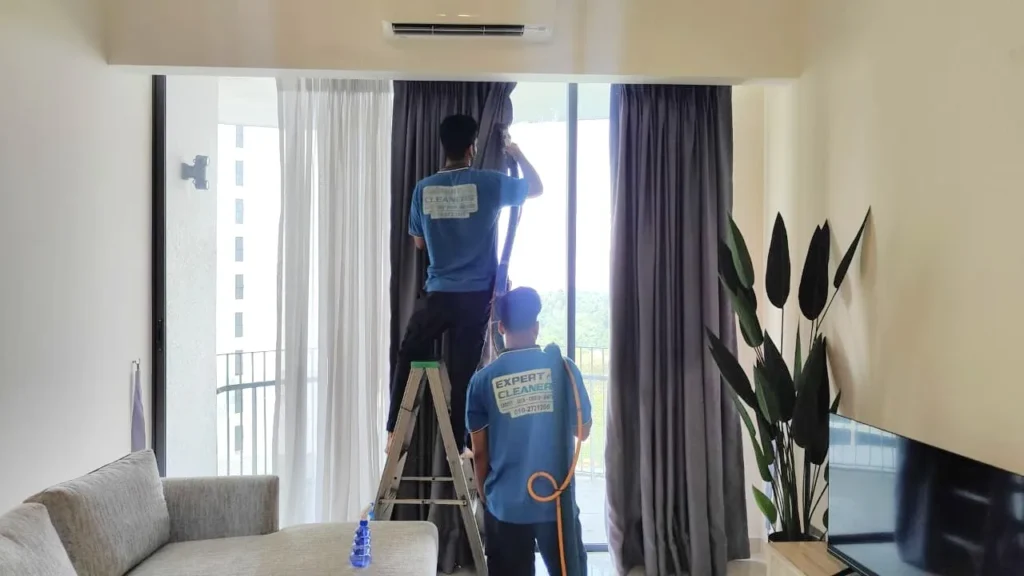
Fabric information to provide before a curtain washing service
Fabric information is one of the most useful details a customer can provide. Look for a care label, purchase information or any notes supplied when the curtains were made. Useful details include the material, lining, colour, pleat style, attached trims and whether the curtains were custom-made.
Tell the provider about previous cleaning, repairs, water exposure, fading, loose seams or damaged hooks. Existing weaknesses may not be obvious when the curtains are hanging. A clear description helps separate pre-existing issues from concerns noticed after cleaning.
| Information to share | Why it helps |
|---|---|
| Fabric or care-label details | Provides a reference for assessing suitable handling and care requirements. |
| Lining or blackout backing | Shows that the curtain has more than one layer with potentially different properties. |
| Previous cleaning | Gives context about earlier treatment and the fabric’s maintenance history. |
| Stains and their likely source | Helps the provider identify areas requiring closer inspection. |
| Loose seams, hooks or damage | Allows existing weaknesses to be noted before work begins. |
| Fading or colour variation | Documents the curtain’s present condition before cleaning. |
How room use changes the cleaning conversation
The same curtain can require a different preparation conversation depending on the room. In a bedroom, the main concern may be protecting bedding, clothes and personal belongings while maintaining access around a crowded window. In a living room, the focus may be on moving seating, protecting electronics and keeping a frequently used area organised.
Room use can also affect the order in which you prepare the home. A bedroom may be easier to clear by removing bedding and closing a wardrobe first. A living room may require the television area, seating and decorative shelves to be addressed separately. A simple room-by-room plan prevents rushed movement of furniture and reduces the risk of leaving fragile items in the work zone.
Homes with children or pets
Children and pets can bring extra movement near curtains. Curtains may be pulled, brushed against or touched at the lower edge. Before a curtain cleaning service, remove toys and pet items from the window area and arrange a separate space for children or animals while the work is taking place.
Tell the provider if the curtains are regularly exposed to pet contact, food marks or heavy handling. This is useful background information, but it should not be treated as a promise of complete stain, odour or allergen removal. The fabric, condition and source of the issue all affect what can be achieved.
Homes with regular visitors or office-style use
A living room used for entertaining may have curtains opened and closed often, while a home office or reception area may have furniture positioned close to the window. In these situations, identify the sections that receive the most handling and explain how the space is normally used.
For offices, preparation may include clearing desks, reception counters and meeting areas near the curtains. Staff should know which items can be moved and which must remain in place. A designated contact person can help answer questions about access, fixtures and the room’s normal schedule.
What to do on the day of professional curtain cleaning
On the day of service, keep the agreed rooms accessible and make sure the provider can reach the curtains without navigating unnecessary obstacles. Confirm the fabric information and point out marks, repairs or areas of concern. If the furniture could not be moved, explain why so the team can work with the available space.
- Clear small belongings from the window area.
- Move lightweight furniture only where it is safe and practical.
- Secure children and pets away from the work zone.
- Show care labels, fabric details and any previous cleaning information.
- Point out stains, odours, loose fittings, damage or discolouration.
- Confirm which curtain panels, sheers, tiebacks or related items are included.
- Ask about any care instructions to follow after the cleaning session.
Do not promise yourself a particular result based only on the appearance of a stain or the type of room. A professional assessment is more reliable than guessing whether a mark will disappear or how the fabric will respond. The provider can explain what can reasonably be considered after reviewing the curtains and their condition.
Choosing a curtain cleaning service for different rooms
When comparing a curtain cleaning service or curtain washing service, look for clear communication about fabric information, access and preparation. A useful provider should have an opportunity to understand whether the curtains are in a bedroom, living room, office or another setting. The room context is part of the job, not an unnecessary detail.
Kleen Asia Carpet Cleaning & Upholstery Cleaning provides curtain cleaning services presented as curtain steam cleaning. The company serves homes and offices in Kuala Lumpur and Selangor, with service information also covering areas such as Putrajaya and Cyberjaya. Customers can describe the room, curtain construction and access conditions when discussing their cleaning needs.
Whether the curtains hang beside a bed or behind a sofa, good preparation starts with accurate information and a clear work area. By considering room use, nearby furnishings, fixtures and fabric details, you can make the cleaning process easier to plan and reduce avoidable complications.
Frequently asked questions
Should bedroom curtains be prepared differently from living room curtains?
Yes. Bedroom preparation usually focuses on clearing beds, wardrobes, clothing and personal belongings. Living room preparation often involves sofas, tables, electronics, ornaments and larger areas used for daily activities.
Do I need to remove curtains before a curtain cleaning service arrives?
Not necessarily. The correct approach depends on the curtain, its fixtures, access and the service provider’s assessment. Do not remove curtains or hardware if doing so could damage the fabric, wall or fittings.
What fabric information should I provide?
Share the care label, fabric type if known, lining or blackout details, previous cleaning history and any repairs or damage. If the label is missing, mention that before the appointment.
What should I do about stains on living room curtains?
Point out each stain and explain what caused it if you know. Avoid applying an additional household product immediately before professional cleaning unless the provider recommends it.
Can furniture stay in the room during curtain cleaning?
It may be possible, but furniture can limit access. Move lightweight items away from the curtains where safe, and tell the provider about large or fixed furniture that cannot be moved.
Are blackout curtains prepared in the same way as lightweight curtains?
Not always. Blackout curtains may have a separate backing or multiple layers. Show the provider the construction and care information so the curtains can be assessed appropriately.
Does room use guarantee a particular cleaning result?
No. Room use provides useful context, but results depend on the fabric, condition, stains, previous treatment and other factors. A provider should assess the curtains rather than guarantee a specific outcome in advance.
Related posts:
 Curtain Cleaning Service for Homes and Offices: Questions to Ask Before Booking
 Cleaning Curtain Service in Mont Kiara: How to Plan Care Around Fixtures and Room Use
 Curtain Cleaning Service Near Me: What to Check for Large Windows and Installed Curtains
 Curtain Cleaner for Homes and Offices: What to Review Before Arranging Care