

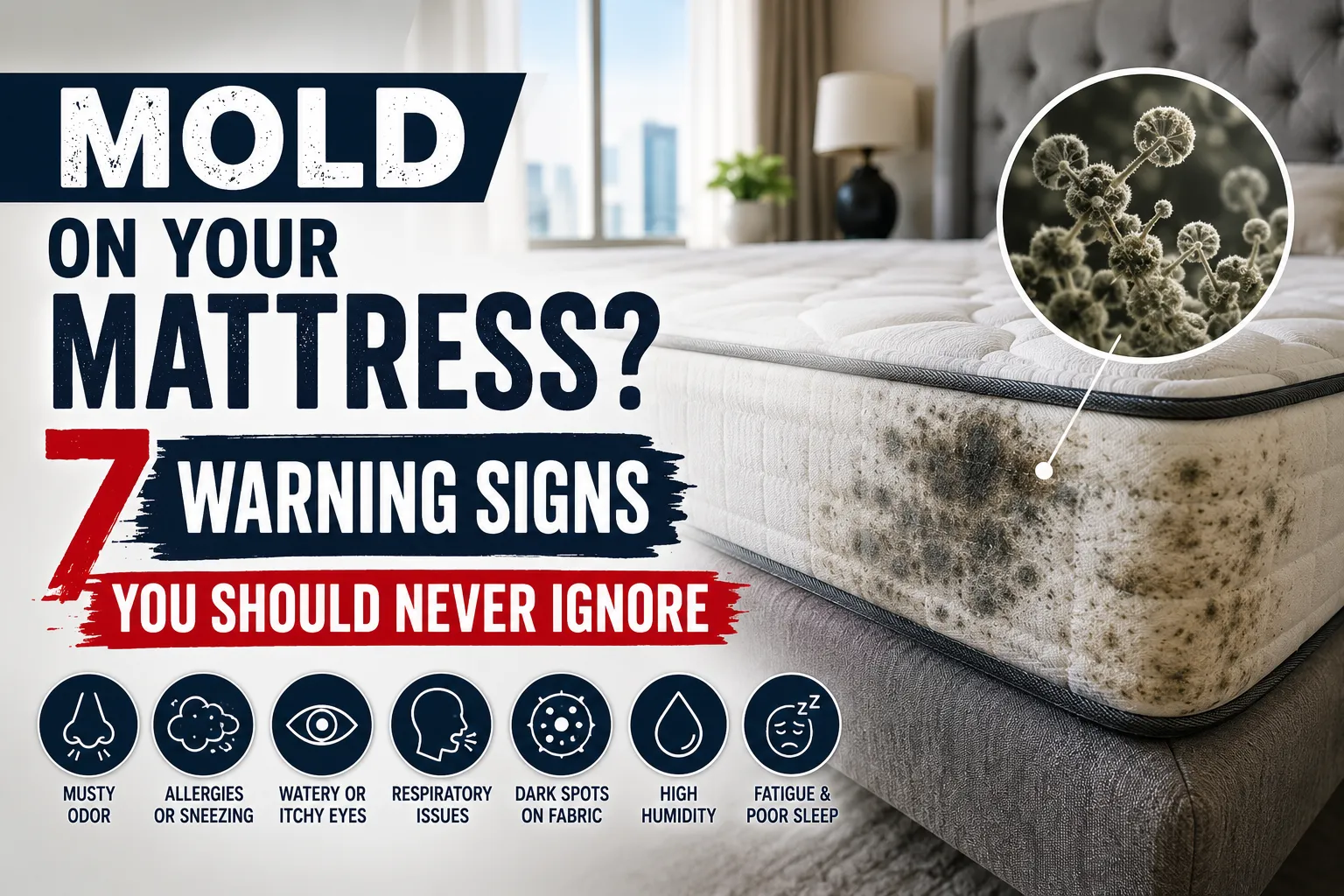
Mold on your mattress isn’t just a gross thought-it’s a common problem that can seriously mess with your sleep and home hygiene if you don’t catch it early. You need to know the warning signs so you can protect your health. Ignoring mold can lead to serious health issues and a damaged mattress.
Key Takeaways:
- Mold loves a damp environment, and guess what? Malaysia’s humidity makes our mattresses a prime target. You’re probably thinking, “My mattress is fine!” but those tiny spores are sneaky. We’re talking about anything from a musty smell to actual visible spots, and sometimes it’s even hiding right under your sheets or in the mattress seams. So, if your bedroom sometimes smells a little off, or you notice some weird discoloration, it’s really worth a closer look.
- Spotting mattress mold isn’t always obvious, and it’s not just about seeing green or black splotches. Sometimes it’s that persistent musty odor you just can’t shake, or maybe you’re waking up with a stuffy nose or itchy skin more often. These are your body’s little alarms going off, telling you something’s up. Pay attention to those subtle cues like worsening allergies or even just a general feeling of not quite being well – your mattress could be the culprit.
- Sleeping on a moldy mattress is a big deal for your health, way more than just a little sniffle. Mold spores can trigger all sorts of nasty stuff, like asthma attacks, respiratory infections, and even skin irritations. Think about it – you’re spending a third of your life breathing in whatever’s growing in there. Kids and anyone with existing health issues are especially vulnerable, so ignoring these signs isn’t just uncomfortable, it can be genuinely dangerous.
- Trying to clean mold yourself often just doesn’t cut it. You might wipe away what you see, but those tiny mold spores are really good at burrowing deep into the mattress fibers. A DIY job usually leaves a ton of mold behind, and it’ll just grow back, sometimes even worse. It’s like trying to fix a leaky pipe with a band-aid; it might seem okay for a bit, but the real problem is still there. Plus, using the wrong cleaning agents can actually damage your mattress.
- Getting a professional mattress cleaning service is honestly the best way to deal with mold. These pros have special equipment and solutions that can penetrate deep into the mattress, extracting all those hidden spores and moisture. They don’t just clean the surface; they sanitize and dry it properly, which is really important for preventing future mold growth. A good mattress cleaning service near me can make your bed feel fresh and safe again, protecting your health and extending the life of your mattress.
7 signs you’ve actually got a mold problem
You might be wondering, “Is that just dust, or something worse?” It’s easy to dismiss a faint smell or a tiny spot, but your mattress could be harboring a hidden mold colony. Pay attention to these common warning signs, because ignoring them can seriously impact your health and your sleep quality.
Many people don’t realize how quickly mold can take hold, especially in a dark, warm environment like your bed. You’ll often notice a combination of issues, not just one, so keep an eye out for a persistent musty smell, those tell-tale dark or fuzzy spots, a strange damp feeling, and any new allergic reactions.
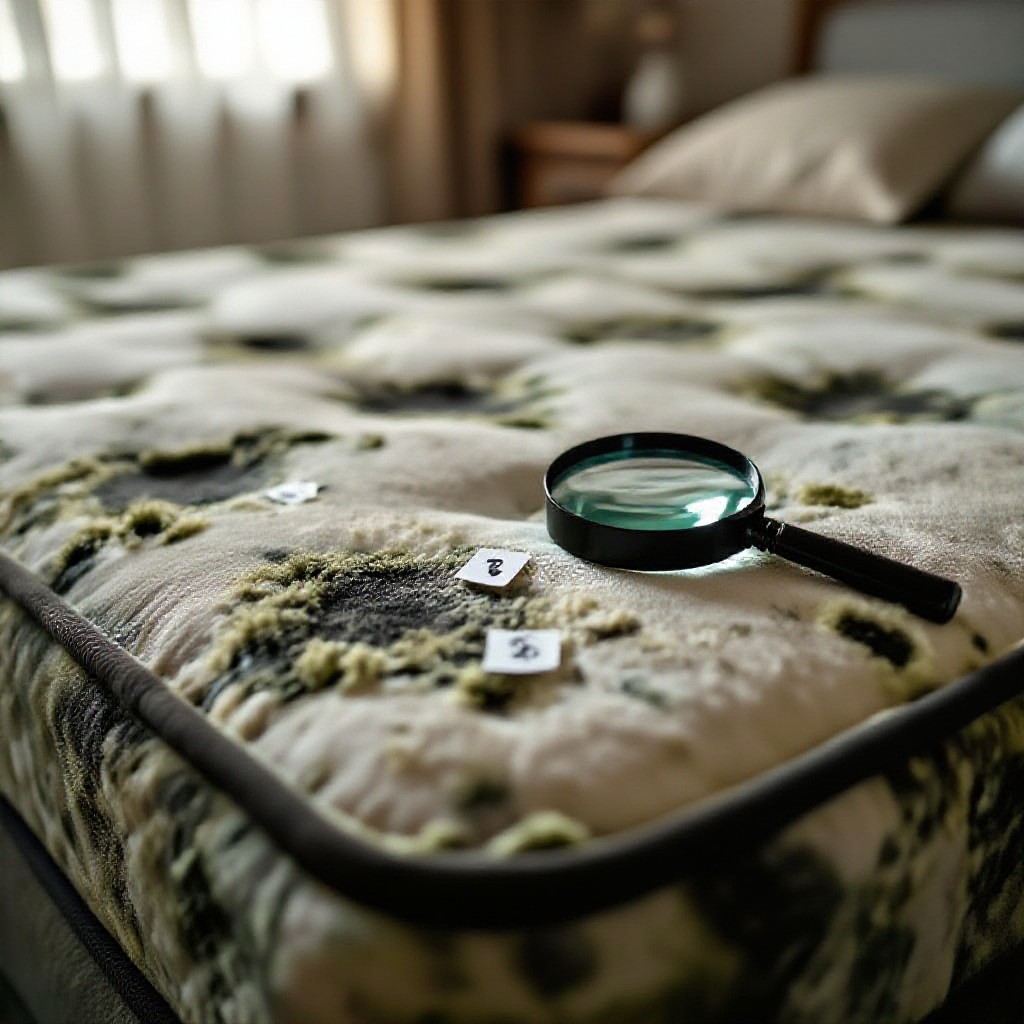
Identifying those weird dark spots
Sometimes, you might just see a little smudge and think nothing of it. But if you’re spotting visible dark or fuzzy spots on your mattress, especially in areas where you sweat or where there’s less airflow, that’s a huge red flag. This isn’t just dirt; it’s often the mold itself, growing right there.
Those spots can range in color, from black and green to even pink or white, and they might appear in patches or as tiny, scattered specks. Don’t try to just wipe them away without protective gear – you could release spores into the air.
That funky smell you can’t ignore
One of the most immediate and undeniable signs you’ve got a mold problem is a persistent musty smell. It’s not just a faint odor; it’s a distinct, earthy, sometimes sweet-and-sour smell that won’t go away, no matter how much you air out the room or change your sheets. This scent is actually caused by volatile organic compounds (VOCs) released by the mold.
That smell can become even more pronounced when you lie down or press on the mattress, releasing more of those mold spores and VOCs into your breathing space. It’s a smell that signals a serious issue, telling you that mold is actively growing and thriving within the fibers of your bed. You might even notice the smell lingering in your clothes or hair after you’ve been in bed for a while, a sure sign the problem is pervasive.
Is this stuff making you sick? The real health risks
You might be wondering if that musty smell is just an annoyance or something more. Moldy mattress health risks are serious, extending far beyond a simple sniffle. In fact, sleeping on a mold-infested surface can lead to a whole host of problems you really don’t want to deal with. For more general information about identifying mold, check out these Signs of Mold You Should Never Ignore.
This isn’t just about feeling a bit under the weather; we’re talking about potential long-term health impacts. You could experience everything from persistent skin issues to severe breathing difficulties, all stemming from microscopic spores in your bed.
Breathing problems in the middle of the night
Waking up gasping for air or with a persistent tickle in your throat isn’t normal, is it? Mold on your mattress can lead to significant respiratory issues, making every breath a struggle, especially when you’re trying to sleep.
You might find yourself coughing throughout the night, a chronic cough that just won’t quit. For individuals with existing conditions, mold can cause significantly worsened asthma symptoms, turning your bed into a trigger zone.
Why your skin might be acting up
Ever notice your skin feeling itchy, red, or just generally irritated when you wake up? That could be your body reacting to the mold spores embedded in your mattress. You see, direct contact with mold can cause uncomfortable skin irritation.
Your skin is your body’s largest organ, and it’s constantly in contact with your mattress for hours every night. If that surface is covered in mold, those spores can transfer to your skin, triggering reactions like rashes or persistent itching that leave you feeling miserable.
Honestly, DIY cleaning just doesn’t cut it
You might think a good scrub and some cleaner will take care of the mold on your mattress, right? So many people try mattress mold removal themselves, but here’s the uncomfortable truth: DIY cleaning just won’t remove mold completely. You’re only seeing the surface, and that’s just part of the problem.
Surface scrubbing, no matter how hard you go at it, simply can’t reach the spores buried deep within the mattress layers. It’s like trying to clean a pond by just skimming the top – the real gunk is down below, out of sight.
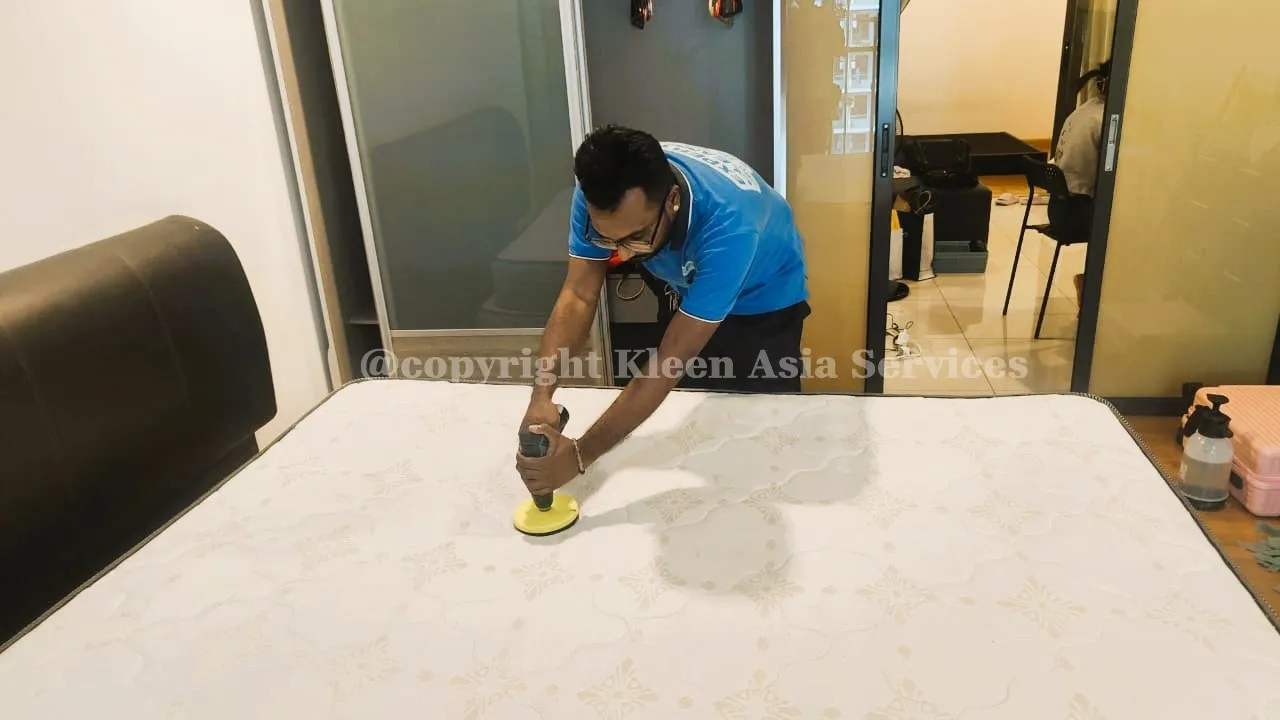
Why surface cleaning is just a temporary fix
Imagine trying to fix a leaky pipe with just a bit of tape. That’s vitally what you’re doing with surface cleaning on your mattress mold. You might get rid of the visible signs, making you *think* the problem is solved.
But the actual mold roots, those sneaky spores, are still chilling deep inside your mattress. This means the mold will almost certainly return, often worse than before, because you haven’t addressed the real issue.
Leaving those hidden spores behind is genuinely dangerous for your health. They’re not just sitting there idly; they’re waiting for the right conditions to multiply, releasing more allergens and irritants into your bedroom air. You’re vitally sleeping on a ticking time bomb of potential respiratory issues and allergic reactions.
These deeply embedded spores are why a professional approach is so critical. They can continue to grow and spread, compromising your indoor air quality and potentially triggering or worsening conditions like asthma or allergies. You might not see them, but your lungs will definitely feel their presence.
Why calling a professional mattress cleaning service is worth it
You might think a quick scrub with some household cleaner will fix your mold problem, but it just won’t cut it. Tackling mold on your own often leaves spores behind, setting the stage for a quick return. To truly eliminate the problem and understand Mattress mould; Why it happens and how to treat it, you need something much more powerful.
This isn’t just about surface cleaning; it’s about getting deep into the mattress. Professional services offer the kind of thorough cleaning you simply can’t achieve yourself, making sure your sleeping environment is genuinely safe.
High-tech extraction and sanitization
Thinking about blasting mold with your carpet cleaner? That’s a huge mistake. Professional mattress cleaning services use industrial equipment specifically designed to extract mold from deep within the mattress core. This isn’t your average vacuum; it’s a powerful system that sucks out moisture and spores.
They don’t just extract; they sanitize the core, too. This process kills lingering mold spores and bacteria, stopping future growth in its tracks and leaving your mattress truly clean.
Finding the right experts in your area
So, how do you find someone you can trust with your mattress? The best way to ensure your bed is truly safe is by searching for a mattress cleaning service near me. You want local experts who know their stuff.
A local service means quicker response times and often a better understanding of regional issues that might contribute to mold growth. They’re also easier to vet, and you can check local reviews to see what others in your community are saying about their service and results.
How to keep the mold away for good
Keeping mold from making a home in your mattress isn’t as hard as it sounds, but it does take a little proactive thinking. You’ll want to focus on preventing the moisture that mold loves, ensuring your bedroom environment stays dry and fresh. Homeowners have some great tools at their disposal to fight this battle effectively.
You can definitely create an unfriendly environment for mold spores, making sure they never get a chance to settle down. This means actively controlling the air around your mattress and taking steps to block any potential moisture. Think of it as building a fortress against those tiny, unwelcome invaders.
Airing out your bedroom the right way
Opening windows daily, even for just 10-15 minutes, can make a huge difference in your room’s air quality. Proper room ventilation is a simple yet powerful tactic to reduce humidity and keep stale air moving out. You’re letting fresh air in, which naturally helps dry out any lingering dampness.
Think about how stuffy a closed-up room can get, right? That’s exactly what mold thrives on. So, throw open those curtains and crack a window whenever you can, especially after you’ve been sleeping and the room’s been sealed up for hours. It really helps.
The magic of dehumidifiers and protectors
Dehumidifiers are absolute game-changers for controlling the air, especially if you live in a humid climate. These devices actively pull excess moisture right out of the air, significantly lowering the humidity levels in your bedroom. This makes it incredibly difficult for mold to grow.
Investing in moisture-resistant mattress protectors is another smart move. These protectors create a barrier, shielding your mattress from spills, sweat, and general environmental humidity. They’re like a raincoat for your mattress, keeping it dry and clean.
Using a dehumidifier, especially in damp basements or humid climates, can keep your bedroom’s relative humidity below 60%, which is the sweet spot for mold prevention. Pairing this with a good quality, moisture-resistant mattress protector provides a formidable defense. These protectors don’t just stop liquids; they also help reduce the amount of body moisture that can seep into your mattress, giving mold one less thing to feed on.
To wrap up
Conclusively, ignoring mold on your mattress isn’t just a minor oversight; it’s a direct threat to your well-being. You might think a little discoloration won’t hurt, but you’re really putting your health at risk by letting it linger. Dealing with mattress mold immediately is the only way to protect your health and make sure you don’t have to throw away an expensive mattress prematurely.
So, don’t put it off. You’ve seen the warning signs, and now you know what you need to do. Taking quick action not only keeps you healthy but it also saves you the headache and expense of replacing a mattress you really didn’t need to throw out.
FAQ
Q: I woke up feeling a bit stuffy and noticed a faint, musty smell around my bed. Could this be mold on my mattress, and what are the first things I should look for?
A: That musty smell is definitely a red flag, and it’s smart to investigate. You’re probably experiencing one of the earliest signs of mold. Start by visually inspecting your mattress, especially around the seams, under the covers, and on the sides. Look for any discoloration – green, black, pink, or white spots. Sometimes it just looks like a faint smudge at first. You might also notice a damp or clammy feeling on the mattress surface, even if the room isn’t particularly cold. Pay attention to how you feel too. Are you waking up with unexplained congestion, a sore throat, or itchy eyes? Those respiratory symptoms can often point to mold exposure. The smell and those subtle physical changes are your body’s way of telling you something’s up.
Q: Malaysia’s humidity is no joke! I’m worried about mold because of the climate here. What specifically makes mattresses such a prime target for mold in a humid environment like ours, and how can I really tell if the humidity is causing mold on my mattress versus just general dampness?
A: You’re absolutely right to be concerned about Malaysia’s humidity; it’s practically an open invitation for mold. Mattresses are particularly vulnerable because they absorb moisture from the air and from our bodies as we sleep. The lack of proper air circulation underneath and around a mattress, especially if it’s on a solid platform bed, traps that moisture. This creates a warm, dark, and damp environment – the perfect breeding ground for mold spores. You can differentiate mold from just general dampness by the persistent musty odor that doesn’t go away with airing out. Visible spots, even tiny ones, are a clear indication it’s mold. If you’re seeing those telltale discolorations or experiencing consistent respiratory issues, it’s very likely the humidity has contributed to mold growth, not just surface dampness.
Q: I found some suspicious-looking spots on my mattress. I’m tempted to just scrub it with some bleach or a strong cleaner. Why isn’t a DIY approach usually effective for getting rid of mattress mold, and what are the actual risks of trying to clean it myself?
A: It’s totally understandable to want to tackle it yourself, but DIY cleaning for mattress mold is often a bad idea, and it can even make things worse. Household cleaners like bleach don’t penetrate deep enough into the mattress fibers to kill all the mold spores. You might remove the visible surface mold, but the roots remain, and it will just grow back. You could also end up spreading the spores further into the mattress or into the air, making your problem bigger. Bleach can damage your mattress fabric, leaving behind stains or weakening the material. Plus, inhaling those strong chemical fumes, mixed with mold spores, is really bad for your lungs. You’re crucially exposing yourself to more irritants. A mattress is porous, and mold gets deep inside, so surface cleaning just isn’t enough.
Q: I’m concerned about my family’s health if there’s mold on our mattress. What are the specific health risks associated with sleeping on a moldy mattress, and are some people more susceptible to these problems than others?
A: Sleeping on a moldy mattress can definitely impact your health, and it’s not something to ignore. When mold grows, it releases tiny spores into the air, and you inhale these all night long. This can trigger a range of respiratory issues like persistent coughing, sneezing, a runny nose, and congestion. You might experience itchy eyes, skin rashes, or even headaches. For people with allergies or asthma, mold exposure can cause severe flare-ups, making it hard to breathe. Children, the elderly, and anyone with a weakened immune system are much more susceptible to these effects. They might develop more severe or prolonged symptoms. Even healthy individuals can become sensitized over time, developing new allergies or respiratory problems. Your mattress is where you spend a third of your life, so a clean one is super important for your well-being.