

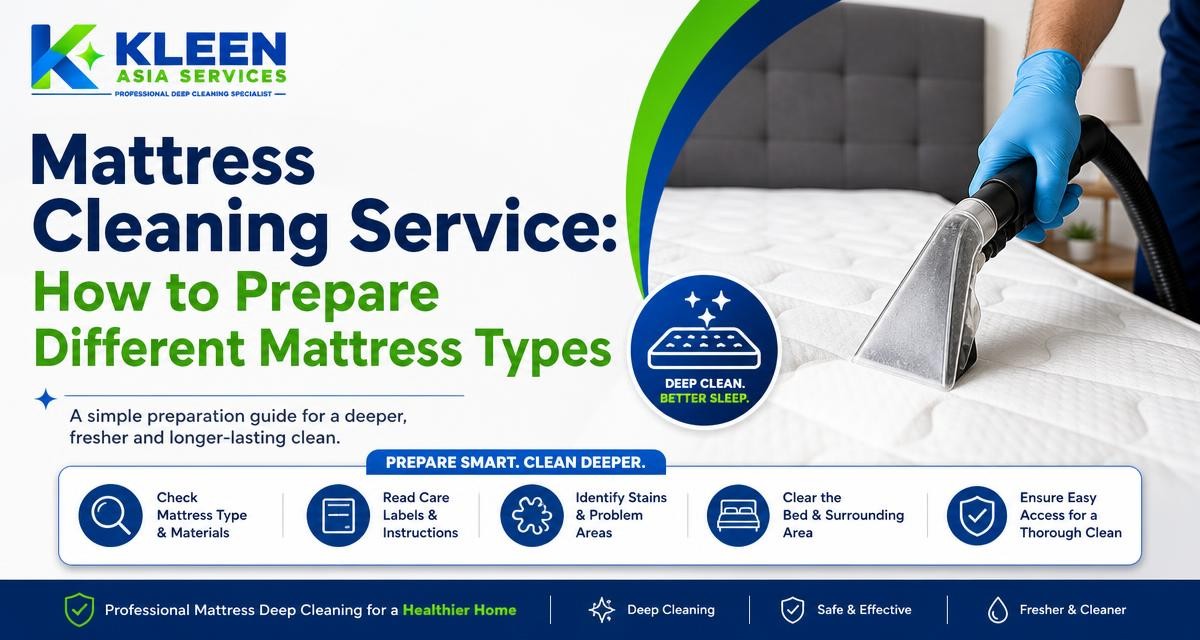
Booking a mattress cleaning service is only one part of getting a mattress ready for professional care. Before the appointment, identify the mattress material, read its care label, point out stains or odours, and make sure the cleaning team can reach the bed safely. These simple preparations help the cleaner choose a suitable approach and help you avoid surprises during the visit.
Why mattress preparation matters
Mattresses are not all constructed in the same way. A traditional innerspring mattress, memory foam mattress, latex mattress, and hybrid mattress can react differently to moisture, pressure, heat, and cleaning products. Even mattresses that look similar may have different covers, fillings, adhesives, or support layers. A preparation check gives the cleaning professional useful information before work begins.
Preparation also makes the service more efficient. Loose bedding, stored items, bedside furniture, and clutter can restrict access to the mattress. Removing them beforehand creates a clear working area and makes it easier to inspect the top, sides, seams, and visible stains. It also gives you a chance to mention anything that should receive special attention.
Start with the mattress label
Look for the manufacturer’s care label before arranging a mattress cleaning service. The label may be attached to the side, underside, or removable cover. It can identify the material and provide instructions about washing, spot cleaning, drying, heat, or professional care. Keep the label available for the cleaner to review if the information is not obvious.
Do not assume that a removable cover means the entire mattress can be washed in the same way. The cover and the inner mattress may require different treatment. If the label says that a cover is removable, ask whether it should be taken off before the appointment or left in place for inspection. If the label is missing, tell the service provider what you know about the mattress, including its approximate age, construction, and previous cleaning history.
Information worth recording
- Mattress type and brand, if known
- Whether the cover is removable
- Any care instructions printed on the label
- Previous spot treatments or cleaning attempts
- Areas affected by stains, spills, or odours
- Whether the mattress has been exposed to moisture
How to prepare common mattress types
The right preparation depends on the mattress construction. The following guide is not a substitute for the care label, but it can help you organise the information a professional cleaner may need before beginning.
| Mattress type | What to check | Useful preparation step |
|---|---|---|
| Memory foam | Care label, foam layers, removable cover | Explain any liquid spills and avoid applying more water before service |
| Latex | Natural or blended latex, cover instructions | Identify moisture exposure and protect the mattress from unnecessary soaking |
| Innerspring | Quilting, padding, stains, and edge panels | Clear access around all sides where possible |
| Hybrid | Foam comfort layers combined with springs | Share the manufacturer’s instructions and describe its layered construction |
| Pillow-top | Attached or separate top layer, deep seams | Point out compressed areas, spills, and stains within the quilting |
| Air or adjustable mattress | Controls, hoses, motors, and removable components | Follow the manufacturer’s instructions and keep electrical parts dry |
Memory foam mattresses
Memory foam can hold moisture within its structure, so it is especially useful to tell the cleaner about any spills, dampness, or previous attempts to wash the mattress. Do not saturate the foam with household products before the appointment. Extra moisture or an unsuitable chemical may spread a stain, affect the cover, or complicate the cleaning process.
Remove the sheets, protector, and other bedding so the cover can be inspected. If the cover is removable, check whether the care label allows washing and ask whether it should be removed. Mention whether the mattress has been folded, stored, or exposed to prolonged dampness, as these details may help the cleaner assess the material before treatment.
Latex mattresses
Latex mattresses may contain natural latex, blended latex, or other materials beneath the cover. The label is therefore important, particularly if you are unsure whether the mattress has a protective layer over the latex. Tell the cleaner if the mattress has come into contact with water, sweat, drinks, or cleaning solutions.
Prepare the bed by removing all bedding and leaving the mattress flat unless the manufacturer gives different instructions. Avoid using strong solvents, bleach, or untested stain removers. A small product test may still be appropriate for some fabrics, but it should be handled by the cleaning professional or approved according to the care instructions.
Innerspring mattresses
Innerspring mattresses usually contain coils beneath layers of fabric, padding, and foam. Preparation focuses on access and inspection. Remove the bedding and, if practical, create space around the head, foot, and sides of the bed. If the mattress is on a storage bed or enclosed frame, tell the cleaner how it can be lifted or reached safely.
Point out stains on the quilted top as well as marks on the sides and edges. Side panels may collect dust and contact marks but can be made from a different fabric than the sleeping surface. The cleaner may need to assess these sections separately rather than treating the entire mattress as one identical material.
Hybrid mattresses
Hybrid mattresses combine spring support with foam or other comfort layers. Because the internal construction is layered, share as much information as possible about the model and care instructions. If you have a product manual or warranty care sheet, keep it nearby without assuming that every instruction applies to professional cleaning.
Describe any liquid incident accurately, including whether the spill was recent or whether the mattress has already been dried. Avoid pressing, scrubbing, or repeatedly wetting the affected area. Those actions can drive a substance further into the surface layers and make it harder to assess the original mark.
Pillow-top and quilted mattresses
A pillow-top mattress has extra cushioning attached to or placed over the main mattress body. Its seams, tufts, and recessed areas may need careful inspection because moisture and residue can collect around textured sections. Before service, identify stains by location rather than simply saying that the mattress is dirty.
For example, you might describe a mark near the lower-right corner, a spill across the upper quilting, or an odour limited to one side. This helps the cleaner plan an inspection. Do not cut, detach, or unzip an attached pillow-top unless the manufacturer specifically instructs you to do so.
Air, adjustable, and specialised mattresses
Adjustable and air mattresses may include controls, hoses, pumps, motors, or other components that require protection. Keep electrical controls and connection points away from cleaning moisture. Follow the manufacturer’s instructions for deflating, disconnecting, or positioning the mattress, and tell the cleaner about any parts that must not be moved.
If the mattress has a medical, pressure-relief, cooling, or other specialised design, do not rely on general cleaning advice. Provide the exact care information available and ask the mattress cleaning service to confirm whether the material can be treated. A professional may recommend an inspection before deciding on the most suitable method.
Prepare stains and odours for inspection
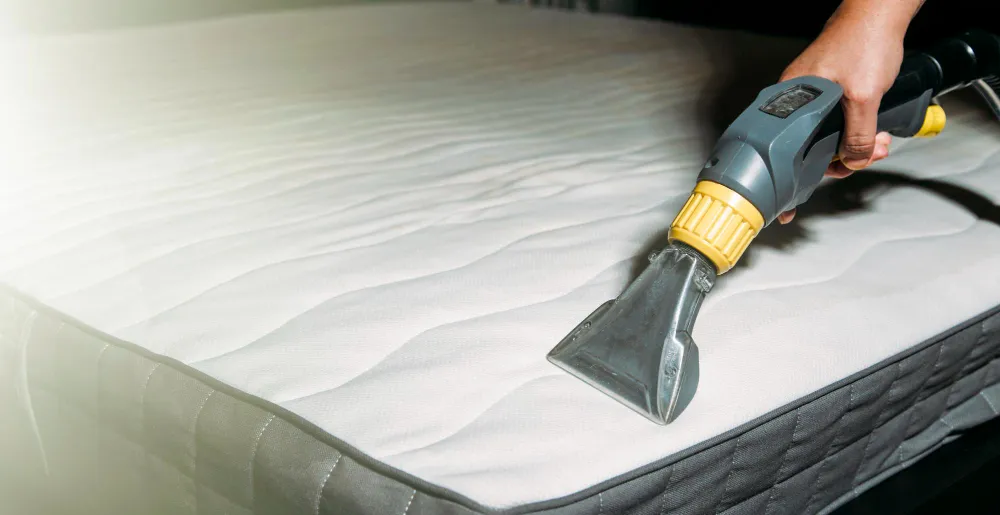
Professional cleaning is easier to plan when stains are identified clearly. Before the appointment, walk around the mattress and check the top, sides, seams, corners, and underside if it is accessible. Use removable markers or simple notes rather than applying additional chemicals to mark a spot.
Tell the cleaner what caused the stain if you know. Food, drinks, perspiration, cosmetics, ink, pet accidents, and unknown marks may require different considerations. Also explain what has already been used on the area. A home remedy, detergent, disinfectant, or stain spray can change the appearance of a mark and may affect how the fabric responds to further treatment.
What to avoid before service
- Do not pour water over the mattress to rinse it.
- Do not combine cleaning chemicals or household disinfectants.
- Do not scrub aggressively, especially on quilted covers.
- Do not cover a damp area with plastic or fresh bedding.
- Do not use high heat unless the manufacturer permits it.
- Do not promise a particular result based on the appearance of a stain alone.
Odours should also be described honestly. Explain whether the smell is new, recurring, localised, or noticeable across the whole mattress. If the mattress has been stored in a humid area or exposed to a spill, mention that history. The cleaner can then assess the fabric and construction instead of treating an unknown odour with an unsuitable product.
Clear the room and plan access
Remove sheets, blankets, mattress protectors, pillows, toys, and items stored on or around the bed. Wash bedding separately according to its own care instructions. If the mattress is on a high frame, a platform, or a bed with drawers, leave enough room for the cleaner to work without moving heavy furniture unnecessarily.
Check the route from the entrance to the bedroom. Narrow corridors, stairs, lifts, locked gates, and parking restrictions may affect how equipment or the mattress can be handled. Share these details when arranging the appointment. In apartments or offices, confirm any building access requirements with the relevant person before the cleaning team arrives.
A simple access checklist
- Remove all bedding and personal items.
- Clear the floor around the bed.
- Identify whether the mattress can be cleaned in its current position.
- Note stairs, lifts, narrow doorways, or restricted access.
- Protect nearby items that should not get wet or come into contact with cleaning products.
- Keep the manufacturer’s label or care information available.
What to discuss before the mattress cleaning service
Before the appointment, ask what information the cleaner needs and whether the mattress will be inspected before work begins. Confirm whether the service is intended for the mattress surface, removable cover, or both. If you want mattress deep cleaning, ask what the proposed process involves without assuming that a particular method, such as steam, is suitable for every material.
It is also sensible to discuss ventilation and use after cleaning. The appropriate care instructions can depend on the fabric, construction, and amount of moisture used. Rather than relying on a fixed drying promise, ask what the cleaner recommends for positioning, airflow, and protecting the mattress while it is still damp.
Questions to ask the provider
- Can you assess the mattress type and care label before cleaning?
- Should the removable cover be taken off beforehand?
- Which stains or previous treatments should I report?
- How should adjustable or electrical components be protected?
- What access and working space do you need?
- What care should I follow after the service?
After cleaning: follow the care instructions
When the cleaning is complete, follow the provider’s instructions rather than covering the mattress immediately. Keep bedding, protectors, and heavy items off the mattress until the recommended care steps have been completed. Maintain suitable airflow where possible, while keeping the mattress away from new spills, dirt, and unnecessary handling.
Inspect the mattress with the cleaner before the visit ends if this is practical. Confirm that the areas you identified were discussed and ask whether any marks require further attention or monitoring. Cleaning can improve the condition and freshness of a mattress, but results depend on the material, age, type of stain, previous treatment, and other factors. No single method is appropriate for every mattress.
Preparing for professional mattress cleaning in Kuala Lumpur and Selangor
Kleen Asia Carpet Cleaning & Upholstery Cleaning provides mattress cleaning services for customers in Kuala Lumpur and Selangor, alongside carpet, sofa and upholstery, curtain, and rug cleaning. If you are arranging a visit, provide the mattress type, care-label information, stain history, and access details when making an enquiry.
A clear description helps the provider understand the job before arriving. Whether the mattress is in a home, rental property, or office, the same principle applies: prepare the material information, remove obstacles, and explain the problem areas. These steps support a more careful assessment and help the cleaning team work with the mattress rather than against its construction.
Frequently asked questions
Should I remove the sheets before a mattress cleaning service?
Yes. Remove sheets, blankets, protectors, pillows, and other bedding before the appointment. This allows the cleaner to inspect the mattress cover and identify stains or damaged areas.
Can every mattress be steam cleaned?
No. The suitable method depends on the care label, cover fabric, internal construction, and moisture tolerance. Ask the provider to assess the mattress before requesting steam mattress cleaning.
What if my mattress has a removable cover?
Check the manufacturer’s instructions and ask the cleaner whether the cover should be removed. The cover may have different care requirements from the mattress core.
Should I treat stains before professional cleaning?
Avoid applying new products unless the care instructions or cleaning provider recommend them. Instead, record the stain location, explain its cause if known, and describe any previous treatment.
How should I prepare a memory foam mattress?
Remove all bedding, check the label, and report any liquid spills or earlier cleaning attempts. Avoid adding water or strong chemicals, because foam can retain moisture and may respond poorly to unsuitable products.
What access does a mattress cleaner need?
The provider generally needs a clear path to the room and enough space to inspect and clean the mattress. Mention stairs, lifts, narrow doorways, storage beds, and building access requirements in advance.