

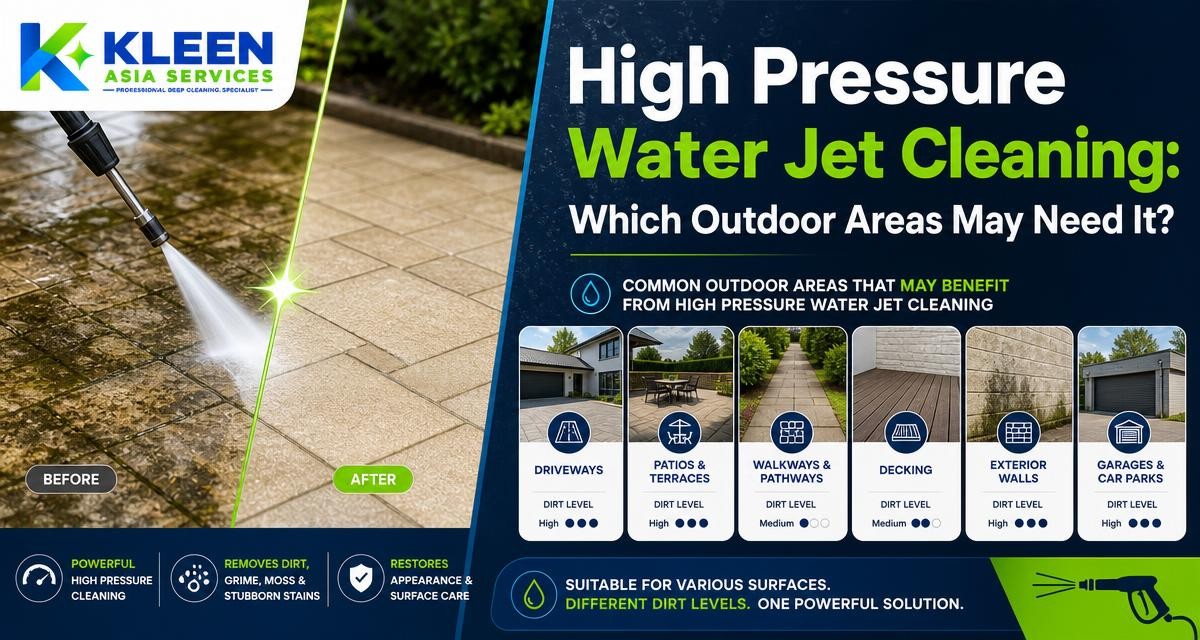
High pressure water jet cleaning can be useful when outdoor surfaces have accumulated dirt that ordinary sweeping, rinsing, or scrubbing does not easily remove. However, not every surface should be treated in the same way. The right approach depends on the material, the type of buildup, the condition of the surface, and how close the area is to doors, windows, plants, vehicles, or indoor furnishings.
What high pressure water jet cleaning is designed to address
Water jet cleaning uses a concentrated flow of water to help loosen and wash away dirt from suitable external surfaces. It may be considered for areas exposed to rain, dust, vehicle traffic, foot traffic, soil, and general outdoor use. Common examples include hard paving, external walls, walkways, driveways, car porch areas, and selected building exteriors.
The method is not simply a matter of using the highest possible pressure. A cleaning assessment should consider how the water will interact with the surface. Strong pressure may be appropriate for some durable materials but unsuitable for fragile finishes, loose joints, damaged coatings, or areas where water could enter the building.
| Outdoor situation | Why water jet cleaning may be considered | Important checks |
|---|---|---|
| Driveway or car porch | Vehicle movement and outdoor exposure can leave behind soil, dust, and tracked-in grime. | Check the paving material, joints, drainage, and nearby vehicles or walls. |
| Walkway or entrance path | Regular foot traffic can create visible dirt along frequently used routes. | Look for loose tiles, uneven sections, and water flow toward entrances. |
| Patio or hard outdoor floor | Open-air areas may collect soil, leaf residue, and general surface dirt. | Consider surface finish, furniture, plants, and nearby indoor thresholds. |
| External wall or façade | Large vertical surfaces may develop a layer of outdoor grime over time. | Check paint, render, joints, windows, vents, and any signs of damage. |
| Drain or external service area | Outdoor utility areas may need focused cleaning around dirt and residue. | Confirm drainage, access, surrounding equipment, and the type of buildup. |
Outdoor areas that may need water jet cleaning
Driveways and car porch areas
Driveways and covered car porch areas are practical candidates for an outdoor cleaning assessment. They are exposed to dust, soil carried by tyres, fallen leaves, and other everyday debris. The surface may also show darker traffic paths where vehicles regularly enter, stop, and turn.
Before cleaning, it is useful to identify whether the area is made from concrete, tiles, stone, interlocking pavers, or another material. The condition of the joints matters as well. If sections are already loose, cracked, chipped, or worn, concentrated water may not be suitable without further consideration. Nearby walls, garage doors, vehicles, and stored items should also be protected or moved where practical.
Walkways, steps, and entrance paths
Walkways and steps often collect dirt in the areas people use most. Entrance paths may also receive soil from footwear and water runoff from surrounding ground. A water jet approach may help clean suitable hard surfaces, particularly when sweeping has removed loose debris but left a visible film behind.
Steps require extra care because water can travel down onto lower levels and nearby entrances. The surface should be checked for smoothness, loose edges, damaged grout, and areas that may become slippery when wet. Cleaning should also be planned so that dirty water does not flow toward an indoor doorway or another recently cleaned area.
Patios, terraces, and hard outdoor floors
Patios and terraces are commonly used for seating, entertaining, laundry, or general household activities. Because these areas are open to the weather, they can gather dust, soil, leaf residue, and marks from outdoor furniture. High pressure water jet cleaning may be considered when the floor is hard, stable, and suitable for controlled water cleaning.
Outdoor furniture, plant pots, electrical items, decorative pieces, and personal belongings should be moved or covered before work begins. It is also worth checking whether the floor has a special coating, painted finish, delicate tile surface, or open joints. A cleaning method that suits uncoated concrete may not be appropriate for every patio finish.
External walls and building façades
External walls can develop a layer of dust and general outdoor grime, especially around lower sections, sheltered corners, and areas close to roads or open ground. Water jet cleaning may be considered for suitable masonry, concrete, or other durable exterior surfaces where the finish is in sound condition.
Walls need a more careful assessment than a flat floor. Windows, vents, light fittings, door frames, painted areas, sealants, and wall joints may respond differently to water pressure. Openings should be identified before cleaning, and water should not be directed into areas where it could enter the building. If the wall has peeling paint, crumbling material, cracks, or loose render, the condition should be addressed before choosing a pressure-based method.
Boundary walls, gates, and outdoor structures
Boundary walls and gates are exposed to dust, rain, soil, and contact with garden areas. Their appearance can change gradually, making accumulated grime more noticeable along the lower sections and around hinges or entrance points. A water jet service may be relevant for stable, washable surfaces, depending on the construction and finish.
Metal gates, painted surfaces, timber elements, decorative coatings, and older masonry should not automatically be treated like concrete. The age and condition of the structure can affect the cleaning decision. Plants, garden soil, neighbouring surfaces, and pedestrian areas around the boundary should also be considered when planning water flow and access.
Stairs and ramps may need regular attention because they combine foot traffic with exposure to rain and airborne dirt. Dirt can become more visible along edges, corners, handrail bases, and places where water does not drain freely. For commercial or shared premises, a visibly maintained approach can also make access areas feel more orderly.
These surfaces should be assessed for grip, slope, drainage, loose sections, and nearby entrances. A cleaning plan should avoid creating unnecessary spray toward people, vehicles, glass, or indoor spaces. Because stairs and ramps are used for movement, the area should be managed carefully while wet and during any post-cleaning drying period.
Loading areas, service yards, and utility spaces
Outdoor service areas can collect heavier general dirt because they are used for deliveries, waste handling, maintenance, or equipment access. Hardstanding around offices, shops, apartment buildings, and other premises may be considered for water jet cleaning when the surface is stable and the drainage arrangement is suitable.
These areas may contain stored materials, bins, cables, equipment, or residue from different activities. Cleaning should therefore begin with a practical inspection rather than an assumption that high pressure is suitable everywhere. The source of the dirt, the direction of runoff, and the condition of the floor all influence the appropriate method.
Drains, gutters, and external water-flow areas
Some outdoor cleaning requests involve areas where water collects or moves, such as drain surrounds, channels, gutter exteriors, and paved sections near downpipes. Water jet cleaning may be considered for accessible, durable areas with suitable drainage. These locations can be difficult to clean by sweeping alone because dirt settles in edges, recesses, and low points.
However, not every blocked or slow-draining system is simply a surface-cleaning issue. A drain may have an underlying obstruction, damaged pipe, or capacity problem. Cleaning should not be presented as a guaranteed solution for drainage faults. The area, access point, and nature of the buildup should be clarified before work is planned.
How surface type affects the cleaning decision
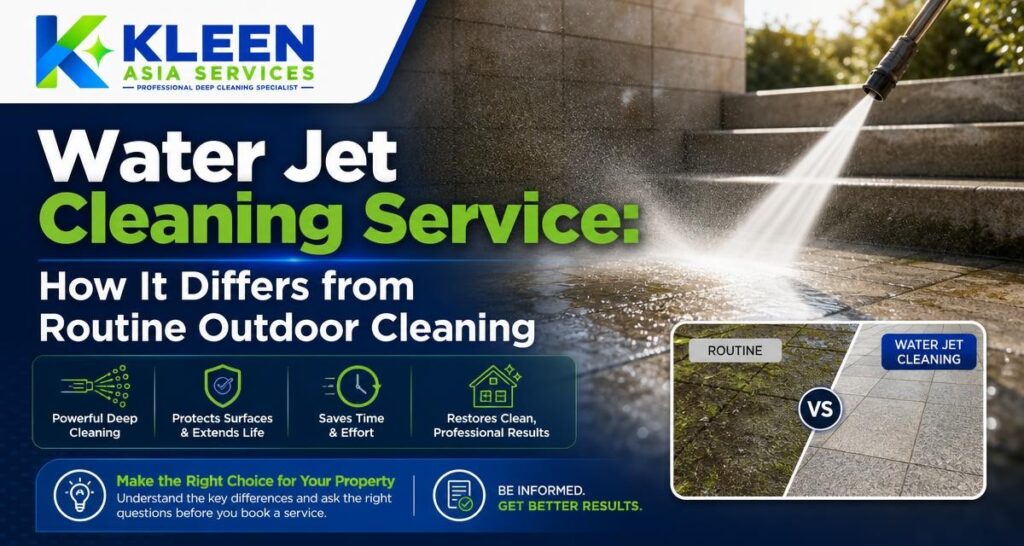
The same outdoor dirt can behave differently depending on the material beneath it. Concrete, stone, tiles, pavers, painted walls, render, and other finishes have different levels of porosity, strength, texture, and resistance to water. A surface that looks hard may still have weak joints, an ageing coating, or concealed damage.
For that reason, a suitable cleaning approach should balance cleaning needs with surface protection. Pressure, distance, direction, water control, and any cleaning agent used may need to vary from one area to another. If the material or coating is uncertain, the safest course is to obtain advice before treating the whole surface.
| Surface condition or material | What to consider before water jet cleaning | Why the check matters |
|---|---|---|
| Stable concrete | Look for cracks, damaged edges, old repairs, and nearby openings. | Water may reveal or worsen existing weak points if the area is not assessed. |
| Tiles and grout | Check for hollow, loose, chipped, or cracked tiles and worn grout lines. | Joints and tile edges may require a more controlled approach. |
| Interlocking pavers | Inspect movement, joint material, settlement, and drainage. | Concentrated water may disturb weak or eroded joints. |
| Painted or coated walls | Check for peeling, flaking, fading, and exposed substrate. | The finish may not respond like bare masonry. |
| Natural stone | Identify the stone type, finish, sealant, staining, and surface wear. | Some stone surfaces may be sensitive to pressure or unsuitable products. |
| Timber or delicate finishes | Confirm whether the material is intended for this type of water cleaning. | Water and pressure can affect softer or more vulnerable surfaces. |
Signs that an outdoor area may need more than routine sweeping
Outdoor areas do not always need high pressure water jet cleaning simply because they look dusty. A stronger cleaning method may be worth discussing when loose debris has been removed but the surface still has embedded grime, visible traffic paths, or buildup in textured sections and corners.
Other signs include dirt along drainage channels, discolouration on frequently used paths, residue around outdoor service areas, or a large external surface that would be difficult to scrub by hand. These signs indicate a need for assessment, not a promise that one method will produce the same result on every material.
- Loose debris has been cleared but a surface film remains.
- Dirt is concentrated in textured paving, edges, joints, or recesses.
- Large outdoor areas make manual scrubbing impractical.
- External walls or hard floors have accumulated general weather-related grime.
- Driveways, paths, or service areas show repeated traffic marks.
- Water collects around an outdoor surface and carries dirt into nearby areas.
When high pressure water jet cleaning may not be the first choice
Pressure-based cleaning is not automatically suitable for every outdoor surface. A fragile coating, loose tile, cracked render, deteriorated grout line, soft material, or vulnerable fitting may require a gentler approach. Indoor-adjacent areas also need special care because uncontrolled water can affect doors, flooring, walls, furniture, or stored belongings.
There may also be situations where the main problem is not surface dirt. For example, a recurring damp patch, damaged drainage, leaking pipe, loose building material, or deep structural defect should not be treated as an ordinary cleaning issue. Cleaning may improve the visible surface while leaving the underlying cause unresolved.
Preparing an outdoor area for water jet cleaning
Good preparation helps reduce avoidable risks and makes the cleaning assessment clearer. The area should be inspected before equipment is used, with attention given to access, drainage, surface condition, nearby property, and the likely path of wastewater.
- Remove movable items. Clear furniture, pots, tools, toys, bins, vehicles, and other belongings from the working area where possible.
- Identify sensitive points. Note doors, windows, vents, electrical fittings, air-conditioning components, decorative items, and open joints.
- Inspect the surface. Look for cracks, loose pieces, damaged coatings, eroded grout, and areas that may need a different method.
- Check water movement. Consider where runoff will go and whether it may carry dirt toward entrances, drains, neighbouring areas, or indoor floors.
- Clarify the cleaning scope. Separate the surfaces that need attention from areas that should be excluded or treated more gently.
- Allow controlled access. Keep people and pets away from the active cleaning area and manage slippery surfaces while wet.
Choosing a professional water jet cleaning service
When comparing water jet cleaning services, ask questions that relate to the actual surface rather than relying only on the phrase “high pressure.” A useful discussion should cover the material, the type of dirt, the size and location of the area, access conditions, nearby indoor spaces, and any known damage.
Kleen Asia Carpet Cleaning & Upholstery Cleaning presents Water Jet Cleaning as a pressure water jet cleaning service. The company also provides carpet, sofa and upholstery, mattress, curtain, rug, and floor cleaning services for homes and offices in Kuala Lumpur and Selangor. For a particular outdoor area, customers can share details about the surface and condition so the requested work can be considered on its specific circumstances.
Questions worth asking before work begins
- Is the surface material suitable for a water jet cleaning approach?
- What areas should be cleared or protected before cleaning?
- How will nearby doors, windows, fittings, and belongings be managed?
- Where will the wastewater and loosened dirt flow?
- Are there visible cracks, loose sections, or coatings that need special attention?
- Which parts of the outdoor area are included in the requested cleaning scope?
A practical way to assess your outdoor cleaning needs
Start by separating the area into surface types rather than treating the entire property as one cleaning job. A concrete driveway, tiled entrance, painted wall, drain channel, and timber gate may all be outdoors, but they should not automatically receive the same pressure or treatment.
Next, describe the dirt accurately. General dust, soil, leaf residue, traffic grime, a spill, biological growth, and a drainage problem may require different considerations. Photographs or a clear description of the affected areas can also help a cleaning provider understand the request before discussing the next step.
The goal of outdoor cleaning is not simply to use the strongest method available. It is to match the method to the surface and the cleaning situation. With that approach, high pressure water jet cleaning can be considered where it is appropriate while reducing the chance of treating unsuitable materials too aggressively.
Frequently asked questions
What is high pressure water jet cleaning used for?
It is used to help clean suitable outdoor and external surfaces by directing a concentrated flow of water at accumulated dirt. Common areas for consideration include driveways, paths, patios, hard outdoor floors, external walls, and service areas.
Can every outdoor surface be cleaned with high pressure water?
No. Surface material, age, finish, joints, damage, and nearby fittings all matter. Fragile coatings, loose tiles, deteriorated grout, damaged render, and some delicate materials may need a different or more controlled approach.
Is water jet cleaning suitable for external walls?
It may be suitable for some stable exterior walls, depending on the construction and finish. Windows, vents, paint, sealants, joints, and signs of damage should be checked before cleaning.
Should outdoor furniture be removed first?
Yes, movable furniture and belongings should generally be removed from the working area where possible. This helps protect them from spray, loosened dirt, and wastewater while giving the cleaner better access to the surface.
Can water jet cleaning fix a drainage problem?
It may clean accessible dirt around some external drainage areas, but it should not be treated as a guaranteed solution for blocked drains, damaged pipes, leaks, or poor drainage design. The underlying problem may require separate attention.
How should I prepare before requesting water jet cleaning?
Identify the surfaces involved, describe the type of dirt, clear movable items, note any cracks or loose sections, and mention nearby doors, windows, electrical fittings, plants, vehicles, and drainage concerns.
Related posts:
 Water Jet Cleaning Service: How It Differs from Routine Outdoor Cleaning
 Pressure Washing Services in Kuala Lumpur: What Property Owners Should Check First
 Flooded Carpet Cleaning in Ampang: A Practical Checklist for Homes and Offices
 Tile Cleaning Service: How to Identify Built-Up Dirt in High-Traffic Areas