
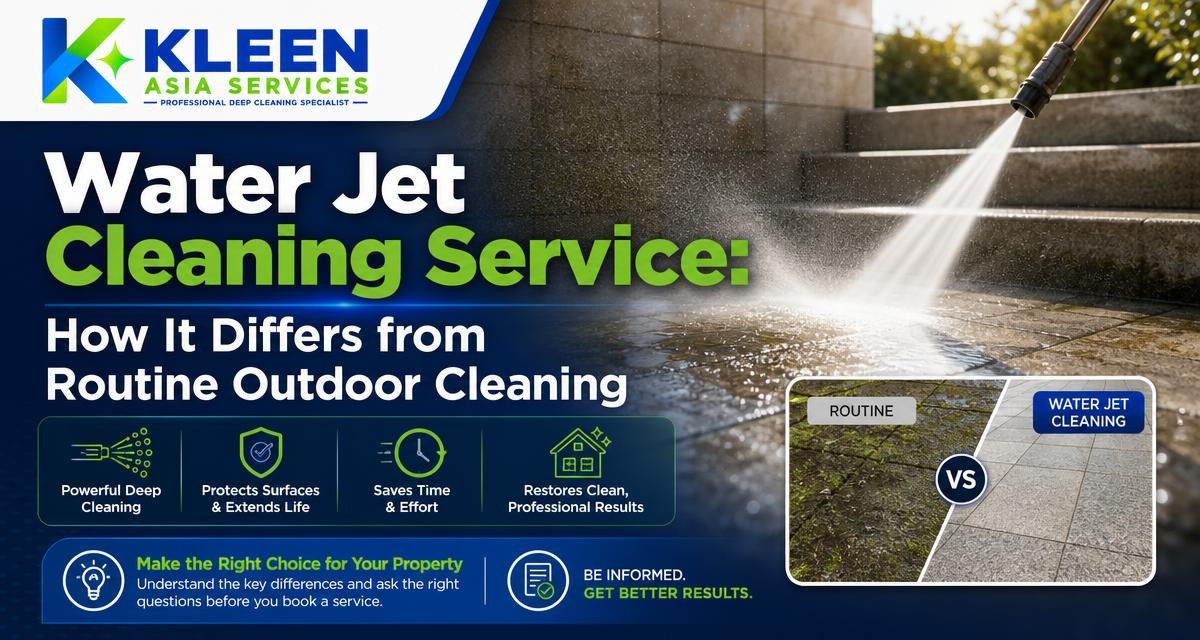
A water jet cleaning service uses a concentrated stream of pressurised water to clean suitable outdoor and external surfaces. It is different from routine outdoor cleaning, which may involve sweeping, brushing, mopping or rinsing with ordinary water pressure. Understanding that difference can help homeowners, tenants and offices decide whether pressure water jet cleaning is appropriate for the surface, the type of dirt and the condition of the area.
What is water jet cleaning?
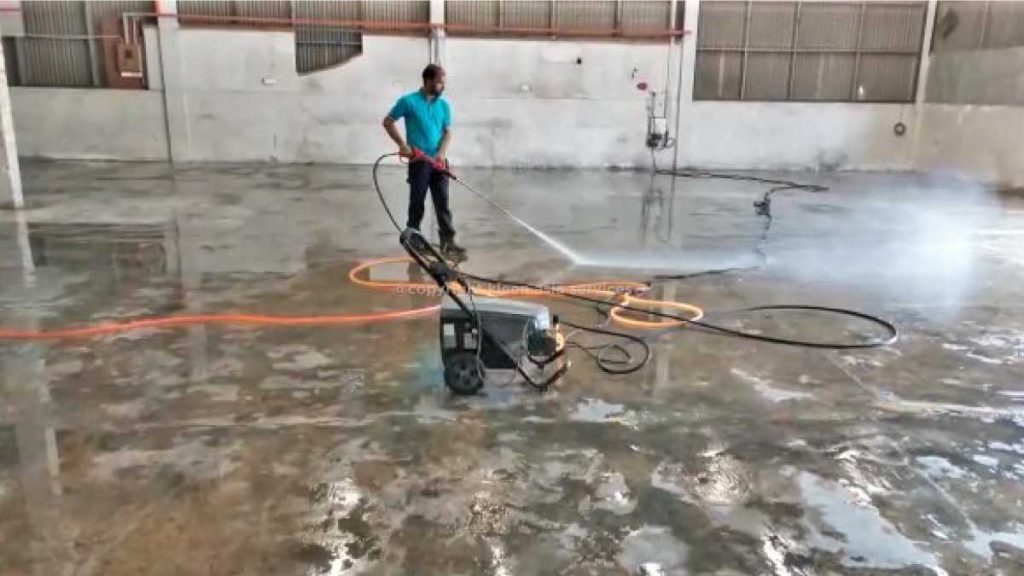
Water jet cleaning, also described as pressure water jet cleaning, directs water through specialised equipment to create a stronger, more focused cleaning stream than a standard hose. The force helps dislodge dirt that may be firmly attached to hard external surfaces. Depending on the job, the cleaning process may be used to address accumulated grime, mud, surface deposits and other outdoor residue.
The equipment does not make every surface suitable for pressure cleaning. The correct approach depends on the material, its age, its condition and the location of the dirt. A surface assessment is therefore an important part of arranging the service, particularly where water could enter joints, damage a weak finish or affect nearby furnishings and fittings.
How it differs from routine outdoor cleaning
Routine outdoor cleaning is usually intended to keep an area presentable through regular maintenance. Sweeping removes loose debris, brushing deals with light surface dirt, and ordinary rinsing can wash away dust or recent marks. These methods are useful for frequent upkeep, but they may be less effective when dirt has collected in textured surfaces, edges, corners or hard-to-reach areas.
A water jet cleaning service is generally considered when the outdoor surface needs a more forceful cleaning method. The distinction is not simply that one method uses more water. Pressure cleaning requires attention to spray strength, distance, direction, drainage and the material being cleaned. Using excessive force without proper judgement can create problems instead of solving them.
| Cleaning approach | Typical purpose | Where it may be suitable | Main consideration |
|---|---|---|---|
| Routine sweeping | Remove loose dust, leaves and debris | Walkways, entrances and open outdoor areas | Does not address firmly attached residue |
| Brushing or scrubbing | Agitate light or moderate surface dirt | Smaller areas and surfaces that require manual control | Can require considerable time and effort |
| Ordinary rinsing | Wash away loose particles and recent dirt | Surfaces that need basic maintenance | May not reach textured or embedded residue |
| Water jet cleaning | Use concentrated water pressure to dislodge stubborn outdoor dirt | Suitable hard external surfaces after assessment | Pressure must be matched to the material and surroundings |
When outdoor surfaces may need more than basic cleaning
Outdoor areas are exposed to rain, humidity, dust, traffic residue and everyday contact. Over time, dirt can settle into textured finishes or collect along borders and drainage lines. Areas near entrances may also receive frequent foot traffic, while external walls, paved sections and other hard surfaces can gradually lose their clean appearance.
Routine cleaning may be enough when the dirt is loose and recent. A stronger method may be worth considering when brushing and ordinary rinsing leave visible residue behind. It can also be useful when the area is larger than a household can comfortably clean by hand, or when the surface has grooves and uneven sections that are difficult to reach manually.
Examples of situations to discuss
- Outdoor surfaces with accumulated dirt that does not lift easily through sweeping or light rinsing.
- Hard external areas with textured finishes where residue collects in grooves.
- Entrances, pathways or paved sections affected by regular use and outdoor exposure.
- External cleaning tasks where controlled water pressure may be more practical than prolonged manual scrubbing.
- Commercial or office surroundings that need an assessment of access, drainage and nearby property before cleaning begins.
These examples do not mean that every dirty exterior should be pressure washed. The material still needs to be checked first. A professional discussion should clarify what is being cleaned, how heavily soiled it is and whether there are vulnerable areas nearby.
Surfaces and areas that require careful assessment
Water jet cleaning is most often associated with hard outdoor and external surfaces, but the appropriate pressure level can vary significantly. Concrete, tiles, stone, paving and painted or coated surfaces may respond differently to water pressure. Even two areas made from a similar material can have different requirements if one is older, cracked, loose or already weathered.
Joints, seals, edges and openings deserve particular attention. Water can travel into gaps or behind finishes if the spray is directed too closely or at an unsuitable angle. Outdoor lighting, electrical fittings, vents, doors, windows and decorative elements may also need protection or avoidance during the work.
| Before cleaning | Question to consider | Why it matters |
|---|---|---|
| Identify the material | Is the surface concrete, tile, stone, paving, paint or another finish? | Different materials tolerate water pressure differently. |
| Check the condition | Are there cracks, loose sections, worn coatings or open joints? | Existing weaknesses may require a gentler method or additional precautions. |
| Review the surroundings | Are furniture, plants, vehicles, doors or electrical fittings nearby? | Overspray and displaced dirt need to be managed. |
| Consider drainage | Where will the water and loosened dirt flow? | Blocked or unsuitable drainage can create avoidable mess and water accumulation. |
| Describe the dirt | Is the issue loose dust, mud, surface grime or another deposit? | The cleaning method should match the actual problem. |
Why pressure level and technique matter
The strongest available setting is not automatically the best choice. Effective pressure cleaning is about applying enough force to remove suitable dirt while reducing the chance of damaging the surface. The operator may need to adjust the distance from the material, the direction of the spray and the pace of movement rather than relying on a single setting for the entire area.
Technique also affects the surrounding environment. A concentrated jet can move dirt from one section to another, disturb loose debris or create overspray. Items close to the work area should be moved or protected where practical. The cleaning plan should also account for people using the space, access routes and where wastewater will go.
Questions about the cleaning method
- What water pressure is appropriate for the specific surface?
- Will the service begin with an inspection or discussion of the material and its condition?
- How will nearby doors, windows, fittings, furniture or vehicles be protected?
- How will loosened dirt and wastewater be managed?
- Are there areas that should be excluded because they are fragile, damaged or difficult to protect?
Clear answers help set realistic expectations. They also show whether the provider is considering the complete cleaning environment rather than focusing only on the visible dirt.
Water jet cleaning versus DIY outdoor cleaning
Many small outdoor tasks can be handled with a broom, brush, bucket or garden hose. These tools are practical for frequent maintenance and give the user direct control. They are often appropriate when the surface is lightly soiled and the work area is small.
DIY pressure washing becomes more demanding when the surface is large, the dirt is stubborn or the area has drainage, access and protection concerns. Without experience, it can be difficult to judge the right pressure, spray angle and working distance. Water may also reach places that were not intended to get wet. A professional water jet cleaning service can be considered when the task requires specialised equipment or when the condition of the surface is unclear.
A simple decision guide
- Start with the surface. Identify what it is made from and look for cracks, loose sections or a worn finish.
- Assess the dirt. Decide whether sweeping, brushing or ordinary rinsing is likely to remove it.
- Review the setting. Check nearby openings, furnishings, plants, vehicles, electrical items and drainage.
- Consider the scale. A larger or awkwardly positioned area may be harder to clean safely by hand.
- Ask for an assessment. If pressure cleaning appears suitable, discuss the method and limitations before arranging the work.
What to ask before arranging a water jet cleaning service
A short conversation before booking can prevent misunderstandings. Describe the location accurately and explain what you have observed rather than assuming that all outdoor dirt can be treated in the same way. Photos or an on-site assessment may help the provider understand the surface, access and surrounding risks, depending on how the service is arranged.
Important questions for the provider
- Is the surface suitable? Ask whether the material and its current condition are appropriate for water jet cleaning.
- What areas are included? Confirm whether the discussion covers a walkway, paved area, external wall, entrance or another specific surface.
- What preparation is needed? Ask whether you should move outdoor furniture, clear loose objects or provide access to the area.
- How will vulnerable items be handled? Discuss windows, doors, plants, decorative finishes, electrical fittings and nearby vehicles.
- What results are realistic? Cleaning can improve the appearance of suitable surfaces, but no method should be assumed to remove every mark or restore every worn finish.
- What happens after cleaning? Ask about remaining water, displaced dirt, access restrictions and any care advice for the surface.
It is also sensible to ask whether the service is intended for outdoor and external hard surfaces rather than indoor fabric furnishings. Water jet cleaning should not be treated as a substitute for carpet, sofa, mattress, curtain or rug cleaning, because those materials require different care methods.
How Kleen Asia’s service fits into a wider cleaning plan
Kleen Asia Carpet Cleaning & Upholstery Cleaning presents Water Jet Cleaning as a pressure water jet cleaning service for outdoor and external cleaning needs. The company also provides carpet, sofa and upholstery, mattress, curtain, rug and floor cleaning services. Each service addresses a different type of surface, so choosing the right category begins with identifying whether the problem is indoors or outdoors and whether the material is hard or fabric-based.
For homes and offices in Kuala Lumpur and Selangor, this distinction can make it easier to explain the cleaning request. The company’s listed service locations also include Putrajaya and Cyberjaya, with location pages covering areas such as Petaling Jaya, Shah Alam, Klang, Puchong, Cheras, Ampang, Bangi, Kajang, Seri Kembangan, Damansara, Gombak, Kepong, Bukit Jalil and Mont Kiara for selected services. Availability and suitability should be confirmed directly for the specific outdoor cleaning requirement.
Preparing the area before the cleaning visit
Good preparation can make the work clearer and reduce avoidable obstacles. Remove loose items from the area where possible, identify fragile objects and point out any known cracks, leaks or drainage concerns. If the space is connected to an occupied home or office, consider how people will enter and leave while the area is being cleaned.
- Clear toys, tools, pots and other movable objects from the cleaning zone.
- Close or identify doors and windows near the spray area.
- Move vehicles or outdoor furniture if they may be affected by overspray.
- Point out delicate finishes, loose paving, cracks and areas that should not be sprayed.
- Discuss where water may collect or flow after dirt is loosened.
- Keep children and pets away from the work area during cleaning.
Preparation does not guarantee a particular result, but it helps the provider work with better information. It also gives both sides an opportunity to agree on the areas included and any limitations before the cleaning starts.
When routine maintenance is still the better choice
Pressure cleaning is not necessary for every outdoor area. Regular sweeping and light rinsing may be preferable when dirt is loose, the surface is delicate or the area only needs basic upkeep. Frequent gentle maintenance can also reduce the amount of residue that accumulates between deeper cleaning sessions.
The best choice depends on the actual condition of the surface. If you are uncertain, ask for guidance rather than selecting a high-pressure method solely because it sounds stronger. A suitable cleaning plan balances the desired appearance with material safety, access, drainage and the condition of nearby property.
Final checklist before you arrange service
Before contacting a provider, note the surface type, approximate area, location and visible cleaning issue. Mention whether the area is paved, textured, painted, tiled or made from another material, and disclose any known damage. This information helps the conversation focus on suitability instead of making assumptions.
- Define the exact outdoor or external area to be cleaned.
- Describe the surface and its condition.
- Explain what kind of dirt or residue is visible.
- List nearby items that may need protection.
- Ask about pressure, preparation, drainage and realistic results.
- Confirm service coverage and arrangements for your location.
A water jet cleaning service can be a useful option when ordinary outdoor cleaning is not enough for a suitable hard surface. The key is not simply stronger water pressure; it is using an appropriate method with proper attention to the material, surroundings and cleaning objective.
Frequently asked questions
What is a water jet cleaning service?
It is a cleaning service that uses a concentrated, pressurised stream of water to remove suitable dirt from outdoor and external surfaces. The pressure and technique should be matched to the material.
How is water jet cleaning different from routine outdoor cleaning?
Routine outdoor cleaning usually relies on sweeping, brushing or ordinary rinsing. Water jet cleaning uses more focused pressure to help dislodge dirt that may remain after basic maintenance.
Can every outdoor surface be pressure cleaned?
No. Suitability depends on the material, finish, age and condition of the surface. Cracks, loose sections, open joints and nearby vulnerable items should be assessed first.
Is water jet cleaning suitable for carpets or sofas?
Water jet cleaning is intended for appropriate outdoor and external surfaces. Carpets, sofas, mattresses, curtains and rugs require cleaning methods suited to their individual fabrics and construction.
What should I ask before booking?
Ask whether the surface is suitable, what areas are included, how nearby items will be protected, how drainage will be managed and what results are realistic.
Does routine cleaning still matter after pressure washing?
Yes. Sweeping and light rinsing can help remove loose debris and support regular outdoor maintenance. They may reduce the need for more intensive cleaning, although they cannot address every type of residue.