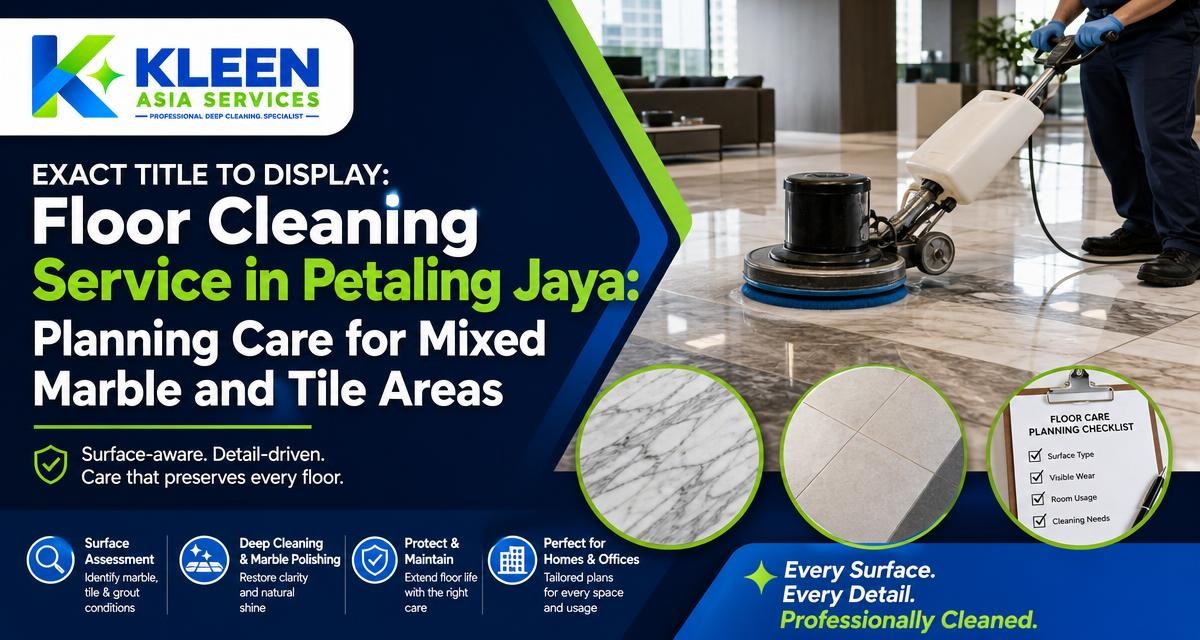
Choosing a floor cleaning service for a home or office in Petaling Jaya is easier when the floor is documented first. Marble and tile may share the same room, but they do not necessarily have the same finish, level of wear or care requirements. A simple record of the surfaces, visible marks and room usage can help you discuss whether the priority is routine cleaning, more detailed tile care, marble polishing or a combination of services.
Why mixed marble and tile areas need a clear plan
Mixed flooring is common in entrances, living areas, kitchens, corridors, reception spaces and offices. Marble may be used as a feature surface while tiles appear in adjoining areas, wet zones or high-traffic sections. Even when both materials look similar after installation, their surface texture, colour, grout lines and existing finish can differ.
That difference matters when planning floor care. A broad instruction such as “clean the whole floor” may not describe the actual condition of every area. One section may mainly need the removal of everyday dust and tracked-in soil, while another may show dullness, scratches, residue or uneven appearance that should be assessed separately.
Start by mapping every floor surface
Before contacting a provider, walk through the property and divide the floor into practical zones. Use room names or simple labels such as entrance, hallway, dining area, pantry, reception and corridor. Note the material in each zone rather than assuming that the entire property has one floor type.
A written map does not need to be technical. Its purpose is to make the conversation more accurate and to prevent smaller areas from being forgotten. If the floor pattern changes at a doorway, record that transition. Also note whether the marble and tile meet directly, are separated by a threshold or continue through an open-plan space.
| Area to record | What to note | Why it helps |
|---|---|---|
| Surface material | Marble, ceramic tile, porcelain tile or material that is not confirmed | Different surfaces may require different cleaning considerations |
| Location | Entrance, kitchen, bathroom, corridor, office or other room | Shows how the area is used and where soil may collect |
| Visible condition | Dullness, discolouration, residue, marks, chipped edges or worn grout | Separates routine cleaning from concerns that need closer assessment |
| Traffic level | Light, moderate or frequent foot traffic | Helps explain why some sections look different from others |
| Access considerations | Furniture, narrow corridors, stairs or areas that cannot be cleared | Supports a more realistic discussion of the work area |
How to identify areas that need confirmation
Some floors are easy to recognise, but others may have a printed pattern, stone-look finish or surface coating that makes identification uncertain. If you do not know whether a section is natural marble, engineered material or tile, record it as “material to be confirmed.” Do not rely only on colour or pattern.
Keep any available renovation notes, product information or care instructions nearby. These documents may help clarify the surface, but they should not replace an on-site assessment where the condition or material remains uncertain.
Document the condition before arranging cleaning
Good documentation focuses on what can actually be seen. Take clear photographs in normal lighting and capture both wider views and close-ups. A wide photograph shows the extent of a problem; a close-up can show fine marks, residue, grout discolouration or changes in sheen.
Photographs are most useful when paired with short notes. For example, write “dull patch beside sofa,” “dark grout near entrance” or “slippery-looking residue near pantry.” Avoid describing a mark as a permanent stain or damage unless that has been professionally confirmed. The purpose is to describe the appearance, not to make a diagnosis.
Condition points worth recording
- Areas that appear duller than surrounding marble.
- Visible scratches, scuffs or lines in frequently used walkways.
- Residue, haziness or a film on the surface.
- Darkened or uneven grout between tiles.
- Chipped corners, loose-looking edges or cracked tiles.
- Differences in colour or sheen between adjoining sections.
- Marks around entrances, dining areas, workstations or cooking spaces.
- Places where furniture, mats or stored items have covered the floor for a long period.
Do not scrub a questionable area aggressively just to see whether it improves. A strong household product or abrasive tool may change the appearance of a surface and make later assessment more difficult. If a mark is important, document it first and mention any previous cleaning attempt.
Separate cleaning needs from polishing needs
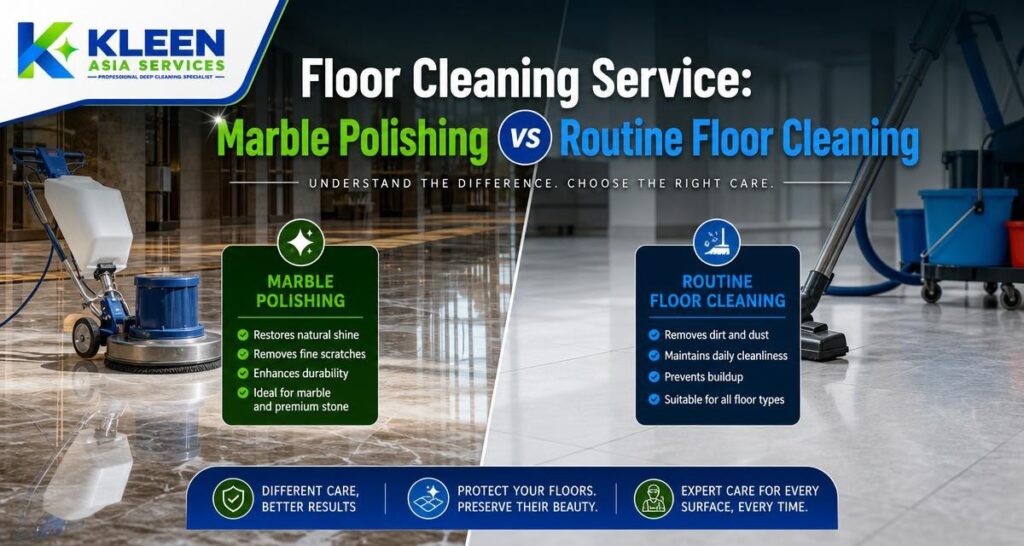
Cleaning and polishing address different concerns, although they may be discussed together. Cleaning generally focuses on removing surface soil, dust, residue and other build-up. Polishing is considered when the appearance of a suitable hard surface has changed through wear, dullness or loss of sheen.
Marble polishing should not be treated as an automatic step for every marble floor. The need depends on the existing finish, the condition of the surface and the result you are trying to achieve. A floor that looks dull because of residue may need a different approach from one that has visible wear. Ask the provider to distinguish between cleaning, polishing and any other recommended treatment before work begins.
| What you observe | Possible discussion point | Question to ask |
|---|---|---|
| Dust, tracked-in soil or everyday marks | Routine floor cleaning | Which areas should be included in the cleaning scope? |
| Persistent-looking residue or haziness | Surface condition assessment | Could the appearance be related to residue or an existing finish? |
| Marble that looks less even or less glossy | Possible marble polishing discussion | Is polishing appropriate for this marble surface? |
| Dark or uneven grout | Tile and grout cleaning discussion | Can the grout be assessed separately from the tile faces? |
| Cracks, chips or loose-looking sections | Maintenance or repair consideration | Should this area be addressed before cleaning? |
There is no need to promise a particular result before the surface has been assessed. A professional provider can explain what the service is intended to address and whether some marks may remain because of wear, damage, material limitations or previous treatments.
Consider how each room is used
Room usage gives useful context to a floor cleaning service. An entrance in a Petaling Jaya home may collect outdoor soil and moisture, while a family living room may show marks around seating and dining areas. In an office, the most affected sections may be reception areas, corridors, pantry entrances and spaces around desks or meeting rooms.
Record when the floor is busiest and whether furniture can be moved. A home with children or pets may need attention given to high-use paths, while an office may need the work planned around staff movement. These details do not determine the cleaning method by themselves, but they help the provider understand the practical scope of the request.
Questions about room usage
- Which entrances are used most often?
- Do people walk directly from outdoor areas onto the floor?
- Are food, drinks or cooking activities present nearby?
- Are chairs, tables or display units regularly moved across the surface?
- Are there areas that must remain accessible during the work?
- Does the floor continue from a dry room into a pantry or wet area?
Prepare a useful brief for a local provider
When requesting a floor cleaning service in Petaling Jaya, send a short brief instead of only asking for a general quote or appointment. Include the property type, approximate areas involved, floor materials, visible concerns and whether marble polishing or tile cleaning is being considered.
Attach labelled photographs where possible. A simple label such as “PJ office reception marble” or “home hallway tile grout” is more useful than a group of unnamed images. If the property contains both marble and tile, say so at the beginning of the request and identify which sections are the priority.
A useful service brief explains what the floor is made of, where it is located, how it is used and what has changed in its appearance.
It is also reasonable to ask what preparation is required, whether furniture should be moved and how adjoining surfaces will be treated. Confirm whether the discussion covers floor cleaning only or also includes polishing and related tile-care work. This keeps the scope clear and reduces the chance of assuming that every visible issue is included.
What to clarify before work begins
Before approving the work, review the proposed scope in plain language. The scope should identify the rooms or floor zones, the surface types being considered and whether any areas are excluded. If the request includes marble polishing, confirm which marble sections are included rather than assuming that all stone-looking surfaces will receive the same treatment.
Ask how pre-existing cracks, chips, deep scratches, loose tiles or uncertain materials will be handled. A cleaning provider may need to note such conditions before starting. This is especially useful in rented homes, offices with building management requirements or properties where furniture cannot be removed completely.
A practical pre-service checklist
- List each room or floor zone.
- Identify marble, tile and any surfaces that need confirmation.
- Photograph visible wear, residue, grout concerns and damaged areas.
- Mark high-traffic sections and areas with restricted access.
- Describe previous cleaning or polishing attempts, if known.
- Ask whether the request is for cleaning, polishing, tile care or a combination.
- Confirm preparation, furniture movement and the agreed work areas.
Planning floor care for homes and offices in Petaling Jaya
A local request is easier to manage when the property details are specific. Petaling Jaya homes and offices can differ greatly in layout, floor material and daily use, so a useful plan should be based on the actual rooms rather than a generic description. Mixed marble and tile areas are best discussed as connected but separate surfaces.
Kleen Asia Carpet Cleaning & Upholstery Cleaning presents floor cleaning and polishing services, including marble polishing and related tile cleaning and polishing solutions. If you are considering a service for a home or office in Petaling Jaya, provide the surface map and condition notes so the conversation can focus on the areas that need attention. The same documentation can also help when planning care for other indoor furnishings, such as carpets, sofas, mattresses, curtains and rugs.
FAQ about floor cleaning service for mixed marble and tile
Can marble and tile be cleaned in the same visit?
They may be included in the same service discussion, but they should be identified as separate surfaces. Share the location and condition of each area so the provider can explain the appropriate scope.
When should I ask about marble polishing?
Ask about marble polishing when the marble appears dull, uneven in sheen or visibly worn after you have documented its condition. Polishing may not be necessary for every floor, so request an assessment rather than assuming it is required.
How can I tell whether a floor is marble or tile?
Visual inspection alone may not always be reliable, especially with stone-look tiles and printed finishes. Check available property records or care instructions, and identify uncertain areas for confirmation.
Should I photograph the floor before contacting a provider?
Yes. Wide photographs show the layout and close-ups show marks, grout, residue and wear. Add short labels describing where each photograph was taken.
What should I do about cracks or chipped tiles?
Record them and mention them before service begins. Cleaning may not address structural damage, and the condition may need to be considered separately from the cleaning scope.
Is a floor cleaning service suitable for both homes and offices?
A provider may serve residential and commercial spaces, but the requested areas and access conditions should be explained. Room usage, foot traffic and furniture placement can affect planning.
What information should I include in a Petaling Jaya service request?
Include the property type, room locations, surface materials, visible concerns, photographs, access details and whether you are asking about cleaning, marble polishing, tile care or more than one service.