


A professional floor cleaning service can involve much more than removing visible dirt. Routine cleaning is designed to clear dust, soil, spills and everyday residue, while marble polishing and related floor care focus on the condition and appearance of the surface itself. Understanding the difference helps homeowners, tenants and offices choose a suitable service for marble, tiles and other hard flooring.
What is the difference between floor cleaning and marble polishing?
Routine floor cleaning is a maintenance task. Its main purpose is to remove loose dirt, tracked-in soil, stains, surface residue and other contaminants that build up through normal use. Depending on the floor material and its condition, cleaning may involve vacuuming, sweeping, mopping, scrubbing or a more detailed professional treatment.
Marble polishing is a surface-refinement process. It is intended for suitable marble surfaces that have become dull, lightly scratched, uneven in appearance or less reflective than before. Polishing does not replace cleaning. The floor normally needs to be cleaned first so that dirt and residue do not interfere with the polishing work.
| Aspect | Routine floor cleaning | Marble polishing |
|---|---|---|
| Primary purpose | Remove dirt, dust, spills and everyday residue | Improve the smoothness and appearance of suitable marble surfaces |
| Typical surface | Tiles, marble and other hard floors, subject to assessment | Marble and compatible stone surfaces |
| Best suited to | Regular maintenance and visible soil | Dull, worn-looking or lightly marked marble |
| Relationship between services | Can be performed as ongoing care | Usually follows careful cleaning and surface assessment |
| Main consideration | Use a method suitable for the flooring material | Use a stone-appropriate approach rather than a general floor cleaner |
What routine floor cleaning includes
Routine cleaning addresses the problems that appear through daily activity. In a home, this may include dust, food or drink spills, marks near entrances and residue in frequently used areas. In an office, corridors, reception areas, pantry spaces and walkways often require attention because people move across them throughout the day.
Removing loose dirt and surface soil
Loose particles should be removed before wet cleaning. If they remain on the floor, they can spread across the surface during mopping and may contribute to a dull or dirty appearance. A professional cleaner can assess the condition of the floor and identify areas that need more than a light pass.
Managing spills and residue
Spills can leave sticky or cloudy residue when they are not removed properly. Cleaning products also need to be used carefully. A product that is suitable for one type of tile may not be appropriate for marble or another stone surface. The material, finish, level of soiling and location of the floor all affect the cleaning approach.
Cleaning grout and edges
The floor surface is only one part of the area. Grout lines, corners, skirting edges and places beneath furniture can hold soil that ordinary mopping does not fully reach. These details are particularly noticeable on pale flooring, where darker grout or edge marks can make a room appear untidy even when the central floor area looks clean.
When is marble polishing appropriate?
Marble is valued for its natural pattern and smooth appearance, but its look can change with use. Foot traffic, furniture movement, tracked-in grit, spills and unsuitable cleaning products may leave the surface looking less even or less reflective. When cleaning removes surface dirt but the floor still appears dull, polishing-related care may be worth considering.
Marble polishing is not automatically the right answer for every mark. A professional assessment is useful because a dull area may be caused by residue, wear, scratches, etching, staining or a combination of issues. Each condition may require a different treatment, and the expected result depends on the material and its existing condition.
Signs that cleaning alone may not be enough
- The marble looks clean but remains dull or flat.
- Frequently used walkways look different from less-used areas.
- The surface has light marks or fine visible wear.
- Spots or cloudy patches remain after ordinary cleaning.
- The floor has lost some of its smooth, consistent appearance.
These signs do not prove that polishing is required, but they indicate that the issue may be related to the surface finish rather than loose dirt. A floor cleaning service that also offers polishing can help distinguish between a cleaning need and a polishing-related need before work begins.
Why the floor material matters
“Hard floor” is a broad description. Marble, ceramic tiles, porcelain tiles, natural stone and other flooring materials do not necessarily respond in the same way to cleaning products, pressure or mechanical action. A method that works well for general tile cleaning may not be suitable for every natural stone surface.
Marble also has a different maintenance profile from many manufactured tiles. It can be affected by abrasive particles and certain substances, while its appearance may reveal uneven wear more clearly. For this reason, professional floor care should begin with identifying the surface rather than treating every floor as if it were identical.
Questions to consider before treatment
- What is the flooring material?
- Is the surface polished, honed, textured or otherwise finished?
- Is the main problem dirt, residue, staining, scratching or dullness?
- Are there damaged tiles, loose sections or deep cracks?
- Has a household cleaning product already been applied?
- Which areas receive the most foot traffic?
Providing accurate information about the floor helps a cleaning provider recommend a more suitable approach. It also reduces the risk of using an unsuitable product or treatment on a sensitive surface.
Routine cleaning and polishing solve different problems
It is useful to think of the two services according to the problem being addressed. Routine cleaning deals mainly with what is sitting on the floor. Polishing deals more with how the surface itself looks and feels after normal cleaning has taken place.
| If you notice… | The likely starting point | Why |
|---|---|---|
| Dust, tracked-in soil or loose debris | Routine floor cleaning | The issue is surface contamination |
| Sticky patches or general residue | Routine cleaning with material-appropriate products | Residue may be affecting the appearance |
| A clean but dull marble floor | Assessment for marble polishing | The finish may need attention beyond cleaning |
| Uneven wear in busy walkways | Cleaning and surface assessment | Both soil and wear may be contributing |
| Deep damage, cracks or broken tiles | Advice from a suitable flooring professional | Cleaning or polishing may not address structural damage |
This distinction prevents a common misunderstanding: polishing is not a substitute for regular maintenance, and routine mopping cannot restore every type of worn or altered surface. The right choice depends on the floor’s material and the condition that needs to be corrected.
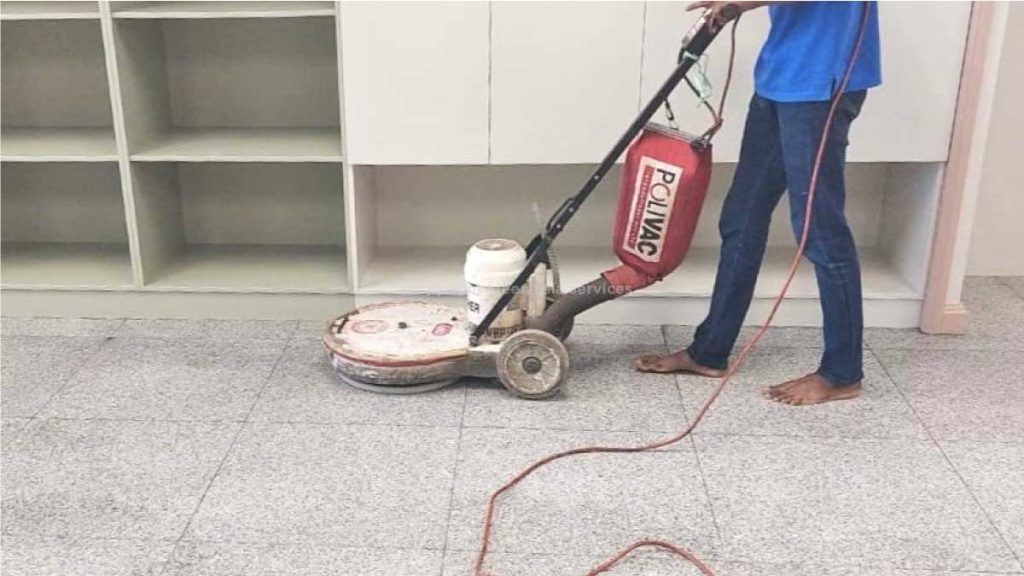
How a professional floor cleaning service can help
Professional assistance is useful when a floor is large, heavily used, difficult to clean evenly or showing signs that are hard to identify. A provider can review the surface, discuss the visible problem and determine whether the priority is cleaning, polishing, tile care or a combination of services.
Assessment before cleaning
An assessment helps establish what the floor is made of and what has happened to it. Dirt, product residue, stains and wear can look similar under indoor lighting. Looking at the floor carefully before treatment supports a more appropriate plan and helps set realistic expectations.
Material-appropriate cleaning
Cleaning should be matched to the surface. This includes considering the type of product used, the amount of moisture, the level of agitation and the areas that need extra attention. For tiles, grout and edges may require different care from the main surface. For marble, a gentler and more specific approach may be necessary.
Kleen Asia Carpet Cleaning & Upholstery Cleaning presents floor cleaning, marble polishing and related tile cleaning and polishing services. Customers can discuss the condition of their flooring with the company to clarify which service is appropriate for their home or office.
How to prepare for floor cleaning or marble polishing
A little preparation can make the work easier and give the cleaner a clearer view of the floor. Remove small movable objects from the treatment area where possible, and identify sections that need particular attention. Point out spills, marks, areas of dullness and any previous repair or cleaning work.
If you are unsure whether the floor is marble, tile or another material, mention that when requesting an assessment. It is also helpful to explain whether the concern is everyday dirt, a change in appearance, a recurring mark or an overall loss of shine. Clear information supports a more useful conversation before service begins.
Information worth sharing
- The type of floor, if known.
- Which rooms or sections need treatment.
- Whether the floor is used by children, pets, customers or office staff.
- Any products already used on the surface.
- Whether the concern is cleaning, dullness, marks or uneven appearance.
- Any areas that should be avoided or treated separately.
How often should each type of care be considered?
Routine floor cleaning is generally part of ongoing maintenance because floors collect soil as people use the space. The suitable cleaning frequency depends on foot traffic, the size of the household or office, entrances, furnishings and the floor’s appearance. High-use areas usually need attention sooner than rooms that are rarely occupied.
Marble polishing is not a routine replacement for cleaning. It is usually considered when the appearance or surface condition indicates that ordinary maintenance is no longer addressing the main concern. Rather than choosing a fixed schedule without assessing the floor, look for changes such as dullness, visible wear or an inconsistent finish, and ask for professional advice.
Common mistakes to avoid
Using the same cleaner on every floor
Different materials can have different care requirements. A general-purpose product may leave residue or be unsuitable for a particular surface. Read product instructions carefully and avoid assuming that a product is appropriate simply because it is marketed for hard floors.
Treating polishing as a deep clean
Polishing can improve the appearance of a suitable surface, but it does not remove every type of dirt or resolve every stain. Cleaning and polishing have separate roles. If the floor is dirty, it should be properly cleaned and assessed before any polishing-related treatment is considered.
Scrubbing aggressively
Strong scrubbing may seem like a quick way to remove marks, yet excessive abrasion can change the appearance of some floors. It may also make a small problem more visible. Start with the least aggressive suitable method and seek advice when the surface is delicate, valuable or already showing wear.
Ignoring the cause of recurring dirt
If the same area becomes dirty quickly, consider what is contributing to the problem. Entrances may bring in soil, furniture may create pressure marks, and busy walkways may simply receive more use. Cleaning remains important, but practical maintenance such as using suitable mats and responding to spills promptly can support the condition of the floor between professional visits.
Choosing the right service for your floor
When comparing a regular floor cleaning service with marble polishing, begin with the result you need. If the floor is visibly dirty or has residue, routine cleaning is the logical starting point. If it has already been cleaned but still looks dull or uneven, ask whether polishing-related care is suitable. If the surface has deep damage, cleaning and polishing may not be enough, so the condition should be explained clearly.
Kleen Asia Carpet Cleaning & Upholstery Cleaning provides floor cleaning and polishing services for customers looking after residential and commercial spaces in Kuala Lumpur and Selangor. The company also offers carpet, sofa and upholstery, mattress, curtain and rug cleaning services. For floor care, discussing the material and the visible issue first can help identify the most suitable service.
Final takeaway
Routine floor cleaning and marble polishing are related but different forms of floor care. Cleaning removes everyday soil and residue, while polishing focuses on the appearance and finish of suitable marble surfaces. A clean floor may need no polishing, and a dull floor may need more than another round of mopping. Assess the material, identify the actual problem and choose a treatment designed for that surface.
Frequently asked questions
Is marble polishing the same as floor cleaning?
No. Floor cleaning removes dirt, dust, spills and residue. Marble polishing is a separate surface-care treatment intended to improve the appearance of suitable marble when cleaning alone does not address dullness or light wear.
Can every tiled floor be polished?
No. The appropriate treatment depends on the tile material, finish and condition. A floor should be identified and assessed before polishing or using a specialised product.
Should marble be cleaned before polishing?
Yes, cleaning and assessment should generally come first. Dirt and residue can affect the appearance of the surface and make it harder to determine whether polishing is actually needed.
How do I know whether my floor needs cleaning or polishing?
If the main issue is visible soil, spills or residue, start with cleaning. If the floor appears clean but remains dull, uneven or worn-looking, ask a professional whether marble polishing or another surface treatment is appropriate.
Can routine mopping restore the shine of marble?
Routine mopping can remove surface dirt, but it may not restore a finish that has changed through wear, marks or unsuitable product residue. An assessment can help identify the cause of the dull appearance.
Does a floor cleaning service include marble polishing?
Not always. Services vary, so ask the provider to confirm what is included. Kleen Asia Carpet Cleaning & Upholstery Cleaning presents floor cleaning, marble polishing and related tile care as available services.