

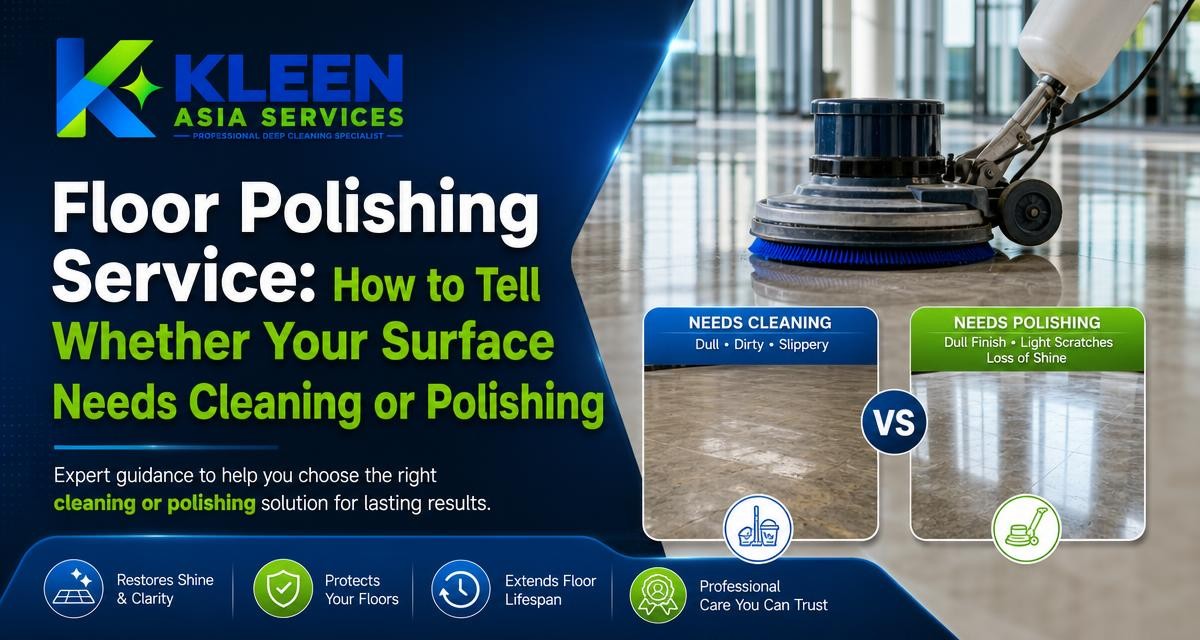
Choosing between a floor polishing service and routine cleaning is not always straightforward. A floor may look dull because of surface dirt, or it may have lost its finish through foot traffic and everyday wear. Understanding the difference can help you request the right type of care for the material and condition of your floor.
Cleaning and polishing solve different problems
Floor cleaning is mainly concerned with removing soil, dust, spills, residue and other surface contamination. It is the appropriate starting point when the floor looks dirty, feels sticky or has marks that may be sitting on top of the material. Regular cleaning also helps prevent loose grit from being walked across the surface, where it can contribute to further wear.
Polishing is related to the appearance and finish of the floor. Depending on the material and the condition of the surface, polishing may be considered when the floor looks dull, has lost some of its shine or shows general wear that ordinary cleaning does not address. Polishing is not simply a stronger form of mopping, and it should not be treated as a universal solution for every floor type.
| What you notice | More likely to require | Why |
|---|---|---|
| Dust, loose dirt or surface marks | Floor cleaning | The issue may be removable contamination on the surface. |
| Sticky residue or tracked-in soil | Floor cleaning | Residue and dirt need to be removed before considering further treatment. |
| A generally dull appearance after cleaning | Assessment for polishing | The surface may have lost some of its finish or reflectivity. |
| Scratches, chips, cracks or damaged joints | Inspection before cleaning or polishing | Cleaning or polishing alone may not correct physical damage. |
| Discolouration with an unknown cause | Professional assessment | The appearance may be linked to staining, wear, moisture or the material itself. |
Start with the type of floor surface
The same visible problem can mean different things on marble, ceramic tile, porcelain, terrazzo, concrete or another flooring material. Before selecting a floor polishing service, identify the surface as accurately as possible. Look at installation records, product information or spare tiles if they are available. If you are unsure, avoid treating the floor with an aggressive product or abrasive tool.
Natural stone floors
Marble and other natural stone surfaces can develop a less reflective appearance in busy areas. They can also show marks that are not removed by ordinary cleaning. A marble polishing service may be relevant when the concern is loss of shine or surface appearance, but the correct approach depends on the stone, its finish and the nature of the wear.
Natural stone also needs careful handling because household cleaners are not automatically suitable for every stone surface. A product that is too harsh, or a method that is too abrasive, may create a new surface problem. Cleaning should therefore be separated from polishing when discussing what the floor actually needs.
Ceramic and porcelain tiles
Tiles may appear dull because of dust, soap residue, grease or a film left by unsuitable cleaning products. In these cases, a tile cleaning service may be more appropriate than polishing. The joints between tiles can also hold dirt, making the whole floor look tired even when the tile faces are in reasonable condition.
Some tile surfaces have a finish that should not be altered casually. A professional assessment can help determine whether the issue is surface contamination, worn finish, damaged glaze or grout discolouration. The answer may be cleaning rather than a polishing treatment.
Other flooring materials
Concrete, terrazzo and other hard surfaces each have their own maintenance requirements. A dull appearance does not automatically mean that the floor should be polished. The material, existing coating, age, traffic pattern and previous treatments all affect what can be done safely.
Signs that routine floor cleaning may be enough
Cleaning is often the sensible first step when the floor has not been maintained recently or when the visible problem appeared after a spill, renovation, event or period of heavy use. A floor that looks noticeably better after loose dirt and residue are removed may not need polishing at that time.
Look for surface-level problems
- Dust or grit is visible along edges, corners and high-traffic paths.
- The floor feels sticky or greasy underfoot.
- Footprints and tracked-in marks are more obvious than scratches.
- A haze appears after mopping and may be related to cleaning residue.
- Spills or food marks are concentrated in specific areas.
- Grout lines look dirty while the tile faces remain relatively even.
These signs point towards soil or residue that may be sitting on the surface. A floor cleaning service can be useful when the problem is difficult to address with normal household equipment, covers a large area or affects a busy home or office.
Signs that polishing may be worth discussing
A floor polishing service may be worth considering when the floor remains dull after appropriate cleaning and the material is suitable for polishing. The change is usually more general than a single spill or isolated mark: high-traffic paths may look flatter, older sections may have less reflectivity and the floor may no longer have the appearance it had when it was better maintained.
Visible wear is different from dirt
Compare a busy walkway with a protected area under furniture or near a wall. If the busy section has a noticeably different finish even after cleaning, repeated foot traffic may have affected the surface. This does not prove that polishing is the right answer, but it is a useful reason to request an assessment.
Polishing may also be discussed before an event, after renovation work or as part of a wider maintenance plan. However, the condition of the floor should guide the decision rather than the desire for a quick visual change.
When neither cleaning nor polishing is the complete answer
Some floor problems are related to physical damage, installation issues or moisture rather than ordinary dirt or loss of shine. Cracks, loose tiles, deep chips, lifting edges and damaged grout may need repair or further inspection. Polishing over a damaged surface is unlikely to resolve the underlying problem.
Persistent discolouration also deserves caution. A mark may be a stain, chemical etching, moisture-related change, worn coating or a difference in the material itself. Because these causes can look similar, avoid promising or expecting a particular result before the floor has been assessed.
Ask these questions before booking
- What is the exact flooring material?
- Is the main concern dirt, dullness, scratches, staining or damage?
- Has the floor been treated with a coating or sealer?
- What cleaning products or methods have already been used?
- Are there areas with loose tiles, cracks, chips or damaged grout?
- Can the provider explain whether cleaning, polishing or another form of care is appropriate?
Sharing clear photos and describing the problem accurately can make an initial discussion more useful. Mention where the issue appears, how long it has been visible and whether it is concentrated in high-traffic areas.
How traffic affects the decision
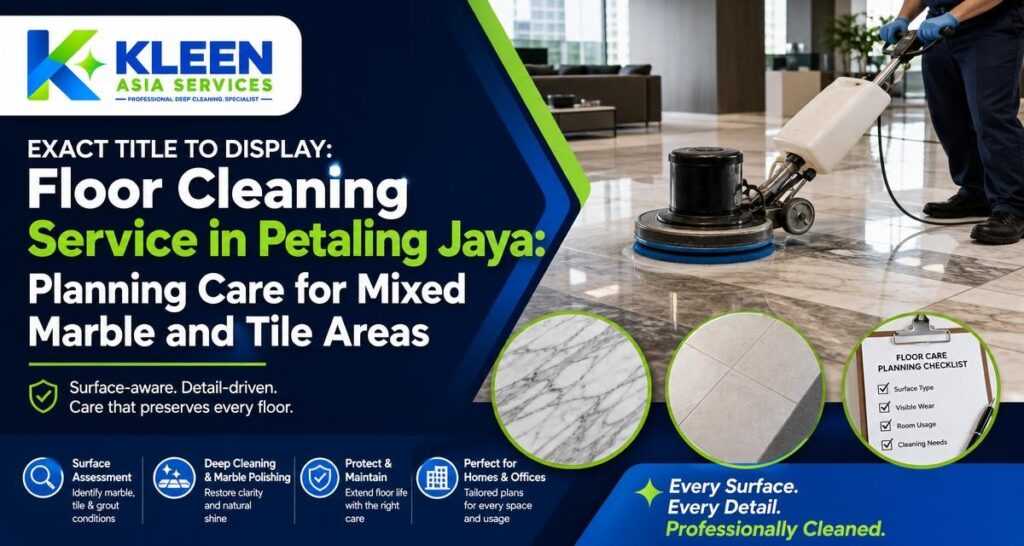
Flooring in an entrance, corridor, lobby, kitchen or office walkway usually experiences more contact than flooring in a rarely used room. Dirt brought in from outside can also act as an abrasive when it is repeatedly walked across the surface. Over time, this may make busy paths appear different from less-used areas.
Traffic alone does not determine whether polishing is required. It does explain why some sections may need more frequent cleaning and why a floor can show wear unevenly. In an office or shared building, consider entrances, lift areas, reception spaces and corridors separately rather than judging the entire floor from one location.
| Area condition | Practical first step | What to monitor |
|---|---|---|
| Lightly used room with loose dust | Routine cleaning | Whether the appearance improves once dust is removed. |
| Busy entrance with tracked-in soil | Thorough floor cleaning | Recurring dirt and the condition of entry mats or surrounding areas. |
| High-traffic walkway that stays dull | Assessment for polishing | Differences between worn and protected sections. |
| Floor with scratches or broken areas | Inspection or repair advice | Whether the issue is deeper than surface appearance. |
Why cleaning usually comes before polishing
It is difficult to judge the true condition of a floor while dirt, residue and loose grit are still present. Cleaning provides a clearer view of the material and helps separate a temporary appearance problem from wear that remains after the surface is clean.
This sequence also supports more realistic expectations. If the floor looks satisfactory after cleaning, polishing may not be necessary immediately. If dullness remains, the next conversation can focus on the suitability of polishing, the floor material and any limitations caused by existing damage.
Choosing a professional floor cleaning or polishing service
When comparing providers, look for a service description that matches your concern. Kleen Asia Carpet Cleaning & Upholstery Cleaning presents floor cleaning and polishing services, including marble polishing and related tile cleaning and polishing solutions. The right service should still be confirmed based on the specific surface and condition of your floor.
Before work begins, explain whether you are seeking routine cleaning, marble polishing, tile cleaning or advice about a dull and worn surface. Ask what information the provider needs and whether the floor should be inspected first. A careful discussion is more useful than choosing a treatment solely because the word “polishing” sounds more intensive.
Prepare the area for an assessment
- Clear small movable items from the floor where possible.
- Identify the areas with the heaviest foot traffic.
- Point out spills, stains, scratches, cracks or previous repairs.
- Share details of past cleaning products or treatments.
- Keep product labels or flooring information available if you have them.
For homes and offices in Kuala Lumpur and Selangor, a professional floor cleaning service can help clarify whether the immediate need is cleaning, polishing or a more cautious assessment. The final recommendation should reflect the material and condition rather than a generic treatment.
A simple decision guide
Use the following process when the floor does not look its best:
- Identify the material. Do not assume that every hard floor can be treated in the same way.
- Describe the visible problem. Separate dirt and residue from dullness, scratches or damage.
- Consider traffic. Compare busy paths with protected sections.
- Start with suitable cleaning. A clean surface makes its underlying condition easier to judge.
- Review the result. If dullness remains, ask whether polishing is suitable for that surface.
- Address damage separately. Cracks, loose tiles and serious defects may require repair or further inspection.
The main lesson is simple: cleaning removes unwanted material from the floor, while polishing relates more closely to the condition and appearance of the surface. When you are unsure, describe the problem carefully and seek advice based on the floor type instead of selecting a treatment by name alone.
Frequently asked questions
What is the difference between a floor cleaning service and a floor polishing service?
A floor cleaning service focuses on removing dirt, dust, spills and residue. A floor polishing service is considered when the surface has lost some of its finish or shine and the material is suitable for polishing.
Should a floor be cleaned before polishing?
Cleaning is generally a sensible first step because it removes surface contamination and makes the actual condition of the floor easier to assess. The appropriate sequence can depend on the material and its existing treatment.
Does a dull floor always need polishing?
No. Dullness can be caused by dirt, cleaning residue, staining, wear or damage. Cleaning may be enough in some cases, while other floors may need an assessment before polishing is considered.
Can every tile be polished?
No. Tile materials, finishes and existing coatings vary. Some floors may be better suited to cleaning, while others require a specific treatment. Confirm the material before using abrasive products or arranging polishing.
Can polishing remove scratches or cracks?
Polishing is not a universal repair method. Deep scratches, cracks, loose tiles and damaged grout may require inspection or repair advice rather than polishing alone.
When should I contact Kleen Asia about my floor?
Contact Kleen Asia Carpet Cleaning & Upholstery Cleaning when you need to discuss floor cleaning, marble polishing or related tile cleaning and polishing services. Provide the floor type, the areas affected and the problem you can see so the service can be considered more accurately.
Related posts:
 Marble Polishing for Office Lobbies: What Surface Details Should You Record First?
 Floor Polishing Service: A Pre-Service Checklist for Homes and Offices
 Floor Cleaning Service: Marble Polishing vs Routine Floor Cleaning
 Floor Cleaning Service in Petaling Jaya: Planning Care for Mixed Marble and Tile Areas