


Moving into a new apartment is easier when you inspect the fitted carpets before furniture, boxes and daily foot traffic cover the floor. A careful check can reveal trapped dust, lingering odours, flattened areas, marks or moisture concerns that may not be obvious during a quick viewing. This Kuala Lumpur-focused guide explains what tenants and homeowners should look for, how to document the carpet’s condition and when a professional carpet cleaning service may be worth considering.
Why inspect fitted carpets before settling in?
Fitted carpet is different from a loose rug because it usually covers a large area and may extend beneath furniture or into awkward corners. Previous occupants may have walked on it for months or years, while routine vacuuming may not have addressed embedded dirt, spills or odours. Even when the carpet looks reasonably clean, a move-in inspection gives you a clear starting point.
For tenants, the inspection is also part of documenting the condition of the apartment. For homeowners, it helps identify which rooms need attention before children, pets, furniture or work equipment are brought inside. In either case, inspect before unpacking wherever possible.
A move-in carpet inspection at a glance
| What to check | What it may indicate | What to record |
|---|---|---|
| Surface appearance | Marks, discolouration or uneven wear | Room, location and clear photographs |
| Smell | Trapped odours, previous spills or dampness | When the smell is strongest and where it occurs |
| Edges and joins | Loose carpet, lifted sections or exposed edges | Exact position and visible condition |
| Texture | Flattening, matting or areas with different pile direction | Rooms and high-traffic zones affected |
| Moisture signs | Recent spills, leaks or flooding concerns | Discolouration, damp feel and nearby wall or floor signs |
Start with a room-by-room walkthrough
Open windows and turn on the lights before inspecting. Natural daylight can reveal colour differences, while a bright lamp can help you see marks in darker corners. Walk slowly through bedrooms, living areas, hallways and any carpeted study or utility space. Avoid judging the whole apartment from the centre of each room; fitted carpets often show their most useful clues at doorways, under windows and along furniture lines.
Use a simple note on your phone for each room. Write down whether the carpet looks clean, has visible marks, smells unusual or feels different underfoot. Taking photographs before cleaning, moving furniture or applying any product creates a useful record of the starting condition.
Check areas that receive the most traffic
Entryways, corridors, living-room pathways and the space beside the bed often show wear sooner than less-used sections. Look for darkened lanes, flattened pile, compressed areas and changes in texture. These signs do not automatically mean the carpet needs replacing, but they help you understand how heavily the room may have been used.
Pay attention to the areas around doors. Dust and outdoor debris can collect where shoes enter the apartment, while the carpet just inside a balcony or service door may have been exposed to humidity or occasional moisture. In a Kuala Lumpur apartment, ventilation and weather exposure can vary considerably between rooms, so do not assume every section has the same condition.
Look for marks, stains and colour changes
Inspect the carpet from several angles rather than relying on one overhead view. Some marks appear as darker patches, while others are visible as lighter areas where a previous product may have affected the fibres. Compare the centre of the room with sections beneath doors, beside skirting boards and behind removable furniture.
Do not scrub an unknown stain immediately. Rubbing can spread a mark or affect the carpet fibres, and a cleaning product that is unsuitable for the carpet may create a new problem. First photograph the area, note its size and appearance, and check whether the mark is dry, sticky, crusted or damp.
Questions to ask about visible stains
- Is the mark on the surface, or does it appear to extend into the pile?
- Does it look like a spill, general soiling, fading or a change in carpet texture?
- Is the affected area near a doorway, window, bathroom or kitchen?
- Was the mark visible during the handover or property viewing?
- Has anyone already applied a household cleaner or deodoriser?
The answers can help you decide whether the issue is mainly cosmetic, connected to previous use or potentially related to moisture. A professional cleaner can review the carpet’s condition and advise on a suitable approach, but no cleaning method should be treated as a guarantee of complete stain removal.
Use your sense of smell carefully
Odours can be easier to notice when an apartment has been closed up. Spend a few minutes in each carpeted room, then compare the smell near the centre, corners, wardrobes and doorways. A general stale smell may differ from a concentrated odour in one patch. Also check whether the smell becomes stronger near skirting boards, under windows or close to a bathroom.
Ventilation may change what you notice, so record the condition before and after opening windows. Avoid covering the smell with fragrance sprays. They can make it harder to identify the original concern and may add another scent to the room. If there is a persistent damp smell or visible moisture, document it and raise it with the landlord, agent, building management or relevant property contact before treating the carpet.
Inspect carpet edges, joins and access points
Fitted carpets can be vulnerable at edges and transitions. Check where the carpet meets tile, wood, vinyl, skirting boards and built-in cupboards. Look for lifted edges, loose sections, exposed backing or a join that appears to be separating. Do not pull at the carpet or attempt to re-stretch it yourself during a move-in inspection.
Room access matters when arranging a carpet cleaning service in an apartment. Note the location of lifts, staircases, narrow corridors, parking restrictions, security desks and building access rules. Also consider whether furniture is already inside the room. Sharing accurate information about the apartment layout and access can help the service provider understand the practical requirements before any appointment is discussed.
Apartment access checklist
- Confirm which rooms have fitted carpet and estimate the areas that need attention.
- Identify lift, staircase and corridor access from the building entrance to the apartment.
- Check whether security registration or management approval is required.
- Move small loose items away from the carpet before inspection or cleaning.
- Tell the provider about heavy furniture, built-in wardrobes or rooms that cannot be cleared.
- Keep a clear route for people entering and leaving the apartment.
Check for moisture and previous-use concerns
Moisture deserves prompt attention because it may affect both the carpet and the surface beneath it. Look for damp-feeling patches, tide marks, unusual darkening, lifted edges or a smell that is strongest in one location. Inspect nearby walls, balcony doors, windows, air-conditioning areas and plumbing points for related signs, without assuming the carpet itself caused the issue.
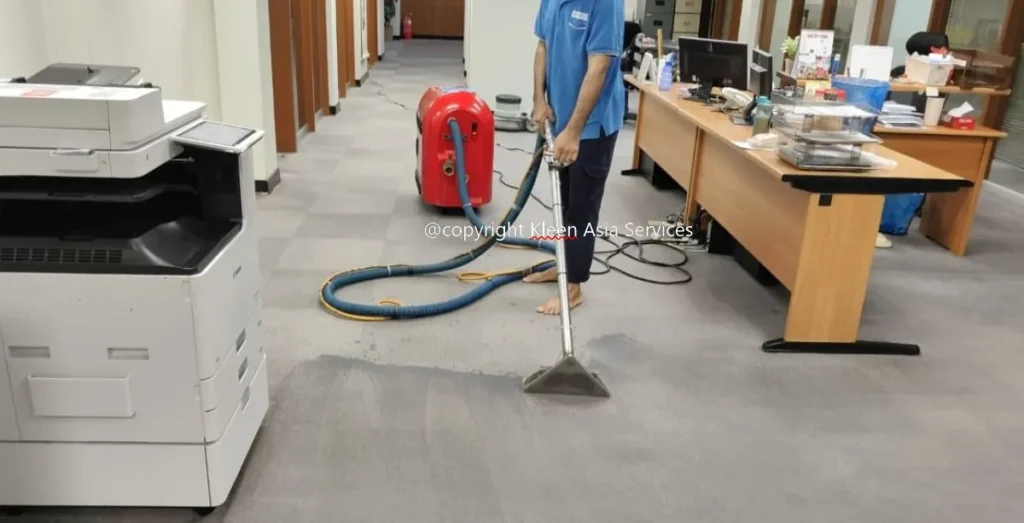
If the carpet has been affected by flooding or a leak, take photographs and notify the responsible property contact. Kleen Asia Services presents flooded carpet cleaning among its listed services for homes and offices in Kuala Lumpur and Selangor. The right response depends on the condition of the carpet and the source of the water, so describe what happened rather than requesting a particular result.
Decide what to do before unpacking
Once the inspection is complete, group your findings into three categories: acceptable as it is, needs routine attention and needs prompt clarification. A lightly marked bedroom may simply need normal care, while a persistent odour, damp patch or damaged edge deserves further discussion before you place a bed or wardrobe over it.
For tenants, send dated photographs and notes through the agreed property communication channel. Keep copies of your messages. For homeowners, consider arranging cleaning before furniture arrives if the carpet is accessible. This is often a more practical point to assess the floor thoroughly because there are fewer obstacles and fewer belongings at risk of getting in the way.
When a professional carpet cleaning service may help
A professional service may be useful when fitted carpets have visible general soiling, an established previous-use smell or areas that are difficult to reach with ordinary household equipment. It can also be worth asking for an assessment when you are unsure whether a mark is surface dirt or a deeper carpet-care issue.
Share the relevant details before arranging work: the carpet type if known, the number of rooms, visible stains, odours, moisture history, furniture access and the apartment location. Kleen Asia Carpet Cleaning & Upholstery Cleaning provides carpet cleaning services for homes and offices in Kuala Lumpur and Selangor. The company also lists sofa and upholstery, mattress, curtain and rug cleaning, which may be relevant when a move-in involves more than fitted carpet.
Prepare the apartment for carpet cleaning
Preparation does not mean applying strong chemicals or trying to remove every mark yourself. Instead, make the condition easy to assess and the rooms easy to access. Remove small objects from the floor, secure fragile items, identify areas that must not be treated and explain any previous cleaning attempts.
If furniture cannot be removed, point out which items are fixed and which can be moved. Ask what preparation is recommended for the specific carpet and apartment layout. Do not rely on a promised drying time or assume that every carpet can be treated in the same way; the material, condition, ventilation and amount of moisture used can all affect the process.
A practical pre-cleaning checklist
- Photograph stains, odours-related areas and damaged edges before work begins.
- Clear toys, boxes, cables and small furniture from the floor.
- Identify carpeted rooms that require separate attention.
- Describe any leak, spill, flooding or previous cleaning attempt accurately.
- Confirm access arrangements for the apartment building.
- Ask how to protect furniture and what should remain off the carpet afterwards.
- Keep the room ventilated as appropriate and follow the provider’s care instructions.
Do not confuse cleaning with carpet repair or replacement
Cleaning can address soil and some stains, but it cannot automatically correct every carpet problem. Loose edges, damaged backing, permanent fading, severe matting and problems beneath the carpet may require assessment by the landlord, building manager or another specialist. If the carpet is physically damaged, record it separately from cleaning concerns.
This distinction is especially important in a rental apartment. A carpet that looks worn may reflect age, heavy previous use or an installation issue rather than a lack of cleaning. Document what you see and ask the responsible party how the condition should be handled before authorising any work that could affect a deposit or handover record.
Move-in checklist for Kuala Lumpur apartments
Use this condensed checklist on the day you receive the keys or before your belongings arrive:
- Inspect every carpeted room in good lighting.
- Photograph the full room and close-ups of marks, edges and unusual patches.
- Check high-traffic routes, doorways, corners and areas near windows.
- Notice any persistent, localised or damp smell.
- Feel for unusual dampness without disturbing damaged sections.
- Record loose edges, joins, flattening and colour differences.
- Ask about previous spills, leaks, flooding or cleaning if information is available.
- Report pre-existing concerns before unpacking.
- Assess whether furniture should be delayed until the carpet has been reviewed.
- Contact a carpet cleaning service with accurate details about rooms and access.
Make the first inspection part of your settling-in routine
A fitted carpet inspection is a small task that can prevent confusion later. It helps tenants create a fair condition record and gives homeowners a clearer plan for preparing each room. In Kuala Lumpur apartments, practical details such as ventilation, lift access, building rules and previous-use history are just as relevant as the visible appearance of the carpet.
Start with photographs and notes, separate cleaning concerns from repair concerns, and avoid aggressive do-it-yourself treatment of unknown marks. If the carpet needs professional attention, provide a clear description of the apartment and its condition so the cleaning discussion begins with realistic expectations.
Frequently asked questions
When should I inspect fitted carpets after moving into a Kuala Lumpur apartment?
Inspect them as soon as you receive access, preferably before unpacking and before placing large furniture in the rooms. This gives you a clearer view and creates a useful record of the starting condition.
Should tenants clean the carpet before reporting stains?
No. Photograph and report visible stains first, especially when the marks may be pre-existing. Avoid applying strong products or scrubbing until you understand the property’s reporting requirements and the carpet’s material.
What carpet areas deserve the closest inspection?
Check entrances, corridors, living-room pathways, bedroom sides, corners, window areas, balcony doors, skirting boards and places where furniture previously stood. These areas can reveal traffic, moisture or colour differences.
Can a carpet cleaning service remove every previous-use mark?
No cleaning result should be guaranteed in advance. The outcome can depend on the carpet, the type and age of the mark, previous treatments and the condition of the fibres. A provider should assess the situation and explain realistic expectations.
What should I tell a cleaner about an apartment?
Provide the Kuala Lumpur location, number of carpeted rooms, approximate area, visible stains, odours, moisture history, furniture restrictions and building access details. Accurate information helps the provider understand the job before discussing service arrangements.
What if the fitted carpet smells damp?
Document the smell and any visible moisture, then notify the landlord, agent or property contact. Check nearby windows, doors and plumbing areas without assuming the cause. If flooding or a leak is involved, explain the circumstances when seeking professional advice.