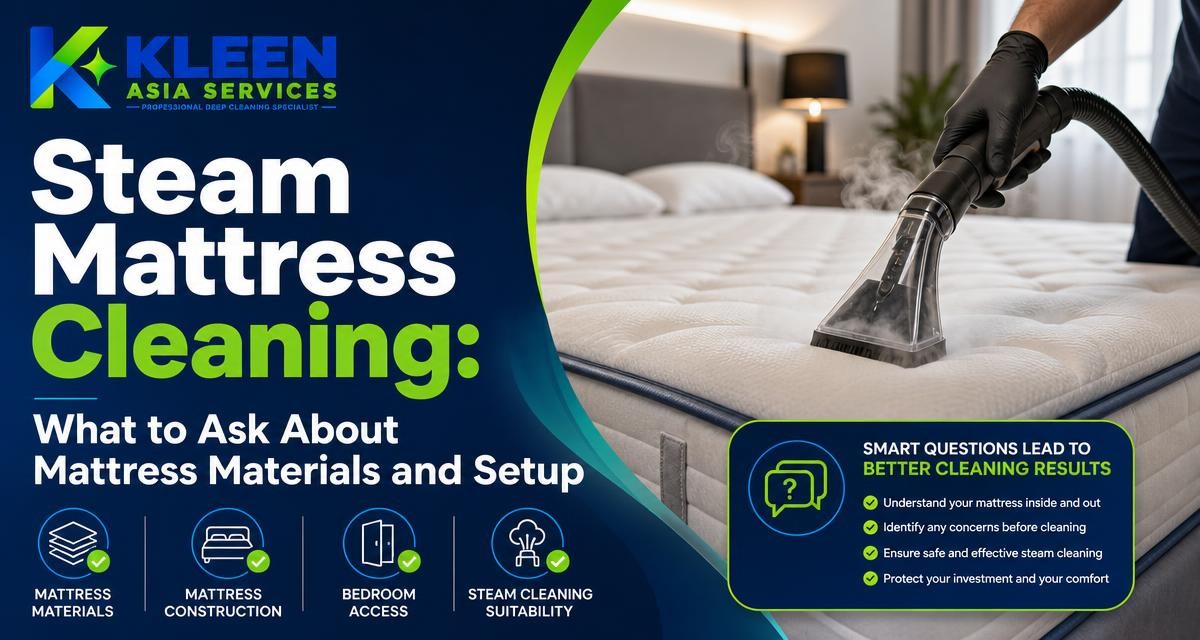
Steam mattress cleaning can be a practical option when a mattress needs more than routine vacuuming, but the right approach depends on its construction, surface condition and the space around it. Before booking a mattress cleaning service, ask clear questions about the materials, moisture control, stains, access and preparation. These details help the cleaner assess whether a steam-based method is suitable for your mattress and your bedroom setup.
Why mattress construction matters
A mattress is not simply a large piece of fabric. It may contain several layers, such as fabric upholstery, foam, springs, padding or other internal materials. Different constructions can respond differently to moisture, heat, pressure and cleaning products. That is why a professional should understand what the mattress is made from before starting work.
When contacting a cleaner, share the information available from the mattress label or manufacturer. If you do not know the exact construction, take a clear photograph of the label and describe the mattress as accurately as possible. Avoid assuming that every mattress can be treated in the same way.
Questions to ask about materials
- Do you need the mattress brand, model or care-label information?
- Is steam mattress cleaning suitable for this type of mattress?
- How will you assess foam, spring, padded or layered sections?
- Will you test a small, less visible area first?
- Are there materials, finishes or coverings that require a different approach?
- What should I do if the care label advises against a particular cleaning method?
These questions do not guarantee a particular result, but they encourage a proper assessment before cleaning begins. A responsible provider should be willing to discuss suitability rather than treating the cleaning method as automatic.
What to disclose about the mattress condition
The cleaner also needs an honest picture of the mattress condition. Mention visible stains, spills, odours, dampness, pet-related soiling and areas that receive heavier use. It is also useful to explain when the issue occurred, if you know. A fresh spill and an old mark may require different attention, and some marks may not disappear completely.
Do not rely on a general request for “deep cleaning” alone. The more specific you are, the easier it is for the service provider to discuss an appropriate process and realistic expectations. If there has been a previous DIY treatment, tell the cleaner which product was used and whether the area was rinsed or dried.
Information worth sharing before an appointment
| Information | Why it matters | Question to ask |
|---|---|---|
| Mattress material | Construction can affect method selection and moisture use. | How will you assess this material before cleaning? |
| Stains and spills | Age, type and location may affect treatment expectations. | Can you inspect the marks before starting? |
| Odours | The source and depth of an odour may not be obvious from the surface. | What can your process reasonably address? |
| Previous cleaning | Existing residue or moisture may affect the next treatment. | Should I provide details of products already used? |
| Mattress condition | Tears, exposed padding or weakened seams may need special care. | Will you note any concerns before cleaning? |
| Bedroom access | Limited space can affect movement and equipment placement. | What access and working space do you need? |
Ask how the steam-based process will be controlled
The phrase “steam mattress cleaning” can mean different things to different providers. Ask what the service involves instead of assuming that the mattress will receive the same treatment as a hard surface or another fabric furnishing. The important points include how moisture is applied, how it is extracted or managed, and how the operator will protect the surrounding room.
A useful explanation should cover the main stages without promising an outcome that cannot be verified in advance. You can ask whether the mattress will be inspected, vacuumed, spot-tested, treated, cleaned and checked after the work. The exact sequence may vary according to the mattress and its condition.
Practical process questions
- What happens during the initial inspection?
- How is loose dust and surface debris handled?
- How do you limit excess moisture during cleaning?
- How is the mattress checked after the treatment?
- Will the cleaning method change if the fabric or filling is delicate?
- Are there areas that should not be treated?
These questions are especially helpful when comparing providers. A clear answer is more useful than a broad promise of “complete” cleaning. You should also ask what the provider can and cannot confirm about stains, odours, drying and the final appearance.
Drying and moisture: what to clarify
Moisture is one of the most important subjects to discuss before mattress deep cleaning. A mattress is thick, and its surface may not tell you how moisture has moved through the material. Ask how the cleaner manages the amount of moisture used and what conditions are needed after the appointment.
Do not accept an assumed drying schedule unless the provider has assessed the mattress and the room. Drying can depend on the mattress construction, ventilation, humidity, room temperature and the amount of moisture involved. Ask what you should do after cleaning, whether the mattress should remain uncovered, and when it may be suitable to use again.
Questions about drying
- What should I remove from the bed before the service?
- How should the room be ventilated during and after cleaning?
- Should the mattress remain uncovered while it dries?
- Will you check the surface condition before leaving?
- What should I do if the mattress still feels damp later?
- When should bedding be put back on?
Follow the provider’s instructions and avoid covering a mattress simply to make the room look tidy. If you are arranging cleaning for a child’s bed, a guest room or a frequently used bedroom, plan for the room to be unavailable until the provider confirms the next steps.

Prepare the bedroom before the cleaner arrives
Good preparation makes the appointment easier and gives the cleaner room to inspect the mattress properly. Remove sheets, protectors, blankets and other bedding before the service unless the provider gives different instructions. Store these items away from the work area so they do not collect moisture or cleaning residue.
Clear the floor around the bed and move small objects from nearby surfaces. Tell the provider about narrow corridors, stairs, lifts, parking restrictions or a bed frame that cannot be moved. In an office or accommodation setting, explain any access rules in advance. For homes in Kuala Lumpur and Selangor, clear communication about the property layout can help the service visit run more smoothly.
Simple preparation checklist
- Remove all bedding and mattress accessories.
- Clear the floor on each side of the bed where possible.
- Secure fragile items and personal belongings near the work area.
- Identify stains, damaged areas and spots with noticeable odours.
- Keep the mattress label or care instructions available.
- Explain access limitations before the appointment.
- Ask what ventilation or drying arrangements will be needed afterward.
Protect the surrounding bedroom
Mattress cleaning takes place in a room that may contain flooring, bedside furniture, curtains and other fabric furnishings. Ask how the provider plans to protect nearby items and where equipment will be placed. This is particularly relevant when the mattress is on a bed frame that cannot be easily moved or when the room has limited floor space.
It is also worth checking whether the cleaner needs access to a nearby power source or a clear route from the entrance to the bedroom. You do not need to rearrange the entire home, but removing obstacles and discussing the setup beforehand can prevent unnecessary disruption.
How to discuss stains and odours realistically
Stain removal and odour treatment should be discussed separately from general cleaning. A cleaner may be able to treat a particular area, but the result can depend on what caused the mark, how long it has been present, whether it reached deeper layers and whether someone has already applied a household product.
Ask the provider to inspect problem areas and explain what is realistically possible. Be cautious of claims that guarantee every stain, smell or mark will disappear. A professional assessment should acknowledge uncertainty where the cause or condition is not clear.
Useful questions for problem areas
- Can you identify the likely type of stain before treatment?
- Will the cleaning method be adjusted for older or set-in marks?
- What information do you need about spills or previous treatments?
- How will you address an odour without masking it with fragrance?
- Could treatment affect the appearance of the mattress fabric?
- What result should I reasonably expect after inspection?
Choosing a professional mattress cleaning service
When comparing a mattress cleaning service, look beyond the word “steam.” Check whether the provider offers mattress cleaning as a defined service and whether they are prepared to discuss materials, access, moisture and aftercare. A useful conversation before booking can reveal whether the service is suitable for your needs.
Kleen Asia Carpet Cleaning & Upholstery Cleaning provides mattress cleaning services for homes and offices in Kuala Lumpur and Selangor. The company also handles carpets, sofas and upholstery, curtains and rugs. If you are considering professional mattress cleaning, share the mattress details and bedroom setup when requesting service information so the cleaning approach can be discussed more accurately.
A short question list to keep before booking
If you want a simple starting point, save these questions on your phone before contacting a provider:
- Is steam mattress cleaning suitable for my mattress construction?
- What information do you need from the care label?
- How will you inspect stains, damage and odours?
- How will moisture be controlled and managed?
- What bedroom access and clear space do you require?
- What should I remove before the appointment?
- What aftercare and drying instructions will I receive?
- Which results can you confirm, and which depend on the mattress condition?
Asking these questions helps you make a more informed decision and reduces misunderstandings about the service. The goal is not simply to choose a named cleaning method, but to find out whether that method fits the mattress, the problem and the room.
Frequently asked questions
Is steam mattress cleaning suitable for every mattress?
No cleaning method should be assumed to suit every mattress. The provider should review the construction, care information and condition before confirming the approach.
What should I tell a mattress cleaner before booking?
Share the mattress type if known, visible stains, odours, previous cleaning, damaged areas and any access limitations in the bedroom.
Should bedding be removed before mattress cleaning?
Usually, the cleaner needs the mattress uncovered for inspection and treatment. Remove sheets, protectors and other bedding unless the provider gives different instructions.
How long will a cleaned mattress take to dry?
Drying depends on the mattress, moisture level, ventilation and room conditions. Ask the provider for aftercare instructions rather than relying on a fixed assumption.
Can steam cleaning remove every mattress stain?
No result should be guaranteed before inspection. Stain age, cause, depth, fabric and previous treatment can all affect the final appearance.
Can I use the mattress immediately after cleaning?
Ask the provider when it is suitable to use the mattress again. Keep it uncovered and follow the recommended drying and ventilation instructions.