


When you search for marble polishing services near me, the closest provider is not automatically the right choice. Marble floors can differ in surface condition, finish, colour and the type of marks they have collected. Before booking, ask clear questions about the stone, the proposed work, the finish you want and what results are realistic. This checklist can help homeowners, tenants and offices compare a marble polishing or floor polishing service with greater confidence.
Why the right questions matter before marble polishing
Polishing is not simply a matter of making a floor look shiny. A professional assessment should consider the material, the existing finish and the problems affecting the surface. Dust, tracked-in grit, dull areas, fine scratches, residue, stains and uneven wear may all require different attention. A service that is suitable for one marble floor may not be suitable for another surface.
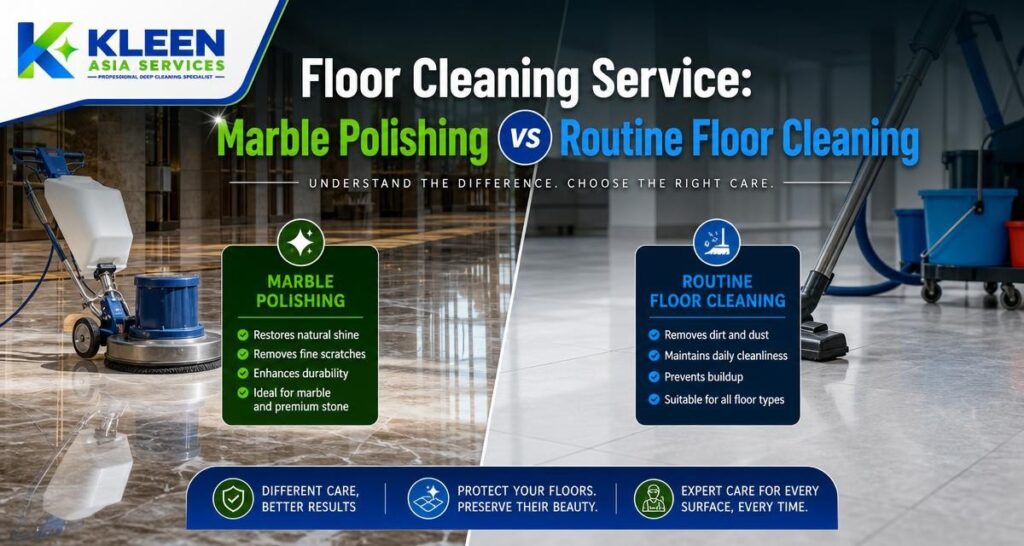
Asking questions in advance also helps you separate the cleaning part of the work from the polishing part. Cleaning may remove loose soil and surface residue, while polishing is intended to refine the appearance of the floor. Neither process should be described as a guaranteed way to remove every mark or restore damaged stone to a perfect condition. The provider should explain what can reasonably be addressed and what may remain visible.
First, confirm what type of surface you have
Is it genuine marble, another natural stone or a tile?
Start by asking the provider whether the work is appropriate for your specific surface. People sometimes use “marble” as a general term for floors that may actually be another natural stone, engineered material, porcelain or ceramic tile. These surfaces can have different care requirements, so an accurate description is useful before any method is selected.
If you are unsure, provide photographs and describe where the floor is installed. Mention whether it is in a living area, entrance, kitchen, bathroom, office, lobby or another space. The location can help the provider understand the level of foot traffic and the kinds of residue or wear the floor may face.
What finish is currently on the floor?
Ask whether the existing surface appears polished, honed, matte, coated or unevenly worn. A glossy area next to a dull area may indicate traffic-related wear, residue or a difference in the previous treatment. A provider should be willing to discuss the current appearance rather than assuming that every floor needs the same process.
It is also helpful to ask whether a small test area can be assessed before the full job is confirmed. A test area does not remove all uncertainty, but it can give you a clearer idea of how the surface responds and whether the expected finish suits the rest of the room.
Questions about existing marks and damage
What is causing the dull or marked appearance?
Describe the problem as accurately as possible. For example, explain whether you are seeing general dullness, visible scratches, dark marks, water spots, cloudy patches, tracked-in soil, discolouration or residue from an earlier product. If you know when the problem appeared, share that information too.
Not every mark is a surface-cleaning issue. Some discolouration may be absorbed into the stone, while scratches or worn sections may affect the surface itself. The provider should explain whether the requested polishing service is likely to improve the appearance, whether additional treatment may be needed, or whether some marks may remain.
Can polishing address scratches, etching or stains?
This is one of the most important questions to ask. A light surface mark may respond differently from a deeper scratch, etched area or set-in stain. Ask the provider to distinguish between cleaning, polishing and more intensive restoration work. These terms should not be treated as interchangeable.
Be cautious of any explanation that promises complete removal without examining the floor. A responsible discussion should cover the condition of the stone and the limits of the proposed service. If the floor has chips, cracks, deep scratches or damaged edges, ask whether those issues are included, excluded or likely to require separate attention.
| Surface concern | Question to ask | Why the answer matters |
|---|---|---|
| General dullness | Is the dullness caused by wear, residue or the current finish? | The cause helps determine whether cleaning, polishing or another approach is appropriate. |
| Scratches | How deep do the scratches appear, and can the proposed service improve them? | Minor marks and deeper damage may have different expectations. |
| Stains or dark patches | Are these surface marks or possible absorption into the stone? | Polishing should not be presented as a guaranteed stain-removal method. |
| Uneven sheen | Can the finish be made more consistent across the area? | Traffic patterns and previous treatments can affect the final appearance. |
| Chips or cracks | Are repairs part of the requested service? | Polishing alone may not address physical damage. |
Ask what the polishing process includes
Is floor cleaning included before polishing?
Ask how the floor will be prepared. Loose dirt and residue can affect the appearance of a polished surface, so the provider should explain whether preliminary floor cleaning is part of the service. Confirm whether the quotation or booking covers both cleaning and polishing, or whether they are treated as separate services.
Kleen Asia Carpet Cleaning & Upholstery Cleaning presents floor cleaning, marble polishing and related tile cleaning and polishing as part of its Floor Cleaning service. When contacting a provider, use your own description of the surface and ask for the exact scope of work rather than assuming that every listed service includes the same steps.
Which areas are included?
Clarify whether the work covers the full floor, selected rooms, walkways, edges or only visibly affected sections. Tell the provider about furniture, built-in cabinets, floor-level fixtures and areas that may be difficult to access. This can help avoid misunderstandings about what will be treated.
For an office or larger premises, ask how the work will be organised around normal use. You may need to confirm which rooms should be cleared, whether access is available throughout the area and how the provider will handle sections that cannot be reached. Do not assume that moving furniture, protecting belongings or cleaning adjacent surfaces is automatically included.
What products, tools or methods will be used?
You do not need to choose the technical method yourself, but you should understand the general approach. Ask whether the method is intended for your type of surface and whether the provider has any precautions for nearby walls, furniture, skirting boards or other materials.
If you have used a household cleaner, coating or polishing product before, mention it. Previous products may affect the surface and can be relevant to the provider’s assessment. It is also reasonable to ask how the area will be left after the work and whether any product residue should be expected.
Set realistic expectations for the final appearance
What finish should I expect?
“Polished” can mean different things to different customers. Some people want a brighter, reflective appearance, while others mainly want a cleaner and more even-looking floor. Explain your preference and ask the provider to describe the finish that the proposed service is intended to produce.
Existing wear, natural variation and permanent marks may still be visible after cleaning and polishing. Marble is a natural material, so a uniform result should not be assumed without an inspection. A clear provider should explain the likely improvement without promising an exact visual outcome that cannot be confirmed in advance.
Will the result look the same in every area?
Not necessarily. A hallway with heavy foot traffic may respond differently from a lightly used room. Areas exposed to moisture, grit, furniture movement or repeated cleaning may also have different levels of wear. Ask whether the provider expects the finish to vary between rooms or sections.
If the floor has been repaired, replaced in sections or treated at different times, colour and reflectivity may not match perfectly. Discuss these details before booking if a consistent appearance across connected areas is important to you.
Practical details to confirm before booking
What should I do to prepare the room?
Ask whether you need to remove loose items, clear furniture or protect personal belongings. Confirm whether the provider will handle any furniture movement and whether there are items that must remain in place. Good preparation can make the appointment more efficient and helps protect possessions from accidental contact with cleaning materials or equipment.
- Remove small objects, mats and decorations from the work area.
- Point out fragile items, floor-level cables and areas that should not be touched.
- Tell the provider about previous cleaning products or treatments.
- Identify stains, scratches, cracks and other concerns before work begins.
- Ask how access will be provided for every area included in the booking.
How long will the area need to remain unused?
Ask what to expect immediately after the service. The answer may depend on the surface, the work involved and the conditions at the property. Rather than relying on a general estimate, confirm when people may safely walk on the floor and when furniture can be returned.
If the work is for an office, retail space or shared building, also ask how access should be managed during and after the appointment. Keep the provider’s instructions available for anyone who uses the area.
Is the quotation clear about the scope of work?
Before accepting a quotation, check that it identifies the areas to be treated and the services included. Ask whether additional work could be recommended after inspection and how that would be discussed before it is carried out. You should also confirm any requirements relating to access, room preparation and furniture.
Prices and availability can vary according to the property and the work requested, so ask the provider for current details rather than relying on a generic online estimate. The most useful comparison is not always the lowest figure; it is the option that clearly explains what will be done for the area and surface you have.
How to compare marble polishing services near you
When comparing local providers, use the same questions for each one. Give each provider similar information about the floor, its condition, the size of the area and your preferred finish. This makes it easier to compare the scope of work instead of comparing vague descriptions.
- Describe the surface: State whether you believe it is marble, another stone or tile, and share clear photographs if an in-person assessment is not available.
- Describe the problem: Mention dullness, scratches, stains, etching, residue or uneven wear without assuming that one service will solve all of them.
- Ask about the proposed method: Confirm whether cleaning and polishing are included and whether the approach is suitable for the surface.
- Discuss expectations: Ask what improvement is realistic and which marks or damage may remain.
- Confirm preparation: Find out what must be cleared, who handles furniture and how access should be arranged.
- Check the written scope: Make sure the rooms, areas and requested services are understood before booking.
When a floor cleaning service may be the better starting point
Sometimes the main issue is not a lack of polish but a buildup of dirt, residue or tracked-in soil. In that situation, a floor cleaning service may be an appropriate first discussion. Cleaning can help reveal the actual condition of the surface before you decide whether polishing is also needed.
This is particularly useful when the floor looks dull after regular household cleaning, when the issue is concentrated near entrances or when the surface has not been professionally assessed for some time. Ask the provider whether the requested work should focus on cleaning, polishing or both based on the condition of the floor.
Why professional assessment is useful
A professional assessment gives the provider an opportunity to review the surface instead of relying only on a service label. It can help identify the difference between everyday soil, residue, wear, scratches and more serious damage. It also gives you a chance to explain the result you want and receive a clearer response about what the service can and cannot address.
Kleen Asia Carpet Cleaning & Upholstery Cleaning provides floor cleaning and polishing services for customers in Kuala Lumpur and Selangor, with service information covering marble polishing and related tile cleaning and polishing solutions. If you are considering a booking, describe the floor accurately, ask about the scope and request current details for your property before making a decision.
FAQ about marble polishing services near me
What should I ask when searching for marble polishing services near me?
Ask whether the provider works with your specific surface, what is causing the marks or dullness, which steps are included, what finish to expect and what preparation is required. Also confirm the areas covered and the current booking details.
Is marble polishing the same as marble cleaning?
No. Cleaning generally focuses on removing soil and residue, while polishing focuses on improving the surface finish. A provider may recommend one service or both depending on the floor’s condition.
Can polishing remove every stain or scratch?
There is no reliable reason to expect every stain or scratch to disappear. The result depends on the depth, cause and condition of the mark. Ask for an assessment and a realistic explanation before booking.
Should I send photos of my marble floor before contacting a provider?
Yes. Clear photographs can help the provider understand the surface, the affected areas and the type of concern you have. Photos may not replace an assessment, but they can make the initial discussion more useful.
What should I confirm about furniture and room preparation?
Ask what must be removed, whether furniture movement is included and how fragile belongings should be protected. Confirm which areas need to be accessible before the appointment.
Is a floor polishing service suitable for tile as well as marble?
That depends on the type of tile and the proposed method. Describe the material accurately and ask whether the provider offers a suitable tile cleaning or polishing solution for that surface.
Related posts:
 Floor Cleaning Service: Marble Polishing vs Routine Floor Cleaning
 Water Jet Cleaning Service: How It Differs from Routine Outdoor Cleaning
 Leather Sofa Cleaning Service: What to Check Before Professional Upholstery Care
 Pressure Washing Services in Kuala Lumpur: What Property Owners Should Check First