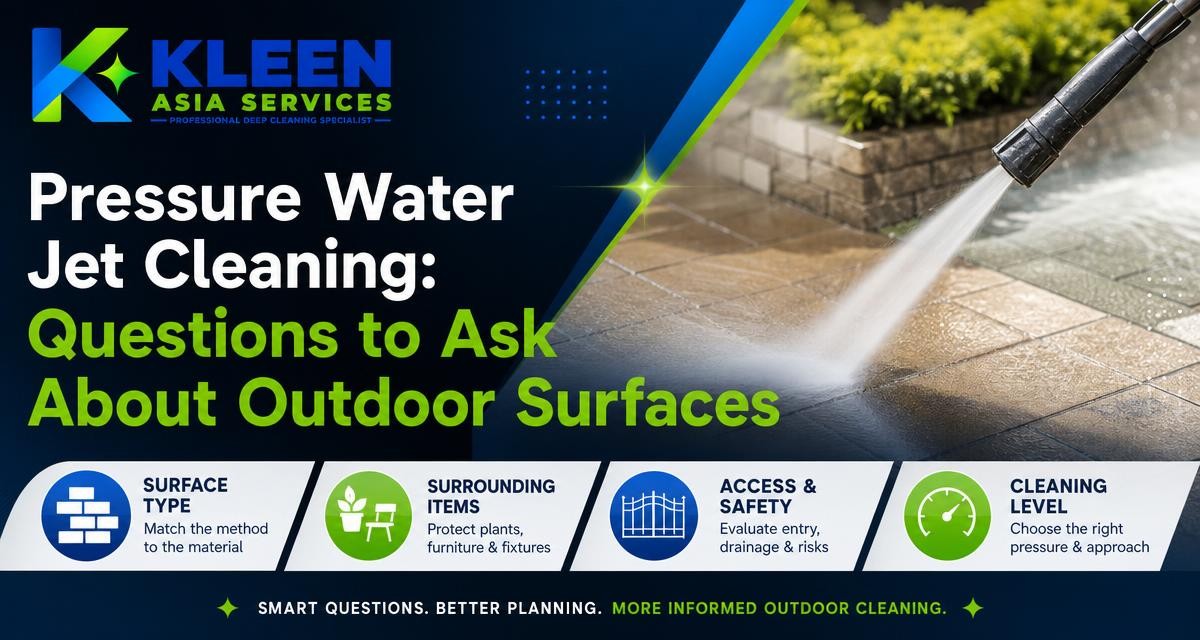
Pressure water jet cleaning can be useful for outdoor areas where dirt, weather exposure and everyday use have left surfaces looking neglected. However, the right approach depends on more than the amount of water pressure available. Before arranging outdoor cleaning, ask what type of surface will be treated, what is nearby, how the team will access the area and how much cleaning the space actually requires.
Why the surface should come first
Outdoor areas are not made from one uniform material. A paved walkway, tiled patio, concrete surface, rendered wall and painted exterior may all react differently to water pressure. A setting that is suitable for one surface may be unsuitable for another, particularly where the material is aged, cracked, coated or already showing signs of wear.
The first question to ask is simple: What is the outdoor surface made of, and what condition is it in? A proper discussion should cover both the material and its current state. A surface that appears solid from a distance may have loose sections, damaged joints, flaking paint or areas that allow water to enter.
| Surface consideration | Questions to ask | Why it matters |
|---|---|---|
| Material | Is it concrete, tile, stone, brick, render, paint or another finish? | Different materials and coatings may require different pressure and handling. |
| Condition | Are there cracks, loose pieces, damaged joints or worn areas? | Existing weaknesses may affect how the area should be cleaned. |
| Surface finish | Is the surface sealed, painted, textured or polished? | A finish can change how water interacts with the surface. |
| Age and repairs | Has the area been repaired, resurfaced or recently painted? | Recent work may need to be considered before outdoor cleaning begins. |
| Soiling | Is the concern general dirt, built-up grime, marks or another issue? | The level and type of soiling help define the cleaning requirement. |
Concrete and paved areas
Concrete and paved surfaces are common outdoor cleaning targets because they are exposed to foot traffic, rain, dust and soil. Even so, they should not automatically be treated as indestructible. Cracks, open joints, surface wear and loose paving can influence the cleaning plan. Ask whether the condition of the surface will be checked before work starts and whether problem areas will be identified in advance.
Tiles, stone and finished surfaces
Tiles and stone can have different textures, joints and finishes. Some outdoor areas also include decorative or coated sections that need more careful treatment than a plain hard surface. Ask whether the cleaning method is appropriate for the particular finish and whether a small test area or inspection is advisable before the whole surface is treated.
Walls, render and painted exteriors
When pressure water jet cleaning is considered for walls or external building surfaces, the condition of the coating matters. Flaking paint, loose render and damaged sections should be discussed before cleaning. Water may also reach gaps, vents or openings, so the surrounding building details should form part of the assessment rather than being treated as an afterthought.
How much pressure is appropriate?
The phrase “pressure water jet” describes the equipment or cleaning method, not one fixed setting that suits every job. The appropriate approach depends on the surface, the condition of the material and the type of dirt present. More pressure is not automatically a better choice, and a strong setting may not be suitable for a delicate, worn or coated surface.
Ask these questions before approving the work:
- How will the pressure be selected for this surface?
- Will the pressure be adjusted for edges, joints and vulnerable areas?
- How will existing cracks, loose sections or damaged coatings be handled?
- Will the cleaning plan change if the surface condition is worse than expected?
These questions help move the conversation away from a promise of a particular visual result and towards a realistic cleaning plan. The condition of the surface before cleaning remains an important factor in what can be achieved.
What should be moved or protected?
Outdoor cleaning rarely takes place in an empty space. Patios may contain furniture, plant pots, decorations, toys, storage items and electrical equipment. Driveways and walkways may be close to vehicles, gates, walls and entrances. Before the appointment, ask which items need to be removed by the property owner and which surrounding areas should be protected during the work.
Nearby items to discuss
- Outdoor furniture and loose decorations
- Plant pots, garden features and delicate plants
- Vehicles, bicycles and equipment
- Outdoor electrical fittings, sockets and lighting
- Doors, windows, vents and other building openings
- Items stored against walls or along the edge of the cleaning area
Plants deserve particular attention because water, loosened dirt and cleaning products may reach them even when they are outside the main work area. Tell the cleaning provider about items that cannot be moved, fragile features and any areas that should not receive direct spray.
It is also sensible to ask where the loosened dirt and water will travel. Cleaning one section may move soil towards a doorway, lower wall, drain or neighbouring area. A clear plan for nearby items and runoff can help prevent avoidable disruption.
Does access affect the cleaning plan?
Access is one of the most practical questions to ask about a pressure water jet service. A visible patio may be easy to reach, while a rear courtyard, upper-level area or narrow side passage may require a different arrangement. The distance from the equipment to the surface, the route through the property and the availability of water and drainage can all affect how the work is planned.
Access questions for homeowners and offices
- Where is the outdoor area located in relation to the entrance?
- Is there a clear route for moving equipment to the work area?
- Are there narrow passages, steps, gates or shared access points?
- Will the work take place near residents, customers, staff or visitors?
- Are there building or management rules for using shared outdoor spaces?
- Can the area be kept clear while cleaning is taking place?
For offices and shared properties, access may also involve security arrangements, neighbouring occupants or busy walkways. Explain the location and any restrictions when requesting information about the service. This gives the provider a better basis for discussing whether the area can be approached as planned.
Where will the water and loosened dirt go?
Drainage is a central part of outdoor cleaning. Water may collect in low points or move towards entrances, garages, garden beds and neighbouring surfaces. Dirt released from a wall or paved area may also travel with the water. Ask how the flow of water will be considered before the work begins and whether any drainage points need to be checked or kept clear.
Questions about drainage can include:
- Where is the nearest suitable drainage point?
- Could water flow towards an entrance, indoor floor or lower level?
- Are drains clear and accessible?
- Could loosened dirt collect in joints, corners or garden areas?
- Are there any shared or neighbouring areas that could be affected?
This is especially relevant for balconies, enclosed courtyards, sloped driveways and areas beside buildings. A practical outdoor cleaning plan should consider the whole work zone, not only the section receiving the spray.
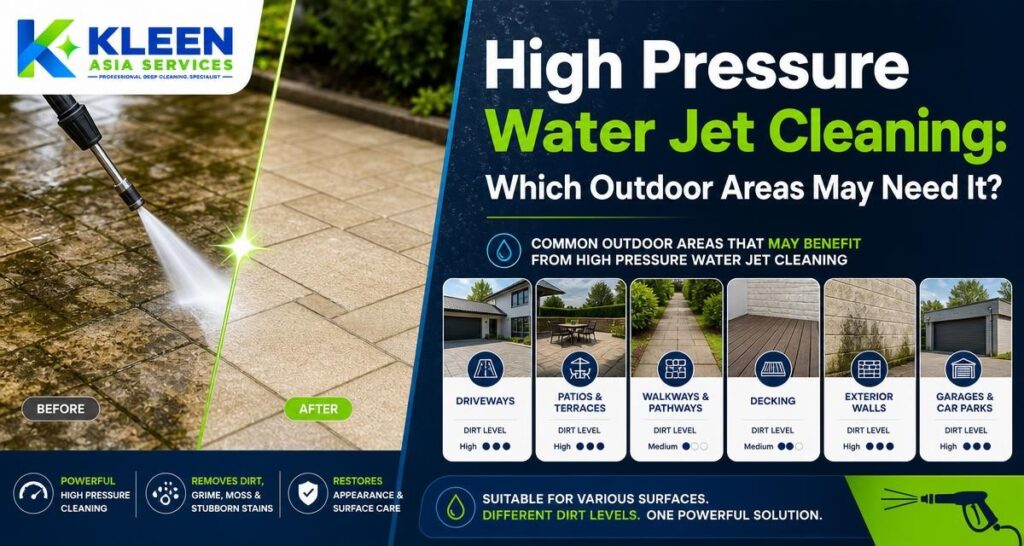
What level of outdoor cleaning is needed?
Not every outdoor surface requires the same scope of work. You may be dealing with a small entrance, a path, a patio, a larger paved area or an external wall. Some customers want general cleaning across an area, while others are concerned about a particular build-up or visibly dirty section. Describing the actual problem helps clarify the intended scope.
| Cleaning need | Useful information to provide | Points to clarify |
|---|---|---|
| Small defined area | Exact location and approximate size | Access, nearby items and drainage |
| Large paved or concrete area | Overall layout and condition | Work boundaries and water flow |
| External wall or building surface | Wall height, finish and visible condition | Openings, access and surrounding surfaces |
| Mixed outdoor surfaces | Materials and finishes in each section | Whether different areas need different handling |
| Heavily soiled area | Type and location of the build-up | What preparation or follow-up may be appropriate |
Use clear descriptions rather than relying only on phrases such as “deep cleaning” or “high pressure washing.” If possible, identify the surfaces involved, explain what concerns you and describe any areas that are difficult to reach. This makes the comparison between cleaning options more useful and reduces the chance of misunderstandings about the requested service.
When should you compare pressure water jet cleaning with other approaches?
A pressure water jet is one possible approach to outdoor cleaning, but the surface and the condition of the area should guide the decision. A hard, open surface may be considered differently from a painted wall, a delicate finish or an area containing many vulnerable items. Rather than choosing a method based only on the word “pressure,” ask what method is suitable for the specific material and cleaning objective.
A useful comparison should cover four areas:
- Surface suitability: Is the method appropriate for the material and finish?
- Level of soiling: Is the concern light surface dirt, accumulated grime or a more specific issue?
- Risk to surroundings: Could water or loosened dirt affect plants, openings, furniture or neighbouring areas?
- Practical access: Can the area be reached and managed safely and conveniently?
This does not mean that one method is always preferable. It means the choice should be based on the circumstances of the property rather than a general assumption that stronger pressure will deliver a better outcome.
What should you tell a cleaning provider before requesting a quote?
Good information at the enquiry stage can make the discussion more efficient. Include the type of surface, its approximate size, its location and the main reason for requesting outdoor cleaning. Mention cracks, loose sections, painted or coated areas, difficult access, nearby plants and drainage concerns.
Photographs may help explain the layout when they are available, but they should not replace a discussion of details that may not be visible in an image. Ask what information the provider needs before confirming whether pressure water jet cleaning is suitable for the area.
A practical enquiry checklist
- Surface material and finish
- Approximate dimensions or size of the area
- Visible dirt, grime or other cleaning concerns
- Cracks, loose pieces, worn sections or previous repairs
- Access route and any shared-property restrictions
- Nearby furniture, plants, vehicles and electrical fittings
- Drainage points and possible water-flow concerns
- Preferred boundaries for the cleaning work
Kleen Asia Carpet Cleaning & Upholstery Cleaning presents Water Jet Cleaning as a pressure water jet cleaning service. The company provides cleaning services for homes and offices in Kuala Lumpur and Selangor, with service information also covering Putrajaya and Cyberjaya. When asking about outdoor cleaning, provide the surface and access details above so the requested work can be discussed in the right context.
How can you prepare the area?
Preparation does not need to be complicated, but it should focus on clearing the work zone and identifying anything that needs special attention. Remove loose items where possible, secure doors and windows, and tell the provider about fragile features or surfaces that should be avoided. If the area is shared, inform the people who may need to use it while cleaning is under way.
Do not assume that every item can remain in place simply because it is outdoors. Outdoor furniture, plant containers, decorations and stored materials can obstruct access or be affected by spray and runoff. Ask what preparation is expected before the cleaning date and what should remain untouched.
What should you check after outdoor cleaning?
After the work, inspect the area from several angles rather than looking only at the centre of the surface. Check edges, corners, joints, steps and nearby walls. Confirm that loose items have been returned safely and that water has not collected in an unexpected place. If the area includes building openings or shared access routes, check those parts as well.
It is also useful to ask whether any areas were excluded because of their condition, access or surrounding risks. A clear explanation of what was included and what was not helps you understand the completed scope without assuming that every mark or aged surface can be changed through cleaning alone.
Frequently Asked Questions
What is pressure water jet cleaning?
Pressure water jet cleaning uses pressurised water as part of an outdoor cleaning service. The suitable approach depends on the surface material, its condition, nearby items, access and the level of soiling.
Is a pressure water jet suitable for every outdoor surface?
No single setting or approach should be assumed to suit every surface. Concrete, tiles, stone, painted walls and other finishes may have different requirements, so the material and condition should be discussed first.
What should I move before outdoor cleaning?
Move loose furniture, decorations, plant pots, toys, vehicles and stored items where possible. Tell the provider about anything that cannot be moved, including delicate plants, electrical fittings and items near doors or walls.
Why does drainage matter during water jet cleaning?
Water and loosened dirt can travel towards entrances, low points, drains, garden areas or neighbouring surfaces. Discussing drainage beforehand helps identify possible flow concerns and areas that need attention.
Does access affect pressure water jet cleaning?
Yes. Narrow passages, gates, steps, shared entrances and distant outdoor areas may affect how equipment reaches the surface and how the work is organised.
What information should I provide when asking about the service?
Provide the surface type, approximate size, location, visible cleaning concern, access conditions, nearby items, drainage details and any cracks, loose sections or damaged finishes.
Does pressure water jet cleaning guarantee a particular result?
No cleaning method should be treated as a guarantee of a specific result. Existing wear, staining, damage, surface condition and access can all influence what cleaning can achieve.