
Choosing a tile polish service starts with understanding what is actually affecting the floor. A surface may look dull because of built-up dirt, soap residue or traffic film, but it may also have genuine wear, scratches or a damaged finish. Identifying the difference helps you decide whether routine cleaning is likely to be enough or whether a professional floor polishing service is more appropriate.
Why surface assessment matters before tile polishing
Tile polishing is not simply a stronger version of everyday mopping. The right treatment depends on the tile material, the condition of the surface and the reason it no longer looks clean or bright. A floor covered with residue may need cleaning first, while a worn or scratched surface may require a more involved polishing approach. Treating both conditions in exactly the same way can lead to disappointing results.
Assessing the floor before booking also gives you clearer information to share with a service provider. You can describe where the problem appears, whether it changes after cleaning, and whether the floor has visible scratches or uneven areas. These details help the provider understand whether your priority is soil removal, stain treatment, polishing or a combination of floor-care steps.
First identify the type of tiled surface
Before judging wear, consider what the floor is made from. Ceramic and porcelain tiles, natural stone and other hard surfaces can have different finishes and maintenance requirements. Some surfaces have a factory finish, while others may have a polished or treated layer that changes how marks and light reflection appear.
If you are unsure about the material, check any renovation documents, product information or spare tiles available in your home or office. You do not need to diagnose the surface perfectly before asking for help, but knowing whether it is a natural stone, porcelain or ceramic tile gives the cleaner more useful background.
- Ceramic or porcelain tiles: These commonly have a durable face, but the surface can still look dull because of residue, traffic film or neglected grout.
- Natural stone: Marble and similar materials may show etching, scratches, uneven gloss or staining that ordinary cleaning does not correct.
- Textured or matte tiles: Their appearance may be intentionally low-sheen, so a lack of shine does not automatically mean the surface is worn.
- Tiles with coatings or treatments: The condition of the coating may be more important than the tile itself, and unsuitable products can affect its appearance.
Do not assume that every tiled floor should have a highly reflective finish. A professional assessment should take the material and its intended appearance into account rather than applying the same expectation to every room.
How to distinguish dirt from genuine surface wear
Look at how the dullness is distributed
Built-up dirt often appears in predictable areas: entrances, walkways, cooking zones, bathrooms and places where furniture is frequently moved. It may create a grey or yellowish film, especially near grout lines. Dullness caused by soil can sometimes look patchy and may become more obvious when light falls across the floor.
Genuine wear is more likely to follow repeated foot traffic or contact with objects. You may see a broad area with reduced sheen, a visible path through a hallway or fine marks around entrances. However, location alone is not conclusive. A heavily used area can also accumulate more dirt, so the surface should be checked after gentle cleaning.
Use a safe, small test area
Choose an inconspicuous section and clean it with a suitable, neutral product and a soft cloth or mop. Avoid abrasive powders, harsh acids, strong solvents and aggressive scrubbing. Allow the area to dry fully, then compare it with an untouched section under the same lighting.
If the cleaned patch looks noticeably clearer but still lacks an even finish, residue may have been part of the problem while the underlying surface may also need polishing. If the appearance does not change, the issue may involve wear, etching, staining below the surface or an unsuitable finish. A small test does not replace professional assessment, but it can prevent you from confusing removable soil with permanent damage.
Check the floor from different angles
Stand near a window, switch on room lighting and view the surface from a low angle if possible. A glossy floor may reflect light unevenly when it has fine scratches or worn patches. A cloudy appearance that remains after cleaning can suggest that the surface finish has changed rather than simply become dirty.
Do not rely on one photograph or one lighting condition. Reflections, shadows and moisture can make a clean floor appear marked. Comparing the same section when dry and when viewed from different directions gives a more reliable impression.
Common signs that routine cleaning may be enough
A tile cleaning service may be the more suitable first step when the main problem is surface soil rather than physical damage. Routine cleaning may be worth considering when:
- The floor looks better immediately after mopping but becomes dull again soon afterwards.
- There is a visible film near cooking areas, bathrooms or entrances.
- Grout lines are darker than the tile faces because of embedded dirt.
- Footprints, dust and general soil are more noticeable than scratches.
- The surface feels sticky, greasy or slightly rough because of product residue.
- The floor has no clear loss of material, chips or deep scratches.
Cleaning may improve the appearance without changing the floor’s natural sheen. That distinction matters: a matte tile can be clean even when it does not look glossy, and a polished tile can still need deeper cleaning even if it has some remaining shine.
Signs that a tile polish service may be appropriate
Polishing becomes more relevant when the floor remains visibly uneven or dull after suitable cleaning. Signs that you may need to discuss polishing include:
- Large areas have lost their former sheen rather than showing only isolated dirt marks.
- Fine scratches or scuffing are visible when light reflects across the surface.
- The floor has a cloudy or hazy appearance that remains after it dries.
- Some sections are glossy while nearby sections look flat, creating an uneven finish.
- Natural stone shows light etching, worn traffic paths or differences in reflection.
- The surface looks clean but still does not have the appearance you expect from its original finish.
These signs do not prove that polishing will correct every problem. Deep scratches, chips, cracks, loose tiles, damaged grout or staining inside the material may need a different type of repair or may remain visible. A good discussion with the provider should cover what improvement is realistic for the existing condition.
Use this quick assessment before contacting a provider
| What you observe | Possible cause | What to discuss |
|---|---|---|
| Sticky or greasy film | Residue or accumulated soil | Professional floor cleaning and suitable maintenance |
| Darker walkways | Traffic soil, surface wear or both | Cleaning first, followed by an assessment of sheen |
| Cloudy appearance after drying | Residue, etching or a changed finish | Tile material and whether polishing is suitable |
| Fine scratches in reflected light | Scuffing or surface wear | Expected improvement and appropriate polishing method |
| Chips, cracks or loose tiles | Physical damage or installation issue | Whether repair is needed before cleaning or polishing |
| Dark or uneven grout | Embedded dirt, staining or grout deterioration | Grout cleaning and whether grout repair is separate |
Questions to ask before booking a floor polishing service
When requesting a quote or assessment, describe the floor rather than saying only that it needs to be “made shiny.” Explain the tile type if known, the rooms involved, the age of the visible problem and any products already used. Mention whether the floor is in a home, office or shared area, since access and furniture may affect the work discussion.
It is also useful to ask what the service is intended to address. A floor polishing service may focus on improving the appearance of a suitable surface, while deep cleaning may be needed to remove soil first. Ask whether the provider expects to clean before polishing, whether grout is included, and whether damaged tiles or cracks fall outside the cleaning scope.
- What type of tile or stone do you believe this surface is?
- Does the condition look more like dirt, residue, wear or etching?
- Will the floor be assessed or tested before the work begins?
- Which areas are included in the service?
- Are grout cleaning, stain treatment or repairs separate from polishing?
- What result is realistic for scratches, dull patches or permanent marks?
- What aftercare should be followed once the floor has been cleaned or polished?
Clear answers are more helpful than a promise based only on photographs. Images can support an initial conversation, but lighting, tile material and the condition of the surface can affect the final assessment.
What to document before the appointment
Take clear photographs of the whole room as well as close-ups of dull patches, stains, scratches and grout. Include one image taken from a low angle if uneven reflection is part of the concern. Write down where the marks are located and whether they appear after particular activities, such as cooking, moving furniture or heavy foot traffic.
Also record any cleaning products or methods you have tried. This information can help the provider avoid repeating an unsuitable approach. If there are fragile furnishings, rugs, appliances or office equipment near the floor, mention them when discussing access and preparation. Do not apply a strong chemical or abrasive treatment immediately before the appointment, as it may alter the surface and make assessment more difficult.
How to prepare a tiled floor for professional attention
Remove small loose objects and personal items from the working area where practical. Sweep or lightly vacuum loose grit, since grit can create additional scuffing when furniture or equipment is moved. Do not attempt to strip a finish, use a polishing compound or scrub aggressively unless the product and surface are known to be compatible.
For offices and busy homes, consider how people will move through the area while the work is being discussed. The provider can advise on preparation and use of the space based on the service selected. Avoid assuming that a polished appearance means the floor is safe from future marks; regular dust removal, prompt spill care and suitable cleaning products still matter.
Routine care after cleaning or polishing
Maintenance begins with removing loose grit before it is walked across the floor. Use a soft broom, dust mop or suitable vacuum attachment, and clean spills before they spread into grout or textured areas. Choose products according to the tile or stone manufacturer’s guidance rather than relying on a generic “shiny floor” product.
- Use clean water and a suitable mop rather than repeatedly spreading dirty water.
- Avoid abrasive pads on surfaces that can scratch or lose their finish.
- Do not mix cleaning chemicals.
- Use mats or entry rugs where appropriate to reduce tracked-in soil.
- Move furniture carefully and use suitable protective pads where allowed.
- Keep a note of products that have caused stickiness, clouding or a change in appearance.
Regular cleaning does not eliminate the need for professional attention, but it can make surface changes easier to identify. When the floor is maintained consistently, you are more likely to notice genuine wear before it becomes widespread.
When to contact Kleen Asia Carpet Cleaning & Upholstery Cleaning
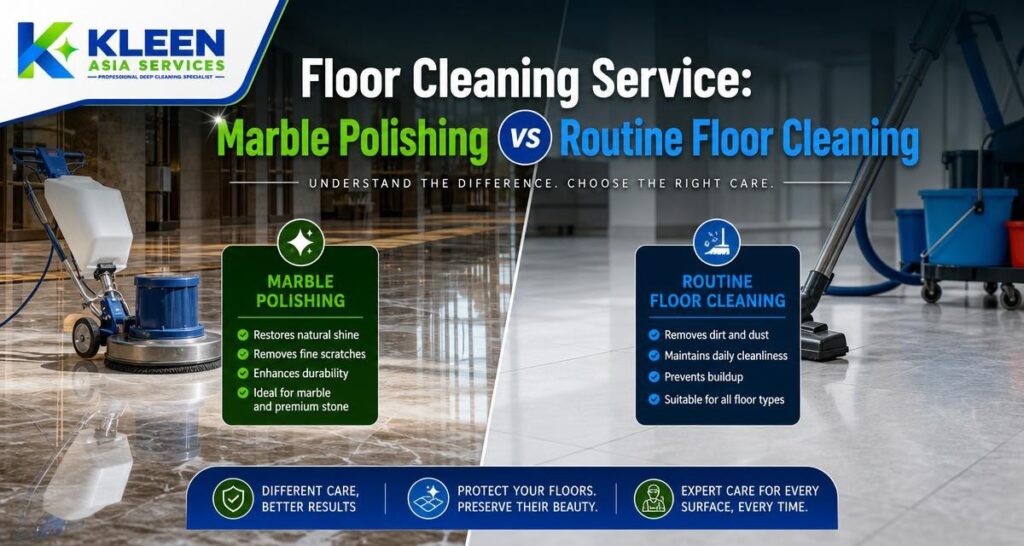
Kleen Asia Carpet Cleaning & Upholstery Cleaning presents floor cleaning and polishing services, including marble polishing and related tile cleaning and polishing solutions. If your tiled floor looks dull, uneven or difficult to clean, you can share the observations above when discussing whether a floor cleaning service or polishing service is appropriate.
The most useful request is specific: describe the material if known, explain whether the problem is dirt or loss of sheen, identify any scratches or damage, and provide photographs of representative areas. This allows the conversation to focus on the condition of the floor rather than an unrealistic expectation that every surface should look identical after treatment.
FAQ about tile polish service
How can I tell whether my tiles need cleaning or polishing?
Clean a small, inconspicuous area gently with a suitable product and compare it after drying. If the film or soil improves, cleaning may be the main need. If the floor remains cloudy, scratched or uneven in sheen, ask about polishing and surface assessment.
Can a tile polish service remove every scratch?
Not necessarily. Fine surface marks may be treatable depending on the material and finish, but deep scratches, chips and cracks may require repair or may remain partly visible. Ask what result is realistic for your particular floor.
Do all tiles need to be glossy after polishing?
No. Some tiles are designed to have a matte or textured appearance. The appropriate result depends on the material, original finish and condition of the surface, not simply on how reflective it becomes.
Should tiles be cleaned before polishing?
Often, the surface needs to be clean enough for its condition to be assessed properly. Dirt and residue can hide the difference between removable soil and genuine wear. A provider can advise whether cleaning and polishing should be treated as separate steps.
Is grout included in tile polishing?
Not automatically. Grout cleaning, stain treatment and grout repair may be separate from work on the tile face. Confirm the scope before booking if dark or uneven grout is one of your main concerns.
What information should I provide when requesting a floor polishing service?
Share the tile or stone type if known, the affected rooms, photographs, the age of the problem, visible scratches or damage, and any products already used. Also explain whether the floor is in a home or office and what result you hope to achieve.