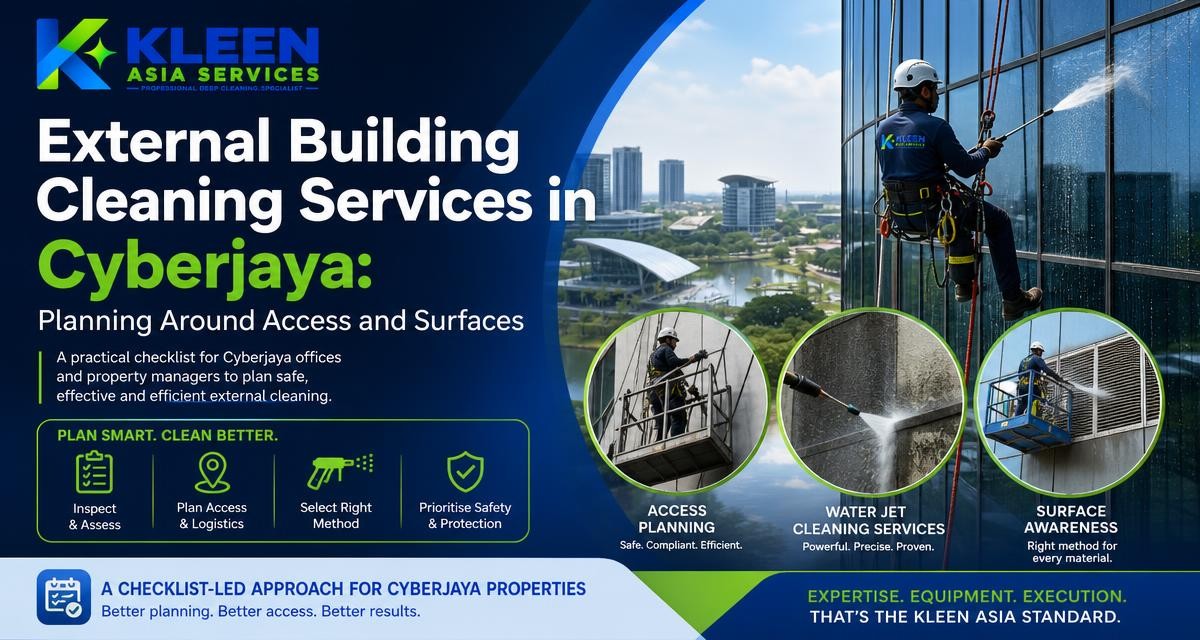
Planning external building cleaning services in Cyberjaya involves more than identifying a dirty wall or walkway. Offices and property managers also need to describe the surfaces, explain how cleaners can reach them, identify nearby activities and consider where water may travel during the work. A clear site brief helps a cleaning provider understand the job before discussing the most suitable approach.
Why site planning matters for external cleaning
Outdoor areas are rarely made from one material. A single commercial property may include painted walls, concrete paths, tiled entrances, covered walkways, loading areas, car park surfaces, shutters and other external features. Each surface can have a different condition and may require a different level of care.
Access can be just as important as the surface itself. A building may have open ground-level areas, restricted side passages, shared entrances or upper sections that cannot be reached directly from the ground. A provider offering water jet cleaning services needs useful information about the site layout so the cleaning plan can be discussed realistically.
Start with a simple external-area survey
Before requesting a quotation or arranging a site discussion, walk around the property and record the areas that need attention. Photographs can help communicate the condition, especially when some sections are difficult to describe over the phone. The purpose is not to diagnose the cleaning method but to give the provider an accurate starting point.
List every area separately
Instead of describing the job as “clean the outside of the building,” divide it into recognisable zones. For example, separate the front entrance from the rear service area, covered walkway, external walls and parking-related surfaces. This makes it easier to identify areas that have different access arrangements or surface types.
- Main entrance and visitor approach
- External walls or façade sections at ground level
- Covered walkways, corridors and sheltered areas
- Back-of-house or service access zones
- Loading and unloading areas
- Hard-surface paths, steps and ramps
- Areas around bins, drains or outdoor fixtures
- Sections affected by visible dirt, algae-like growth, stains or accumulated debris
Record whether each area is open, enclosed, shared with other occupants or close to public movement. This information can affect how the work is planned and what needs to be protected or temporarily cleared.
Describe the surfaces before discussing pressure
“High pressure” is not a complete description of a cleaning requirement. The cleaning provider needs to know what the water jet may contact. Surface information can help determine which areas require closer assessment and which details should be clarified before work begins.
| Site detail | What to record | Why it helps |
|---|---|---|
| Surface material | Concrete, tile, painted finish, metal, glass or another visible material | Different materials may need different handling and precautions |
| Surface condition | Cracks, loose coating, worn grout, damaged edges or existing marks | Pre-existing defects should be identified before cleaning |
| Type of soiling | Dust, mud, traffic residue, organic buildup, spills or general staining | Helps the provider understand the nature of the work |
| Location | Entrance, wall, walkway, car park, loading area or service lane | Connects the surface to access and operational requirements |
| Nearby features | Doors, vents, drains, electrical fixtures, landscaping or signage | These features may need protection or special attention |
Do not assume every mark has the same cause
Dark patches, discolouration and surface deposits can have different causes. They may be connected to weather exposure, vehicle movement, nearby landscaping, water flow or ordinary use. A photograph and a short description are more helpful than promising that one cleaning method will remove every mark.
It is also sensible to mention areas where the finish is already peeling, chipped or fragile. External building cleaning services should be planned with the existing condition in mind. Cleaning may improve the appearance of a sound surface, but it should not be treated as a repair service unless that has been separately discussed.
Prepare an access checklist for Cyberjaya properties
Access questions are often overlooked when a property manager first contacts a cleaning company. In a busy office or mixed-use site, the most convenient route for equipment may also be used by visitors, tenants, delivery vehicles or maintenance teams. Describing these conditions early can reduce confusion on the day of service.
Ground access
- Where can a cleaning team enter the property?
- Is there a suitable route from the entrance to the external areas?
- Are there gates, barriers or security checkpoints?
- Will vehicles need access to a service lane or loading area?
- Are any routes narrow, blocked or shared with pedestrians?
- Are there steps, ramps or uneven sections along the route?
Restricted or elevated areas
Tell the provider if some areas are above ground level, behind fixed barriers or reachable only from a particular side of the building. Do not assume that an upper section can be cleaned simply because it is visible. The provider may need to assess the access method, working clearance and any restrictions before confirming what can be included.
If the property has building management rules for work at height, equipment movement or water use, include those rules in the initial brief. Any required approvals, security registration or access windows should be clarified by the property manager before the work is scheduled.
Consider water flow and nearby building features
Water used outdoors needs somewhere to go. Before arranging water jet cleaning services, identify drains, slopes, doorways and low points around the work area. Also note whether the cleaning zone is beside an occupied office, retail frontage, lobby or vehicle route.
This does not mean a property manager has to design the cleaning process. It means the provider should receive enough information to discuss water movement and site protection. Ask how the proposed work will be managed around sensitive areas, entrances, fixtures and items that should remain dry.
Features worth pointing out
- Open doors, windows and ventilation openings
- Electrical boxes, external sockets, lights and communication equipment
- Signage, decals, painted markings and façade features
- Plants, landscaped beds and exposed soil
- Drains, channels, grates and areas where water may collect
- Stored goods, office furniture or equipment near the cleaning zone
- Pedestrian routes and vehicle lanes that may remain in use
Photographs showing these features can be particularly useful. Include a wider image for context and closer images of the surface, access route and nearby fixtures.

Build a practical work brief for the provider
A short written brief helps keep the discussion focused. It does not need technical terminology. State the property type, the areas to be cleaned, the visible issue, the preferred timing and any restrictions known to the building team.
Example information to include
- Property location: Give the Cyberjaya address or a clear site description.
- Property use: Explain whether the site is an office, commercial building, managed property or another type of premises.
- Requested areas: List walls, paths, entrances, covered areas or other external sections separately.
- Surface details: Identify the visible materials and note any damaged or delicate sections.
- Cleaning concern: Describe dirt, mud, residue, organic buildup or general weathering without promising a particular result.
- Access conditions: Mention gates, checkpoints, narrow routes, upper areas, loading zones and shared spaces.
- Water considerations: Point out drains, entrances, landscaping and areas that need protection.
- Site rules: Include security procedures, approved working periods and tenant or management requirements.
This brief gives the provider a clearer basis for asking follow-up questions. It also helps the property manager compare proposals by checking whether each one addresses the same areas and conditions.
Questions to ask before confirming external cleaning
When contacting a provider, ask questions that relate directly to the property rather than relying only on a general service name. The answers may depend on an assessment of the site, so treat them as planning points rather than assumptions.
- Can the provider review the listed surfaces and access conditions before work begins?
- Which external areas are included in the proposed scope?
- Are damaged, painted or delicate surfaces treated differently?
- How should doors, vents, electrical fixtures and landscaping be protected?
- Where should vehicles, hoses or other equipment be positioned?
- How will pedestrian and vehicle movement around the work area be managed?
- Are there details the building manager must prepare before the visit?
- What information should be supplied if the property has restricted access?
Clear answers are more valuable than broad promises. If the condition of a surface or the practicality of access is uncertain, ask for that point to be assessed before the scope is finalised.
How Kleen Asia can fit into the planning process
Kleen Asia Carpet Cleaning & Upholstery Cleaning presents water jet cleaning as a pressure water jet cleaning service and lists Cyberjaya among its supported locations. For a Cyberjaya office or managed property, the most useful first step is to provide a clear description of the external areas, surfaces and access arrangements.
The company also presents cleaning services for carpets, sofas and upholstery, mattresses, curtains, rugs and floors. Those services are separate from external building cleaning, so a property manager should describe each requirement independently rather than combining indoor and outdoor work into one vague request. This makes it easier to discuss the intended scope with the provider.
A final checklist for Cyberjaya offices and property managers
Before sending an enquiry about external building cleaning services, review the following points:
- Have all requested external areas been listed?
- Have the visible surface materials and existing damage been described?
- Have photographs been prepared for difficult-to-reach or unclear areas?
- Are gates, security procedures and access routes included?
- Have upper-level or restricted sections been identified?
- Are drains, entrances, landscaping, fixtures and nearby activities noted?
- Have the property’s working rules and preferred access arrangements been explained?
- Have you asked what the provider needs to assess before confirming the scope?
A well-prepared brief does not guarantee a particular cleaning result, but it gives both sides a more accurate understanding of the work. For properties in Cyberjaya, careful planning around access and surfaces can make the conversation about water jet cleaning services clearer, more practical and better suited to the site.
Frequently asked questions
What are external building cleaning services?
External building cleaning services address outdoor areas of a property, such as external walls, entrances, paths, covered walkways and other hard surfaces. The exact scope depends on the site and the provider’s assessment.
Is water jet cleaning suitable for every external surface?
Not necessarily. Surface material, condition, coatings and nearby features should be reviewed before the cleaning approach is confirmed. Tell the provider about fragile, painted, damaged or previously repaired areas.
What should I send when asking about cleaning in Cyberjaya?
Provide the property location, a list of requested areas, surface descriptions, photographs, access restrictions, site rules and information about drains, entrances and nearby fixtures.
Why do access details matter for an external cleaning job?
Access affects how a team reaches the work area, where equipment can be positioned and how pedestrian or vehicle movement is managed. Restricted routes and upper sections should be identified early.
Should existing surface damage be mentioned?
Yes. Note cracks, loose paint, worn finishes, damaged edges or other visible defects before work is discussed. This helps distinguish cleaning needs from repair requirements.
Can office cleaning and external building cleaning be requested together?
You can describe both requirements, but list them separately. External water jet cleaning and indoor services such as carpet, upholstery or curtain cleaning involve different areas and should have clearly defined scopes.