

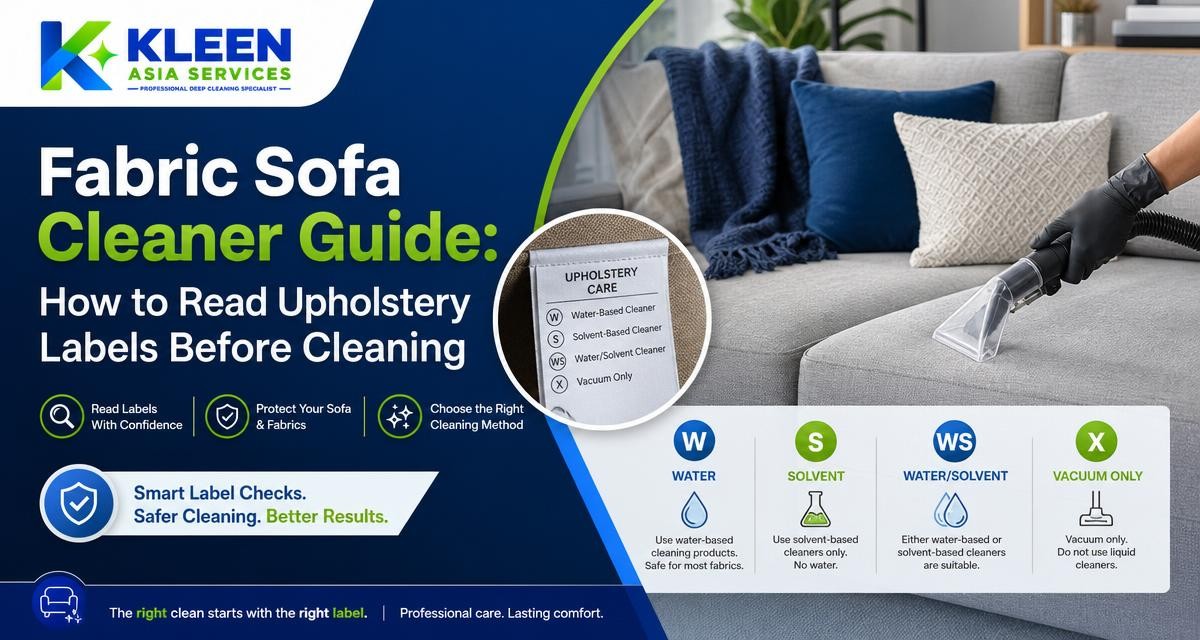
Choosing a fabric sofa cleaner should begin with the sofa itself. Upholstery labels, fabric composition, colour, construction and existing damage all provide useful clues about how the furniture should be handled. Checking these details before arranging professional sofa cleaning can help you give clearer information, avoid unsuitable cleaning methods and set realistic expectations for the result.
Why upholstery labels matter before sofa cleaning
A sofa may look like a simple fabric surface, but its cover can contain natural fibres, synthetic fibres, blends, loose weaves, delicate textures or treated materials. The fabric is also attached to padding, backing and a frame. Moisture, agitation and cleaning products can affect these parts differently.
The care label is not a complete cleaning plan, but it is an important starting point. It can indicate whether the cover is intended for water-based cleaning, solvent-based cleaning, either type of cleaning or vacuum-only care. A professional sofa cleaner can use this information together with a visual inspection before deciding on a suitable approach.
Where to find the sofa care label
Look for a sewn-in label underneath removable seat cushions, behind back cushions or along the lower edge of the sofa. Labels may also be attached to the underside of a cushion cover or hidden inside a zippered section. Check every removable component if the sofa has cushions made from different materials.
If you cannot find a label, do not assume that the upholstery is safe for any particular method. Take clear photographs of the sofa, its cushions and any labels you locate. If the furniture is relatively new, the manufacturer’s care instructions, purchase documents or product information may also help identify the fabric and recommended care method.
Understanding common upholstery cleaning codes
Many upholstery labels use short care codes. The exact wording may vary by manufacturer, so the label’s full instructions should always take priority. The codes below are useful as a general guide when discussing the sofa with a professional cleaner.
| Label code | General indication | What to discuss before cleaning |
|---|---|---|
| W | Water-based cleaning may be suitable. | Ask how moisture will be controlled and whether the fabric requires a low-moisture approach. |
| S | Solvent-based cleaning may be recommended. | Confirm that the proposed product and process are suitable for the specific fabric. |
| WS or W/S | Water-based or solvent-based methods may be possible. | Do not treat this as permission to use any product; fabric testing is still useful. |
| X | Vacuuming or light brushing may be the main recommended care. | Ask whether professional cleaning is appropriate and what limitations may apply. |
These codes should not be read in isolation. A sofa marked with a water-related code may still react differently depending on its colour, weave, backing and condition. Similarly, a fabric marked for solvent-based care should not be treated with a household solvent without professional advice.
What a label does not tell you
A care code may not reveal whether the dye can bleed, whether the fabric will show water marks, how quickly the cushion filling will dry or whether an old stain can be removed. It may also say little about weakened seams, sun-faded areas, pet damage, previous spot treatment or odour held inside the padding.
This is why a careful fabric sofa cleaner should consider the label alongside the sofa’s actual condition. If the label is missing, faded or unclear, mention that when requesting a quotation or assessment.
Fabric characteristics to check before choosing a cleaning approach
Fibre content
Check whether the fabric is described as cotton, linen, wool, polyester, nylon, rayon, acrylic, velvet or a blend. Fibre content can influence how the surface responds to moisture, heat, brushing and cleaning products. Blended fabrics can be particularly difficult to judge from appearance alone because different fibres may respond differently during cleaning.
Do not rely only on colour or feel to identify a material. Two sofas can look similar while requiring different care. Share the fibre information with the sofa cleaner if it is available on the label or product documentation.
Texture and weave
Look closely at the surface. A tight, even weave is different from a loose weave, chenille, velvet-like pile, boucle texture or fabric with raised threads. Textured upholstery can trap dust and may show changes in direction after brushing or rubbing.
Raised or delicate surfaces may need gentler handling than a flat woven fabric. Point out areas that feel loose, flattened or uneven. A professional can then decide whether the cleaning process should be adjusted or whether some areas need special care.
Colour and pattern
Dark, strongly coloured or multi-coloured upholstery deserves careful attention before cleaning. Colour transfer, fading and uneven appearance may be more noticeable on these fabrics. A patterned sofa can also make existing marks harder to distinguish from changes caused by wear.
Ask whether a small, inconspicuous test can be carried out before wider cleaning. Testing cannot predict every possible result, but it can provide useful information about colour stability and the fabric’s response to the proposed process.
Backing, piping and decorative details
Inspect seams, piping, buttons, fringe, embroidery, printed sections and attached trim. These details may not respond in exactly the same way as the main upholstery. Loose threads, exposed backing or lifting trim should be reported before work begins.
Removable covers also need attention. A cover that can be unzipped is not automatically suitable for machine washing. Follow the manufacturer’s instructions and tell the cleaner whether the covers are removable, fitted tightly or difficult to replace.

Other condition details to report to a fabric sofa cleaner
The most useful information is not limited to the label. Before arranging a sofa cleaner service, make a short note of the sofa’s history and current condition. This helps the cleaning professional understand what they may encounter.
- How long the sofa has been in use and how heavily it is used.
- Whether the upholstery has been cleaned previously.
- Any household products, stain removers or DIY mixtures already applied.
- The location and age of visible stains.
- Whether the sofa has been exposed to spills, food, pets or smoke.
- Areas with fading, fraying, torn seams, loose fabric or damaged padding.
- Whether cushions can be removed and whether the sofa can be moved for access.
Previous spot treatment is especially relevant. A product that appears harmless may leave a residue, alter the texture or change how the fabric absorbs moisture. It is better to describe what was used than to leave the cleaner to discover it during the appointment.
Questions to ask before booking a sofa cleaner service
A short conversation before cleaning can clarify whether the service is appropriate for your furniture. The aim is not to demand a guaranteed result, but to understand the proposed process and any limitations.
- Can you review the upholstery label or fabric information first? This helps the cleaner consider the manufacturer’s care guidance.
- Will the fabric be tested before the main cleaning? Ask what will be checked, such as colour stability or reaction to the proposed product.
- What cleaning approach is being considered? The answer should relate to the fabric and sofa condition rather than a one-size-fits-all method.
- Are there areas you may recommend leaving untreated? Weak seams, delicate trim or unstable fabric may need a more limited approach.
- What should I do before the appointment? The cleaner may need clear access and information about removable cushions or previous treatment.
- What care instructions apply after cleaning? Ask about ventilation, use of the sofa and any precautions while the upholstery is drying.
Why household testing can be risky
Testing a hidden area is often recommended for small DIY tasks, but a hidden test is not a complete guarantee for the entire sofa. The middle of a cushion, the front edge and an armrest may have different wear, colour exposure or construction. A product may also leave a visible ring or change the feel of the fabric after drying.
Avoid using strong household chemicals, excessive water or aggressive scrubbing simply because a stain is difficult. These actions can spread a mark, damage fibres or affect the appearance of the surrounding fabric. If the label is unclear or the upholstery is valuable, delicate or already damaged, professional assessment is a more sensible starting point.
How to prepare for professional sofa cleaning
Good preparation does not require complicated equipment. Remove loose items from the sofa and clear the surrounding area so the cleaner can inspect the upholstery and reach the relevant sections. Keep cushions together and identify which pieces belong in each position if they are not interchangeable.
Have the care label, fabric details and previous cleaning information ready. Photograph existing stains, fading or damage before work begins. These simple steps create a clearer record of the sofa’s condition and help distinguish older wear from changes that may occur during cleaning.
A practical pre-cleaning checklist
- Locate and photograph all upholstery labels.
- Record the fibre content and care code if shown.
- Identify stains, odours, worn areas and loose seams.
- List any cleaning products previously used.
- Remove objects from the sofa and clear access around it.
- Tell the cleaner about removable covers and cushions.
- Ask about testing, the proposed method and aftercare.
When to contact a professional sofa cleaning service
Professional help may be appropriate when the sofa has widespread soiling, several types of stains, delicate upholstery or a label that you do not understand. It can also be useful when home cleaning has already produced uneven marks or when the sofa is too large to handle comfortably.
Kleen Asia Carpet Cleaning & Upholstery Cleaning provides sofa and upholstery cleaning services for homes and offices in Kuala Lumpur and Selangor. Customers can share the sofa’s label information, fabric type, condition and cleaning concerns when asking about a suitable service. The same preparation principles apply whether the sofa is in a home, rental property or office setting.
Final thoughts: let the label guide the conversation
An upholstery label is a useful safety clue, not a promise of a particular cleaning result. Read the code, identify the fabric characteristics, inspect the sofa for damage and explain any previous treatment. These details give a fabric sofa cleaner a better basis for assessing the furniture and selecting a suitable approach.
When you are unsure, avoid guessing from appearance alone. A clear label, honest description of the sofa’s condition and a conversation about testing and limitations can make professional sofa cleaning more informed and less risky.
Frequently asked questions
What does a W code mean on a sofa label?
A W code generally indicates that water-based cleaning may be suitable. The fabric still needs to be assessed because colour, weave, backing and condition can affect the cleaning approach.
Can I clean an S-coded sofa with water?
You should not assume that water is suitable for an S-coded sofa. Check the manufacturer’s instructions and discuss the fabric with a professional sofa cleaner before choosing a method.
Is a WS label a guarantee that any sofa cleaner can be used?
No. WS or W/S usually indicates that more than one type of cleaning method may be possible, but the product, process and fabric condition still need careful consideration.
What should I do if my sofa has no care label?
Do not guess the fabric or cleaning code. Gather product information if available, photograph the upholstery and tell the cleaning professional that the label is missing.
Should I remove sofa covers before professional cleaning?
Only remove covers if the manufacturer’s instructions allow it and they can be replaced correctly. A removable cover is not automatically suitable for machine washing or separate treatment.
Can a professional sofa cleaning service remove every stain?
No cleaning service should be assumed to guarantee removal of every stain. Results can depend on the substance, age of the mark, previous treatment, fabric type and condition of the upholstery.
Related posts:
 Sofa Cleaning Service: How to Choose the Right Approach for Fabric Upholstery
 Leather Sofa Cleaning Service: What to Check Before Professional Upholstery Care
 Couch Cleaner Guide: What to Note About Cushions, Seams and Daily Use
 Wash Sofa Service for Family Living Rooms: What to Describe Before Cleaning