

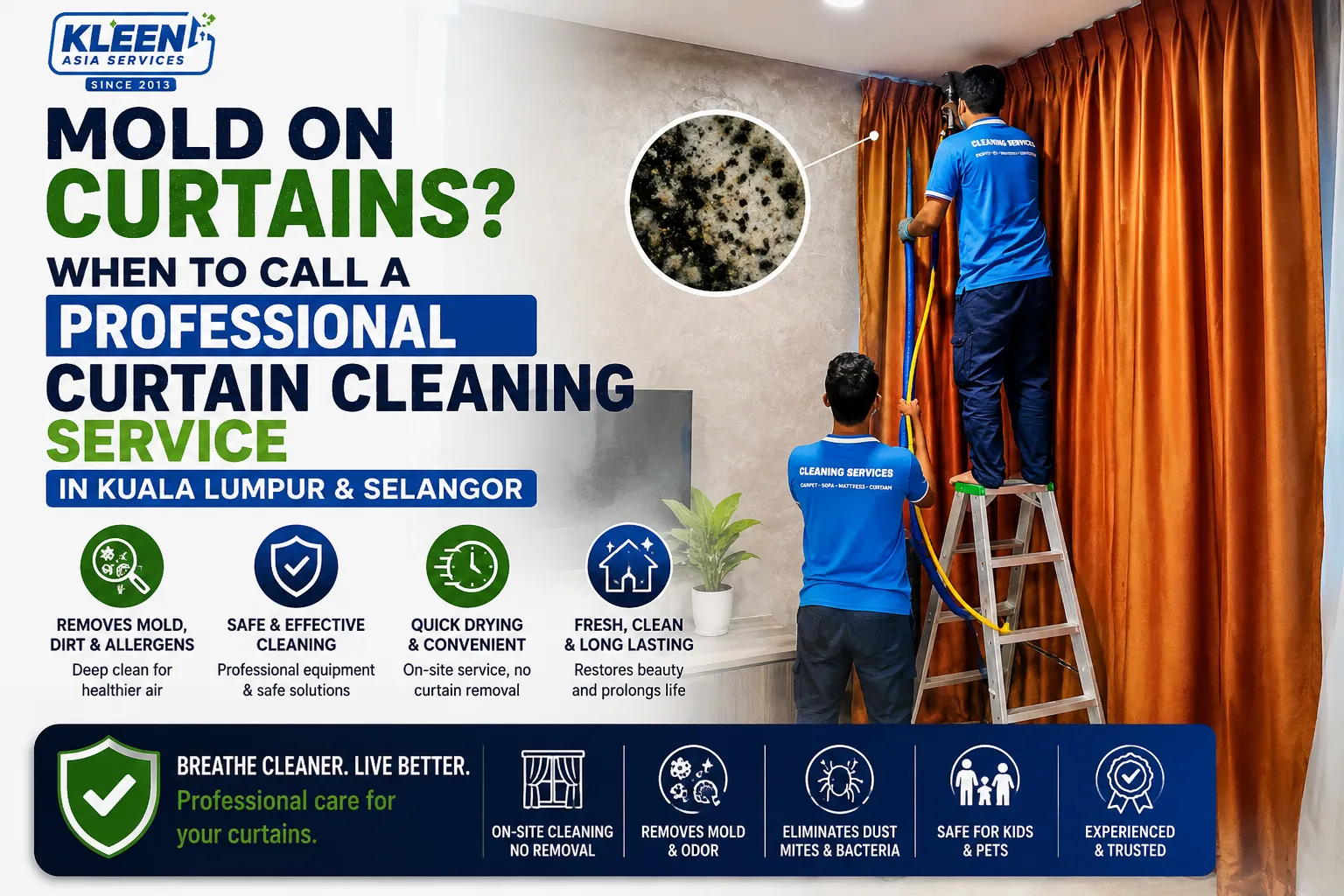
You’ve spotted those unwelcome dark spots on your curtains, a common issue here in Kuala Lumpur and Selangor humid climate. That moisture creates a perfect breeding ground for fungi, turning your once lovely drapes into a potential health hazard. But when is it time to stop scrubbing and call in the pros for a truly deep clean?
Finding mold on curtains is more common than many homeowners realize, especially in Malaysia’s humid climate. Moisture, poor ventilation, and daily dust buildup create the perfect environment for mold and mildew to grow, affecting both your curtains and your indoor air quality. If you’re dealing with musty odors, dark spots, or recurring mold, a professional curtain cleaning service in Kuala Lumpur & Selangor can safely remove deep-seated contaminants, restore your curtains, and help create a cleaner, healthier home without the hassle of taking them down.
Key Takeaways:
- Malaysia’s high humidity creates a perfect breeding ground for mold on curtains, so it’s a very common problem here in Kuala Lumpur and Selangor. You’ll often find it in rooms with less air circulation or near windows where condensation builds up.
- Mold isn’t just unsightly; its spores pose real health risks, especially for kids, the elderly, and anyone with allergies or respiratory issues. They can trigger asthma attacks, allergic reactions, and even more serious breathing problems.
- Catching mold early is key. Look for those tell-tale musty smells, small discolored spots that might be black, green, or even pink, and a slightly slimy texture on the fabric. Don’t wait until it’s a full-blown infestation.
- DIY cleaning rarely works for mold on curtains because those spores and their roots penetrate deep into the fabric fibers. Wiping the surface might remove what you see, but the mold often grows back quickly, sometimes even stronger.
- Professional curtain cleaning services use specialized techniques like steam extraction to safely and thoroughly remove mold, its associated odors, and other contaminants without damaging your curtains. This method gets deep into the fibers, killing the mold at its source.
Why I think mold is a huge deal for your family’s health
You might see a bit of mold on your curtains and think, “No biggie, I’ll just wipe it off.” But here’s the thing: those tiny mold spores carry some really significant health risks. They’re not just an aesthetic problem; they’re an air quality issue that can directly impact everyone breathing that air.
This isn’t just about a stuffy nose, either. For certain family members, the consequences can be much more severe. You’re importantly inviting an airborne irritant into your living space, and it’s something that needs to be addressed professionally.
Protecting the most vulnerable people in your home
Think about the little ones in your house. Children are especially sensitive to air quality, and their developing respiratory systems are more susceptible to irritation from mold spores. They spend a lot of time playing on the floor, closer to where these spores might settle.
And it’s not just the kids. Our beloved elderly parents or grandparents living with us are also at a higher risk. Their immune systems might not be as strong, making them more vulnerable to the respiratory issues that mold can trigger, sometimes leading to more serious conditions.
Why allergy sufferers can’t ignore the problem
If you or someone in your home struggles with allergies, you already know how frustrating it can be to manage symptoms. Mold in your curtains is like adding fuel to that fire; allergy sufferers are significantly more sensitive to air quality.
Exposure to mold spores can trigger a whole host of allergic reactions. We’re talking about persistent sneezing, itchy eyes, a runny nose, and even skin rashes. It’s a constant irritant that makes daily life uncomfortable and can exacerbate existing conditions like asthma, making breathing difficult and potentially leading to more frequent attacks.
Is that a stain or mold? How to spot those early warning signs
You’re probably thinking, “It’s just a little spot, right?” But that tiny discoloration on your curtains could be the beginning of a much bigger problem. It’s truly vital to identify early warning signs before mold spreads and ruins the entire fabric of your window treatments, turning a minor issue into a costly replacement. Don’t underestimate how quickly these spores can take hold in a humid climate like Kuala Lumpur’s.
Often, what looks like a harmless water stain can actually be mold in its infancy. If you catch it early enough, you might even save yourself the hassle of a full professional cleaning, though for extensive issues, Express Curtain Cleaning is always an option.
Catching the problem before it gets out of control
Ignoring those small, suspicious marks is a gamble you don’t want to take. Mold thrives in dark, damp environments, and your curtains often provide the perfect breeding ground, especially if they’re near windows that collect condensation.
A small patch can quickly become a large, unsightly, and unhealthy growth. You really want to tackle this before it affects the air quality in your home and potentially triggers allergies or respiratory issues for your family.
What to look for when you’re inspecting your drapes
Look for any unusual spots or discoloration on the fabric. Mold often starts as small, fuzzy patches that can be white, grey, black, or even green. They might look a bit like dirt at first glance, but they’ll often have a slightly raised or textured appearance.
Another tell-tale sign is a musty, earthy odor. Even if you don’t see anything obvious, a persistent damp smell coming from your curtains is a strong indicator that mold is present and growing somewhere within the fibers. Check the parts of the curtains that are closest to the windowpane or the floor, as these areas tend to accumulate more moisture.
Honestly, your DIY cleaning probably won’t cut it
You might be tempted to tackle that curtain mold yourself, armed with a spray bottle and some elbow grease. But here’s the tough truth: DIY mold removal often fails because mold penetrates deep into fabric fibers, making surface scrubbing almost useless.
That visible patch on the surface? It’s usually just the tip of the iceberg. The real problem lies deeper, where household cleaners just can’t reach effectively.
The problem with mold hiding deep in the fabric
Mold isn’t just sitting on top of your curtains; it’s weaving its way into the very structure of the fabric. Think of it like tree roots in soil – you can trim the branches, but the roots remain.
This deep penetration means that even if you scrub away what you see, the microscopic spores and mycelial threads are still embedded, ready to regrow as soon as conditions are right.
Why home remedies don’t reach the root of the issue
Many common home remedies, like vinegar or bleach solutions, are effective at killing surface mold. However, they struggle to penetrate woven materials deeply enough to eradicate the problem at its source.
These solutions often just lighten the stain or kill the visible growth, leaving behind embedded spores that will inevitably lead to a recurrence. You’re vitally treating the symptom, not the underlying cause.
Your typical spray-and-wipe method simply can’t get to those deeply embedded spores. The liquid might wet the surface, but it won’t saturate every single fiber in the way a professional cleaning system can, which is why you’ll often see the mold reappear weeks later.
The real deal about professional steam extraction
So, you’re wondering if professional help is truly worth it for those moldy curtains? The short answer is yes, especially when it comes to steam extraction. This method is genuinely the best way to safely remove mold, stubborn odors, and other nasty contaminants that have decided to make your curtains their home.
It’s not just about getting things looking good again; it’s about a deep clean that most home methods just can’t achieve. If you’re looking for comprehensive Curtain Cleaning And Laundry Services In KL & Selangor, professional steam extraction should be at the top of your list.
How high-pressure steam gets the job done right
High-pressure steam isn’t just hot air; it’s a powerful cleaning agent. The intense heat works to kill mold spores on contact, preventing them from spreading or returning quickly. This is far more effective than just scrubbing with a spray cleaner, which often just pushes spores around.
The steam also penetrates deep into the fabric fibers. It loosens embedded dirt, grime, and those microscopic mold particles that are otherwise impossible to reach. Then, the extraction process pulls all that gunk out.
Getting rid of those lingering musty smells for good
Mold doesn’t just look bad; it smells terrible, doesn’t it? That pervasive musty odor is a dead giveaway that you’ve got a mold problem, and it’s notoriously difficult to banish with conventional cleaning.
Professional steam extraction directly tackles the source of these smells. By eliminating the mold and its associated contaminants, you’re not just masking the odor with air fresheners; you’re actually getting rid of what’s causing it. This means your curtains will finally smell fresh and clean again, not just less musty.
Should you clean them or just throw them away?
There’s definitely a fine line when deciding if your mold-affected curtains are salvageable or destined for the bin. It really comes down to the extent of the damage. You don’t want to throw out perfectly good curtains if a professional can rescue them, but you also don’t want to hold onto something that’s beyond help and potentially harmful.
Making the right call here can save you money and ensure your home stays healthy. Sometimes, what looks like a lost cause might just need a little expert attention to bring it back to life, especially with those pricier custom drapes.
When a professional deep clean can save your investment
Many homeowners are surprised by what a professional deep clean can achieve. If the mold growth is relatively superficial and hasn’t deeply penetrated the fabric fibers, there’s a good chance your curtains can be restored. This is particularly true for durable fabrics like cotton or linen, where the mold might just be sitting on the surface.
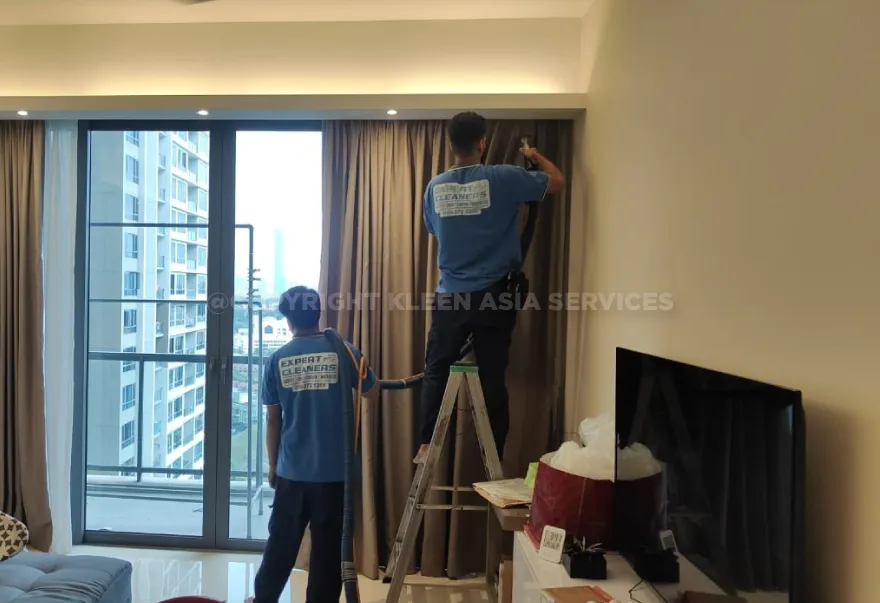
A specialized cleaning service in Kuala Lumpur or Selangor uses techniques like steam extraction that can effectively kill mold spores and remove stains without damaging the fabric. This process can often save you the significant expense of replacing high-quality or custom-made curtains, making it a worthwhile investment.
Signs that it’s actually time to buy new curtains
On the other hand, some situations truly call for replacement. If you notice extensive discoloration that has permanently stained the fabric, or if the mold has caused the material to start breaking down, it’s probably time to say goodbye. You might see the fabric becoming brittle or even tearing easily where the mold has taken hold.
Another major red flag is a persistent, musty odor that just won’t go away, even after cleaning attempts. This often indicates that mold has deeply embedded itself into the fabric’s core, making it impossible to fully eradicate. In such cases, holding onto them could be a health risk, as spores can continue to be released into your indoor air.
My take on how to stop that mold from coming back
So, you’ve had your curtains professionally cleaned, and that nasty mold is gone. Great! But here’s the thing: without specific, ongoing maintenance, you’re just setting yourself up for a repeat performance. It’s not enough to just clean; you’ve got to change some habits to keep those spores from making a comeback.
You see, the truth is that even the best professional service can’t magically make your home immune to mold. It’s really up to you to implement those daily and weekly practices that create an environment where mold simply can’t thrive.
Simple habits to keep your fabric dry and fresh
Making a few small changes in your routine can make a huge difference. For instance, always pull your curtains back and secure them during the day, especially if you’ve just opened windows or it’s been raining. This simple act allows air to circulate and helps any residual moisture evaporate.
Also, consider wiping down windowsills and frames regularly with a dry cloth. Any condensation that collects there can quickly become a breeding ground, and that moisture will inevitably transfer to your curtain fabric.
Why airflow is your best friend in a humid climate
Good airflow is absolutely critical, particularly here in Kuala Lumpur and Selangor, where humidity levels are almost constantly high. Stagnant air is a mold spore’s dream environment, providing the perfect conditions for growth.
Opening windows and doors whenever possible, even for just an hour or two each day, can dramatically improve air circulation. If you’re worried about security or dust, even running a fan near your curtains can help keep the air moving and prevent moisture from settling into the fabric fibers.
And don’t underestimate the power of a ceiling fan in a room with curtains. That gentle, continuous breeze can make a significant impact on drying out any dampness that might otherwise cling to your drapes, keeping them fresh and mold-free.
To wrap up
You want your home to be a healthy sanctuary, and keeping your curtains free from mold is a big part of that. Professional cleaning services in Kuala Lumpur and Selangor offer the most effective way to keep your curtains mold-free and your indoor air healthy. Don’t underestimate the impact of invisible spores on your family’s well-being.
Making that call to a professional isn’t just about clean curtains; it’s an investment in your home’s air quality. You’ll breathe easier knowing you’ve tackled the problem effectively, preventing future growth and protecting everyone under your roof.
FAQ
Q: Why do curtains in Kuala Lumpur and Selangor often get moldy?
A: Malaysia’s climate is incredibly humid, isn’t it? That constant moisture in the air creates a perfect breeding ground for mold spores, which are always floating around. Curtains, especially those near windows, absorb this humidity readily. If there isn’t enough air circulation or if the room stays cool and damp, those spores find a nice, cozy home in the fabric fibers and start to multiply. It’s really just basic science – mold loves moisture and organic material, and curtains offer both in spades.
Q: What are the health risks associated with mold on curtains, particularly for sensitive individuals?
Q: How can I tell if my curtains have mold before it becomes a major problem?
A: You don’t always need to see big black spots to know mold is present. Often, the first sign is a musty, earthy smell in the room, even if you can’t see anything. Visually, look for small, discolored spots – they might be green, black, brown, or even white and fuzzy. Pay close attention to the bottom edges of curtains or any areas that might touch a damp wall or window sill. Sometimes it just looks like a faint stain that won’t come out with a regular wash.
Q: Why isn’t DIY mold removal effective for curtains, and when should I call a professional?
A: Many people try to tackle mold with household cleaners, but it’s usually a temporary fix. The problem is that mold isn’t just on the surface; its roots, called hyphae, penetrate deep into the fabric fibers. While you might clean the visible spots, the underlying mold often remains, ready to regrow. Professional curtain cleaning services, especially those using steam extraction, have specialized equipment and solutions that reach deep into the fabric, killing the mold spores and extracting them completely. If you see persistent spots, smell that musty odor, or if you’ve tried cleaning yourself without success, it’s definitely time to call in the pros.
Q: Should I try to clean my moldy curtains or is it better to just replace them?
A: That really depends on the severity of the mold. If it’s a small, isolated patch and you catch it early, a professional cleaning service can often save your curtains. They use methods like hot water extraction that effectively kill mold and remove stains without damaging the fabric. However, if the mold has spread extensively, has severely weakened the fabric, or if the curtains are very old and inexpensive, replacement might be the more practical and cost-effective option. Sometimes, the damage is simply too deep to reverse completely. A good cleaning service can usually assess this for you during an inspection.