
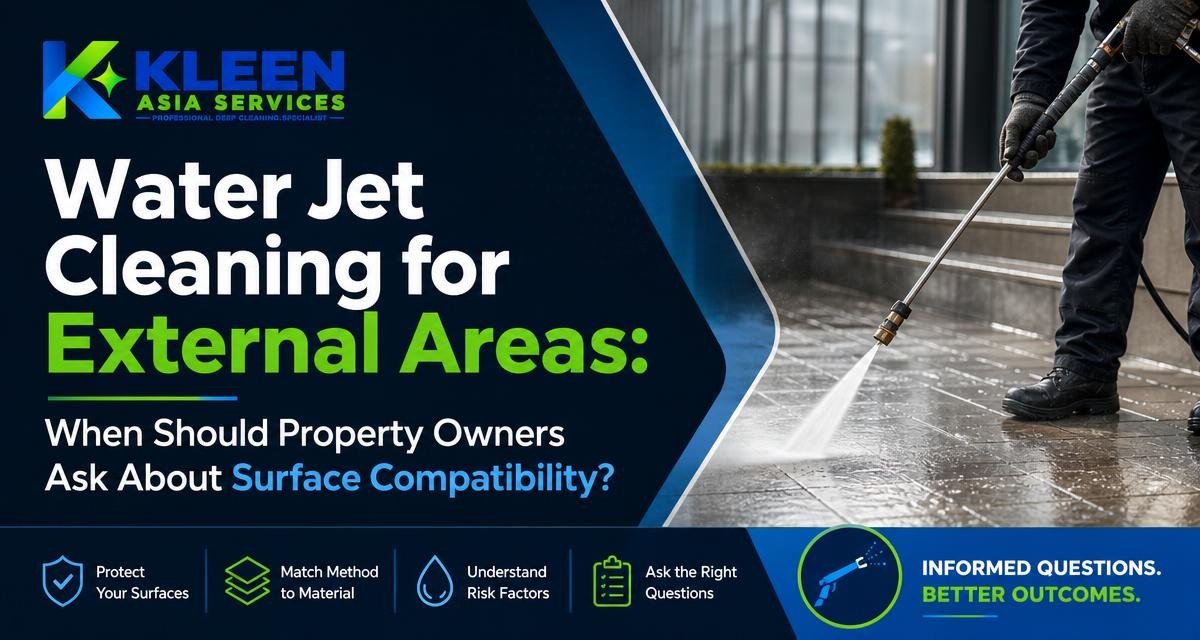
High pressure water jet cleaning can be considered for many outdoor cleaning situations, but the suitability of the method depends on more than how dirty a surface looks. Property owners should discuss the surface material, its condition, nearby features, drainage and access before asking a provider to assess the work. These details help create a clearer conversation about whether pressure water jet cleaning is appropriate for a particular external area.
Why surface compatibility matters
A water jet directs pressurised water at a surface to help dislodge dirt, residue and other unwanted material. The pressure, distance, spray pattern and cleaning approach all influence how the water interacts with the surface. A hard, sound area may respond differently from an older, weathered or damaged one.
That is why property owners should avoid treating high pressure water jet cleaning as a one-size-fits-all process. The same approach may not be suitable for every part of a building or outdoor space. A responsible discussion should consider what the surface is made of, how it was installed and whether it already has weaknesses.
Start by identifying the surface material
The first question to raise is simple: what material will be cleaned? External areas can contain several surfaces within a small space, including concrete, tiles, masonry, painted finishes, stone, metal features and coated areas. Even when two surfaces look similar, their coatings, joints and condition may be different.
Provide as much information as possible about the area. If you are unsure whether a surface is natural stone, manufactured tile, painted concrete or another material, say so rather than guessing. Photographs, maintenance records or information from a building contractor may help the cleaning provider understand what needs to be assessed.
| Detail to discuss | Why it matters | Useful information to provide |
|---|---|---|
| Surface material | Different materials can react differently to pressurised water. | Concrete, tile, stone, masonry, painted finish or another known material. |
| Surface condition | Existing damage may affect the suitability of the cleaning method. | Cracks, loose sections, worn coatings, stains, flaking or previous repairs. |
| Joints and edges | Water can reach gaps, seams and vulnerable edges. | Tile joints, expansion joints, door thresholds, window edges and corners. |
| Nearby features | Water and loosened debris may affect surrounding items. | Electrical fittings, plants, vehicles, furniture, vents and entrances. |
| Drainage | Runoff needs to be directed and managed appropriately. | Drains, slopes, low points, grates and areas where water may collect. |
| Access | The work area must be reachable without creating avoidable hazards. | Gates, stairs, narrow passages, shared areas and restricted entrances. |
Questions about the condition of the surface
Material alone does not determine compatibility. A newer or well-maintained surface may be in a different condition from an older area exposed to weather, traffic and repeated repairs. Before discussing external building cleaning services, check whether the surface has visible defects that should be mentioned.
Look for existing damage
Tell the provider about cracks, chipped edges, loose tiles, flaking paint, open joints, exposed aggregate or sections that sound hollow when tapped, if this is already known. Also mention areas that have been repaired, sealed, painted or treated with a coating. These details do not automatically decide whether water jet cleaning can be used, but they are relevant to the assessment.
Consider the age and maintenance history
Older surfaces may have accumulated layers of paint, sealant, dirt or previous treatments. A surface that has already been cleaned with aggressive methods may also have a different condition from one that has received routine maintenance. Share any known history, including previous pressure washing, renovations or water-related problems.
Property owners should also separate cleaning from repair. High pressure water jet cleaning is intended as a cleaning method, not a replacement for fixing damaged surfaces, failed joints or drainage defects. If the area has a structural, waterproofing or building-maintenance concern, that issue may need separate attention.
Discuss coatings, paint and treated finishes
Painted and coated surfaces deserve specific discussion because cleaning may interact with the finish as well as with the underlying material. Ask whether the provider needs details about the coating type, when it was applied and whether it is already peeling or worn.
The same consideration applies to sealed stone, treated concrete and surfaces with a protective finish. A property owner may want to preserve an existing appearance or coating, so the provider should understand that before recommending a method. Do not assume that a visibly dirty finish should simply be cleaned at the highest possible pressure.
A useful request is: “Please assess the surface and finish before confirming whether high pressure water jet cleaning is suitable for this area.”
Pay attention to joints, edges and openings
Large open surfaces are only one part of an external cleaning project. Water may also reach joints, gaps, thresholds, vents, doorways and window edges. These details should be raised before work begins, especially around entrances or areas connected to interior rooms.
Point out locations where water should not enter. This may include building openings, service access points, storage areas, basement entrances or gaps around external fixtures. A provider can then consider how the work area should be approached and which surrounding details need protection or careful handling.
Assess the surrounding area, not just the target surface
Compatibility includes the space around the surface being cleaned. Water, loosened dirt and cleaning residue can travel beyond the immediate spray area. Nearby objects and activities should therefore be included in the discussion with the cleaning provider.
Items that should be mentioned
- Outdoor furniture, stored materials and movable equipment.
- Vehicles, bicycles or other personal property near the work area.
- Plants, garden beds and landscaped sections.
- Electrical fittings, lighting, cameras and other building fixtures.
- Air vents, doors, windows and access points to indoor spaces.
- Pedestrian routes, neighbouring properties and shared facilities.
Some items may be moved before cleaning, while others may require protection or a different working distance. The important point is to identify them early. A quick visual inspection of the whole area can prevent a narrow focus on the main stain or dirty patch.
Drainage and runoff need early attention
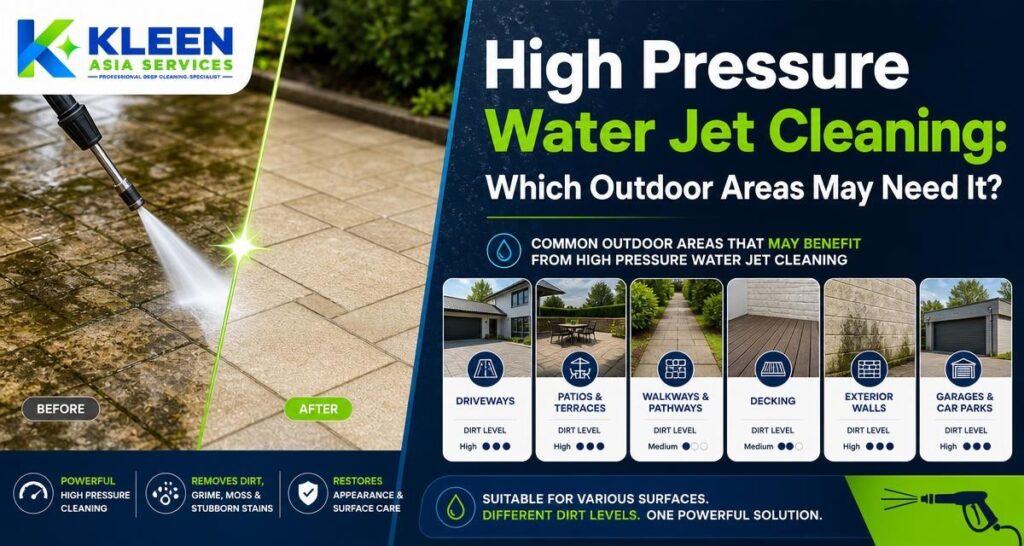
Water jet cleaning creates runoff. Before arranging outdoor cleaning, identify where water will flow and whether drains, grates and channels are clear. Slopes, low points and blocked drainage can affect the work area and the surrounding property.
Ask how loosened dirt and water will be managed during the cleaning process. This is particularly relevant near entrances, ramps, garages, public walkways and areas connected to neighbouring lots. A drain that appears available may still be blocked, covered or unsuitable for the expected flow, so it should be included in the site discussion.
Property owners should also mention any location where runoff could create a concern, such as an indoor threshold, storage area or landscaped section. These details help the provider form a more accurate view of the job rather than assessing the surface in isolation.
Access and site conditions can affect the assessment
A provider needs to know how the external area can be reached. Narrow gates, stairs, long passages, shared driveways and restricted building access may affect how equipment and hoses are brought to the work zone. The available route can also influence how nearby people and property are managed.
Tell the provider about access restrictions, building rules, parking limitations or shared areas before arranging the work. If the area is part of an office, apartment, retail or managed property, check whether permission is required from a building manager or other responsible party.
Information worth preparing
- The exact outdoor areas that need assessment.
- The known material and any surface coating.
- Visible cracks, loose sections, peeling finishes or previous repairs.
- Nearby doors, windows, vents, electrical features, plants and belongings.
- The location of drains, low points and areas where runoff may collect.
- Access instructions, restrictions and any shared-use concerns.
- Photographs showing the whole area and close-ups of damaged sections.
Questions to ask before approving the work
A good enquiry should focus on assessment rather than a guaranteed result. Ask the provider how they will evaluate the surface, whether different areas need separate consideration and what information they need before confirming the cleaning approach.
- Is the identified surface suitable for the proposed water jet cleaning method?
- How should existing cracks, loose material or damaged coatings be handled?
- Are there areas where water should not be directed?
- What nearby objects or fixtures should be moved or protected?
- How will runoff be considered around drains, entrances and low points?
- Does the work require clear access or preparation before the visit?
- Are there parts of the area that should be assessed separately?
The answers may differ from one property to another. That is normal. A useful consultation should acknowledge the actual condition and layout of the site instead of presenting pressure washing services as identical for every external area.
When a different approach may need consideration
Surface compatibility questions are especially important when an area is fragile, damaged, heavily coated or close to sensitive fixtures. In these situations, the provider may need to discuss a modified method, a lower-impact approach or a separate assessment before work is confirmed.
This does not mean that high pressure water jet cleaning is automatically unsuitable. It means the decision should be based on the surface and surroundings rather than on the appearance of dirt alone. Property owners should be comfortable asking for clarification when the material, condition or runoff arrangements are uncertain.
How to make a clearer enquiry to Kleen Asia
Kleen Asia Carpet Cleaning & Upholstery Cleaning presents Water Jet Cleaning as a pressure water jet cleaning service. When contacting the business about an external area, describe the location, surface material, visible condition and surrounding features as clearly as possible.
Useful information can include the type of property, the approximate area to be reviewed, photographs of the surface, known drainage points and any access restrictions. The purpose is not to predict a particular result, but to give the cleaning provider enough context to discuss whether the requested service fits the site.
For property owners, asking about compatibility before scheduling work is a practical step. It encourages a more careful conversation about surface condition, nearby property, water movement and preparation. That approach can help keep expectations realistic when considering high pressure water jet cleaning or other external building cleaning services.
Frequently asked questions
What is high pressure water jet cleaning?
It is a cleaning method that uses pressurised water to help remove dirt and residue from suitable surfaces. The appropriate pressure and approach depend on the material, condition and surrounding area.
Should every outdoor surface be cleaned with the same pressure?
No. External surfaces may differ in material, coating, age and condition. These details should be assessed before a cleaning method is confirmed.
What should I tell a provider about a damaged surface?
Describe visible cracks, loose sections, peeling paint, open joints, previous repairs and any known water-related problems. Photographs can also help explain the condition.
Why do drainage details matter?
Water and loosened dirt need somewhere to flow. Drains, slopes, low points and entrances should be discussed so runoff can be considered before work begins.
Do nearby plants and electrical fixtures need to be mentioned?
Yes. Plants, lighting, cameras, vents, doors, windows and other nearby features are part of the work environment and should be identified during the enquiry.
Can water jet cleaning repair cracked or loose surfaces?
No cleaning method should be treated as a substitute for repairing damaged surfaces. Existing defects should be disclosed and may require separate building or maintenance attention.
What is the best way to request a surface compatibility assessment?
Provide the surface type, condition, photographs, access information, nearby features and drainage details. Then ask the provider to assess whether the proposed method is appropriate for the site.
Related posts:
 Water Jet Cleaning Service: How It Differs from Routine Outdoor Cleaning
 Water Jet Cleaning Services for Commercial Outdoor Areas: How to Define the Work Zone
 Outdoor Cleaning in Klang: How Property Managers Can Prepare Surface and Access Details
 Water Jet Cleaning in Putrajaya: How to Compare Outdoor Surface Requirements Before Booking