

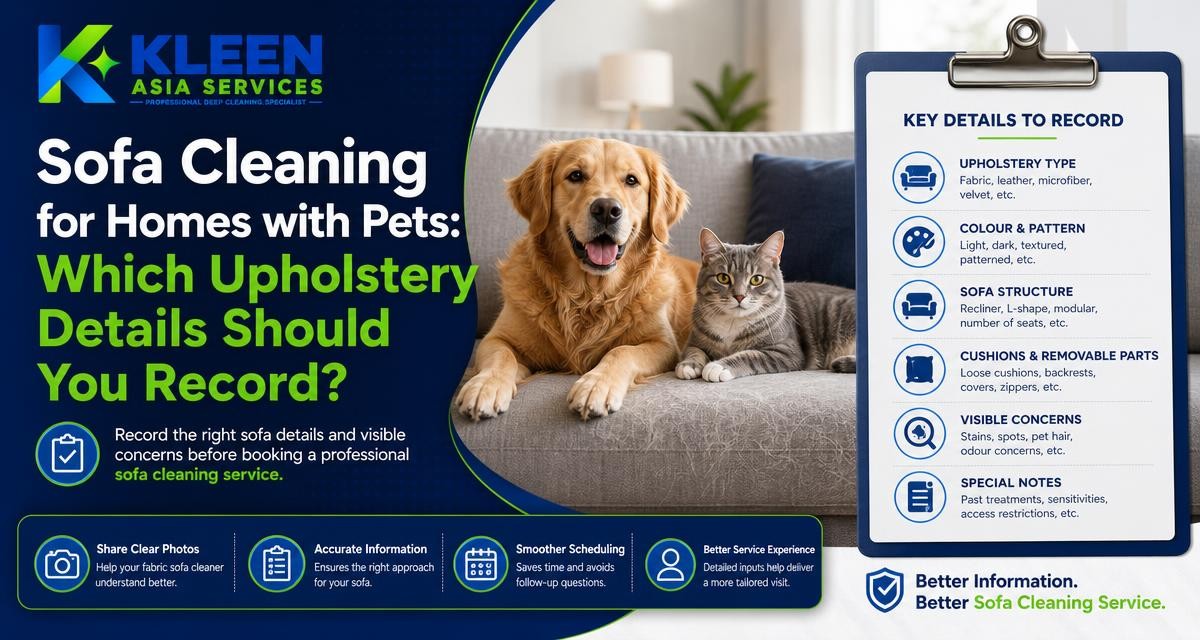
When pets regularly use a sofa, a clear description of the upholstery can help a sofa cleaning service understand what needs attention before an appointment. Rather than simply saying that the sofa is dirty, record the fabric type, cushion design, areas used by pets, visible marks, previous cleaning and any access considerations. These details give the cleaning team useful information without assuming that every sofa or every mark can be treated in the same way.
Why sofa details matter before cleaning
A sofa is not one uniform surface. Its fabric, backing, padding, seams, removable covers and frame may all respond differently to moisture and handling. A loose-weave textile requires a different conversation from a tightly woven synthetic fabric, while a fixed cushion may need to be assessed differently from a removable one.
Pet households also tend to use upholstery in very specific ways. A dog may rest on one arm or corner, a cat may favour the back cushion, and removable blankets may cover the main seating area. Recording these patterns helps you describe the condition more accurately when asking about a professional sofa cleaning service from Kleen Asia Carpet Cleaning & Upholstery Cleaning.
The essential upholstery details to record
You do not need to identify every material scientifically. The goal is to provide practical information that can support an initial discussion. If you are unsure, say so and describe what you can observe instead of guessing.
| Detail to record | What to look for | Why it is useful |
|---|---|---|
| Fabric type | Woven, velvet-like, microfiber, linen-like, leather or unknown | Shows what kind of upholstery is being discussed |
| Construction | Loose covers, fixed covers, piping, buttons, seams or tufting | Identifies areas that may need closer assessment |
| Cushions | Removable or fixed; seat, back and bolster cushions | Clarifies which parts can be handled separately |
| Pet use | Sleeping, scratching, shedding or frequent movement across the sofa | Describes the type and location of everyday wear |
| Visible concerns | Hair, soil, marks, discolouration, flattened areas or odour | Helps create a more precise service request |
| Previous care | DIY products, spot treatment, washing or earlier professional cleaning | Provides relevant background before further treatment |
1. Identify the upholstery material as accurately as possible
Start with the care label, purchase information or manufacturer’s description if you still have it. Useful terms may include polyester, cotton, linen, velvet, microfiber, suede-like fabric or leather. If there is no label, describe the surface in plain language: smooth or textured, shiny or matte, tightly woven or visibly open, soft-piled or flat.
Do not rely only on colour or appearance. Two sofas can look similar while having different fibres, backing and construction. A message such as “dark grey fabric sofa with a fine, short pile” is more helpful than simply “grey sofa.” If the material is unknown, tell the sofa cleaning service that it needs to be assessed.
2. Record whether covers and cushions are removable
Note whether the seat and back cushions can be removed and whether their covers have zips. Also record fixed features such as attached back cushions, built-in armrests, piping, buttons, deep seams or tufted sections. These details describe how much of the sofa can be separated from the frame and where dirt, hair or small particles may collect.
Removable does not automatically mean machine-washable. A cover may still have a specific care requirement, and removing it may affect its fit or appearance. Record the construction, but leave cleaning instructions to the product label and the professional assessment.
3. Describe how your pets use the sofa
Pet use is more specific than simply saying that you have a dog or cat. Write down which animal uses the sofa, how often it is used and which areas are most affected. For example, a cat may sleep on the left arm, while a dog may lie across one seat cushion after outdoor walks.
- Mark the usual sleeping or resting areas.
- Note whether pets climb onto the back, arms or cushions.
- Record visible shedding, embedded hair or tracked-in soil.
- Mention scratching, digging or repeated rubbing against one area.
- State whether blankets, throws or protective covers are normally used.
This information helps distinguish general sofa use from concentrated wear. It also prevents the service request from overlooking less obvious areas, such as the back cushion, underside of a removable cushion or the gap between the seat and arm.
Which visible concerns should you photograph or describe?
A short written description is useful, but photographs can make the request clearer. Take well-lit images of the whole sofa and close-ups of areas that need attention. Include a photo that shows the mark in relation to the cushion or arm so its location is easy to identify.
Hair, dust and loose debris
Describe whether hair is mainly on the surface or caught in seams and textured fabric. Also mention loose debris that collects under cushions or along the frame. These observations help define the condition of the sofa before any work is discussed. They do not establish what can or cannot be removed.
Spills, spots and discolouration
For each visible mark, record its location, approximate size, colour and when you first noticed it. If you know what caused it, include that information. If you do not know, say that the cause is unknown. Avoid applying several products before professional advice, because unrecorded spot treatments can make the history of the area harder to understand.
Odour or dampness
If the sofa has an odour, describe where it seems strongest and whether it appeared after a spill, pet accident or another event. Mention any current dampness or previous moisture exposure. Odour descriptions are subjective, so simple wording is best: “noticeable near the right seat cushion” or “present throughout the sofa.” A sofa cleaning service can then discuss the concern without promising a particular result.
Wear, damage and changes in texture
Record fraying, loose threads, torn seams, scratches, faded sections, flattened pile or areas that feel different from the rest of the sofa. Cleaning is not the same as repair, and documenting pre-existing damage helps keep the service request accurate. If a cushion is misshapen or the fabric has stretched, include that as well.

Previous cleaning and products used
Make a short list of anything used on the sofa. Include household detergent, upholstery foam, stain remover, disinfectant, steam equipment, wet vacuuming or a previous professional cleaning visit. If possible, note the date and the areas treated.
This is particularly useful when a mark has changed after a DIY attempt. State what happened without judging the result. For example, you might write, “A store-bought spot cleaner was applied to the front edge two weeks ago; the area now looks darker when dry.” Accurate history is more useful than a general statement that the sofa was “cleaned before.”
A practical sofa inspection checklist
Walk around the sofa slowly and record each section. Looking at the piece from more than one direction can reveal concerns that are not obvious from the main seating position.
- Write down the sofa’s approximate size and number of seats.
- Identify the visible upholstery material or state that it is unknown.
- Check the seat cushions, back cushions, arms, front panels and sides.
- Look between cushions and beneath removable pieces for hair or debris.
- Mark the areas most frequently used by pets.
- List spots, discolouration, odour, wear and any known pet accidents.
- Record previous products, treatments or cleaning attempts.
- Photograph the overall sofa and each significant concern.
- Note stairs, narrow corridors, lifts or other access details if relevant.
Keep the notes available when contacting a sofa cleaning service. A concise checklist is easier to review than a long message that mixes confirmed details with assumptions.
How to describe special access or household arrangements
Upholstery care is not only about the fabric. Tell the provider whether the sofa is in a living room, office, enclosed balcony or another area, and mention practical access points. Note stairs, narrow doorways, lifts, parking restrictions or furniture that cannot easily be moved.
In a home with pets, also explain where the animals can stay while the sofa is being assessed or cleaned. This is a household planning detail, not a claim about the cleaning method or result. You can ask what preparation is recommended and whether cushions, blankets or nearby furniture should be moved beforehand.
Questions to ask a sofa cleaning service
Once you have recorded the details, ask focused questions rather than requesting a broad promise. A professional discussion should address the actual sofa in front of you, including its fabric and condition.
- Can you assess this upholstery material before cleaning?
- Should I provide a photo of the care label or fabric?
- Should removable cushions or covers be separated before the appointment?
- How should I describe a mark when I do not know its cause?
- Are there pre-existing tears, loose threads or colour changes that should be noted?
- What preparation is recommended for pets, blankets and nearby furniture?
- Are there areas or materials that require special handling or further discussion?
These questions help set realistic expectations. A fabric sofa cleaner or upholstery technician may need to review the material, construction and visible condition before discussing suitable care. The most helpful request is specific and honest rather than based on a guaranteed outcome.
Preparing a clear service message
You can organise your information in a short message such as: “Three-seat fabric sofa, dark grey, fixed back cushions and removable seat cushions. A dog uses the right seat daily. There is visible hair in the seams, one unknown mark on the front edge and a mild odour near the cushion. No previous professional cleaning; a household spot product was used on the mark. The sofa is on the second floor with stair access.”
This format gives the cleaning company a practical starting point. Kleen Asia Carpet Cleaning & Upholstery Cleaning provides sofa and upholstery cleaning services for homes and offices in Kuala Lumpur and Selangor. Contact the company with your sofa details so the specific upholstery and concerns can be discussed before arranging care.
FAQ
What should I tell a sofa cleaning service about a pet-used sofa?
Describe the fabric, cushion construction, areas used by pets, visible hair or marks, odour, damage and any previous cleaning products. Photos and the care label can also be useful.
Do I need to know the exact fabric before requesting sofa cleaning?
No. Share the information you have and state when the material is unknown. A professional can discuss whether the upholstery needs assessment before cleaning.
Should I remove sofa cushions before the appointment?
Record which cushions are removable, but do not assume they should be removed or washed separately. Ask the provider what preparation is appropriate for your sofa.
Should pet hair be removed before professional upholstery cleaning?
Record where hair is concentrated and whether it is loose or caught in the fabric. Ask the cleaning provider whether any pre-cleaning preparation is recommended.
What if I do not know what caused a stain?
Say that the cause is unknown and describe the mark’s location, colour, size and age if known. Do not invent a cause, and mention any products already applied.
Can a fabric sofa cleaner guarantee that every mark or odour will disappear?
Cleaning results depend on the material, condition, cause and history of the concern. A responsible discussion should avoid guarantees and address what can be assessed before treatment.
Does Kleen Asia provide sofa cleaning for pet-owning households?
Kleen Asia Carpet Cleaning & Upholstery Cleaning provides sofa and upholstery cleaning services for homes and offices in Kuala Lumpur and Selangor. Share your upholstery details and pet-related concerns when making an enquiry.
Related posts:
 Sofa Cleaning Near Me in Puchong: What to Clarify for Shared Living Areas
 Fabric Sofa Cleaner Guide: How to Read Upholstery Labels Before Cleaning
 Sofa Deep Cleaning Services: What to Note Before Requesting Upholstery Care
 Sofa Cleaning Services for Sectional Seating: How to Organise Cushions and Upholstery Details